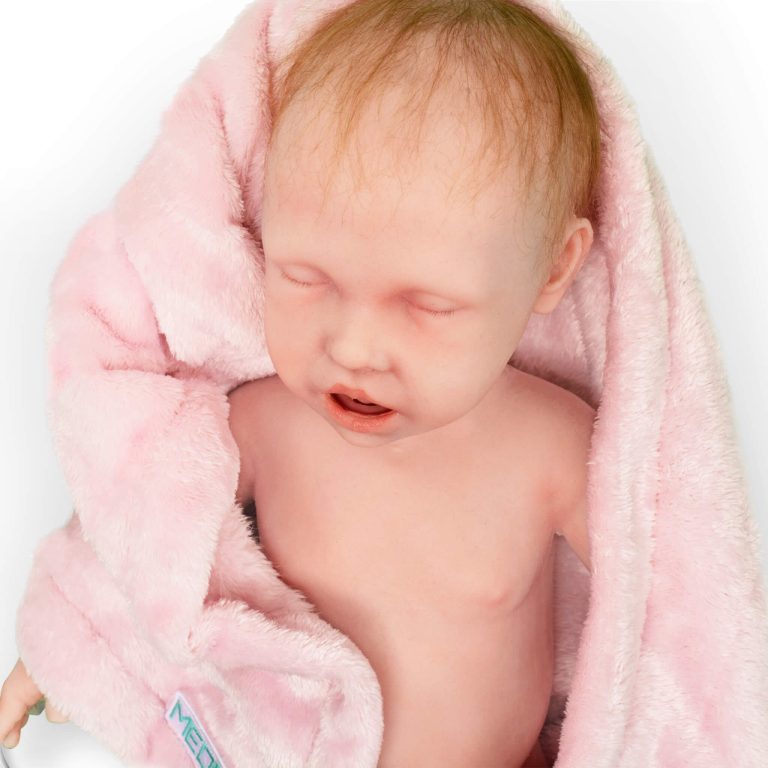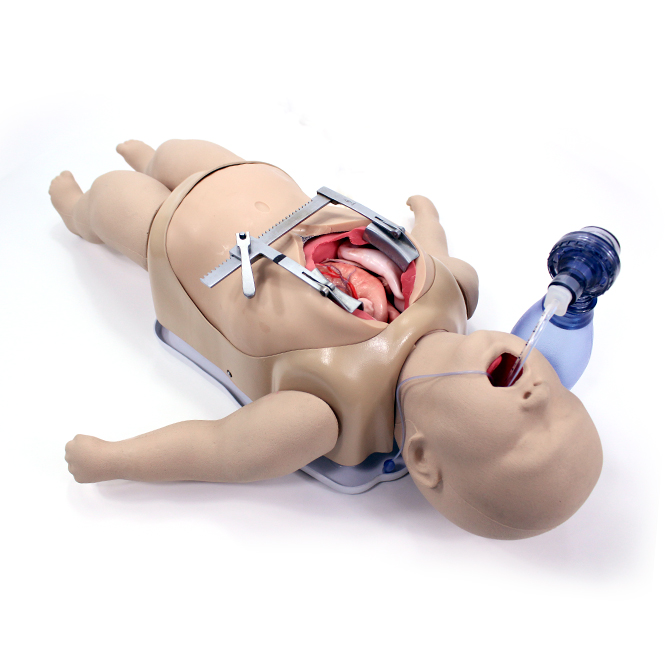

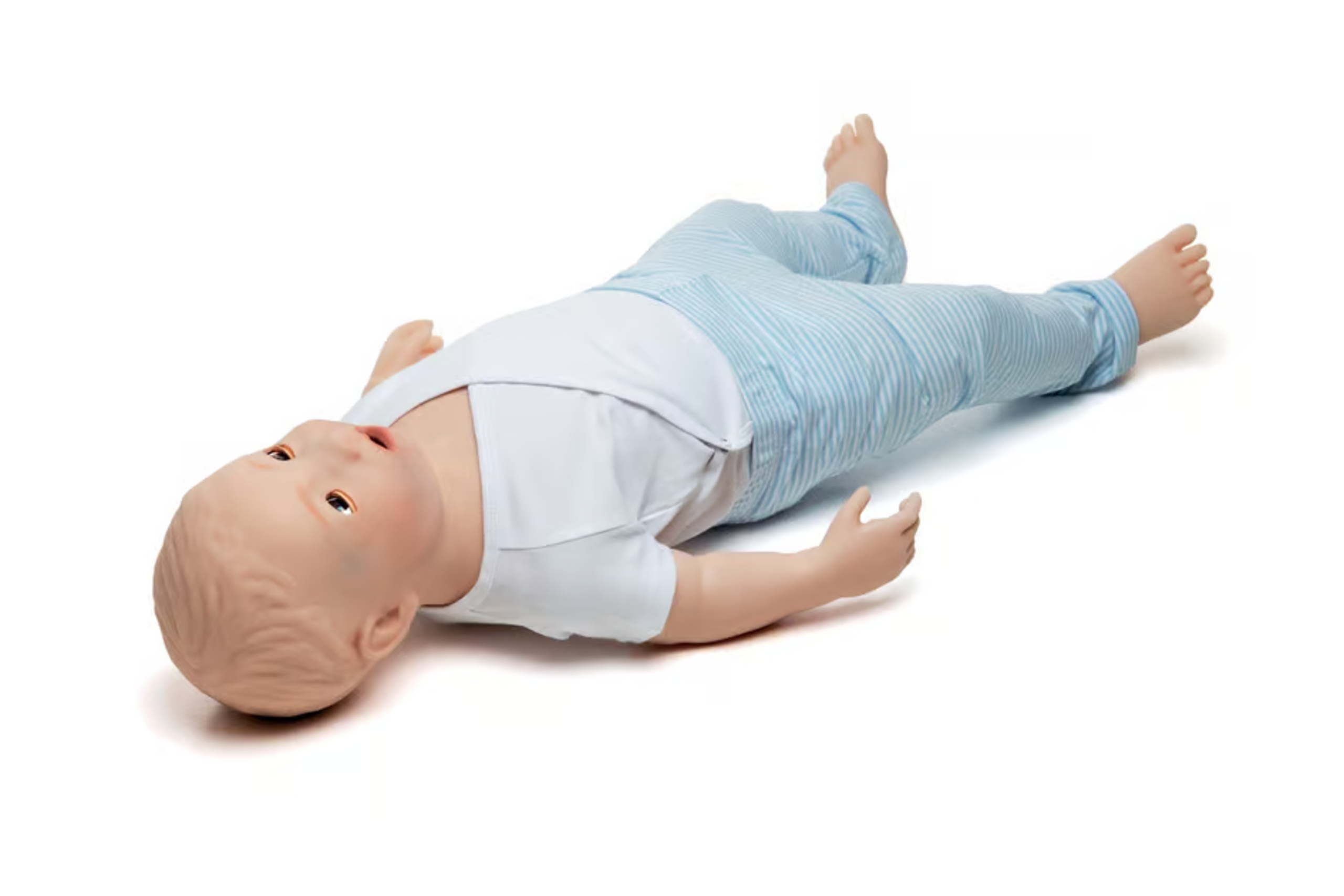
SimBaby is a pediatric simulator representing a 9-month-old manufactured by Laerdal Medical to help improve pediatric critical care through healthcare simulation. The goal of the Sim Baby medical simulation product is to help learners receive advanced training across all aspects of pediatric care. In medical education, the margin for error is nonexistent when treating the most vulnerable patient populations. Pediatric critical care requires a highly specialized skill set that demands precision, rapid decision-making, and seamless teamwork. To address the complexities of infant care, the Laerdal SimBaby has emerged as a pivotal tool in pediatric simulation. The Laerdal SimBaby is a tetherless manikin that enables learners to practice recognizing and responding to critically ill pediatric patients. Laerdal designed the SimBaby as a highly realistic, high-fidelity patient simulator that meets specific learning objectives focusing on initial assessment and treatment in pediatric education and training. This HealthySimulation.com article will explore the functions, settings, and skills to be incorporated into pediatric clinical simulation. Be sure to visit the Laerdal company page in the new HealthySimulation.com vendor directory to learn more about SimBaby and other Laerdal Medical content.
SimBaby for Communication and Teamwork
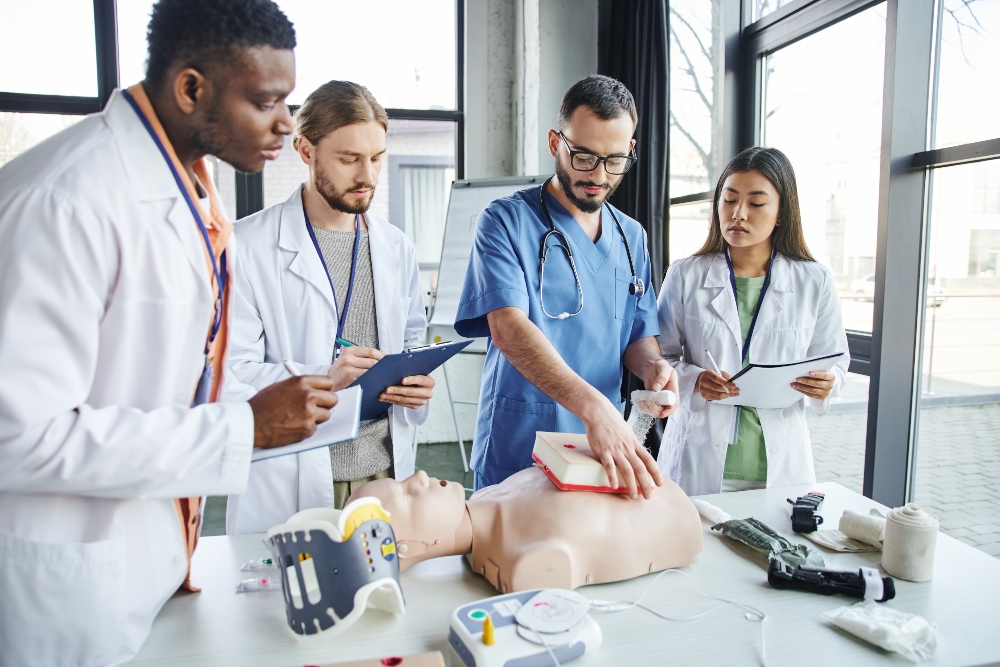
The baby simulator SimBaby is a useful educational training system that healthcare providers can use to simulate team-centered, safe, highly-realistic infant care in clinical environments. The use of high-fidelity patient manikins, such as the SimBaby, in infant simulation-based education prepares learners to make critical decisions, enabling clinical teams to practice effective communication and teamwork and respond to events in real time.
The use of SimBaby for educational purposes can also help improve a learner or healthcare provider’s ability to respond more confidently in any given emergency situation. This is especially important because children can have a wide variety of different physiological responses to trauma compared to adults. Clinical care of pediatric patients is a highly specialized skill set that requires extensive practice and refreshers to prevent skill decay.
View the new HealthySimulation.com Community Pediatric Simulation Group to discuss this topic with your Global Healthcare Simulation peers!
To provide inclusive pediatric-based education, SimBaby allows users to simulate a range of clinical skills. For example, Laerdal SimBaby enables learners to assess capillary refill time, test the pupillary light reflex, check bilateral pulses, measure resuscitation quality, and help improve team communication skills, and continuity of care at their respective practice or facility.
Additional benefits of SimBaby include providing educators and students with resources to plan healthcare simulations and meet learning objectives. Video-enabled debriefing then provides new dimensions to student performance feedback and remediation. Student performance during paediatric simulation scenarios can also be video-recorded and synchronized with Laerdal SimBaby patient data logs.
SimBaby learning scenarios are based on the American Heart Association’s Pediatric Advanced Life Support curriculum, designed to help learners prepare for those critical situations and mirror real-life critical events before ever having to respond to an actual emergency. As a company, Laerdal also offers clinical subject matter experts and standardized delivery to help to develop scenarios tailored to a learner’s specific needs.
Patient Care Setting Use with SimBaby
Whether it be emergency, intensive care, or point-of-care training (such as home care), confidence and competence can help improve patient outcomes. Furthermore, interdisciplinary team training and transport on a realistic pediatric simulator help ensure that cross-functional teams avoid potential breakdowns in communication and continuity of care later in their real-life practice. Laerdal SimBaby is an incredibly versatile high-fidelity patient simulator that can be used in healthcare simulation programs in a variety of ways to ensure that the learning outcomes of pediatric simulation participants are met.
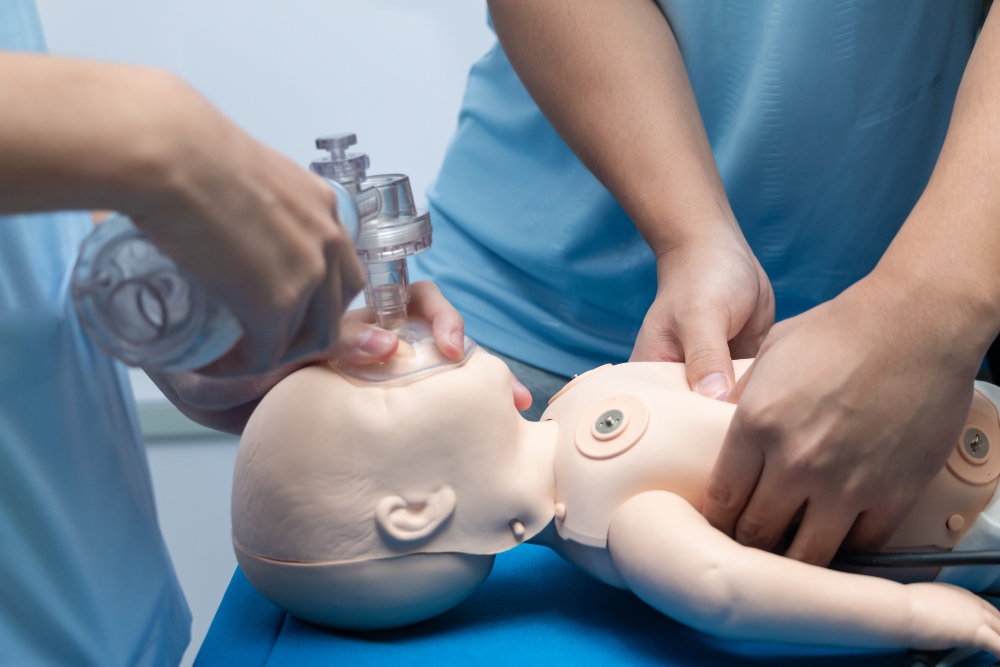
Realistic pediatric anatomy from patient simulators like the SimBaby also helps ensure that a clinical simulation learner has mastered the correct head tilt and chin lift and experiences appropriate chest resistance and chest rise. For these maneuvers, SimBaby provides learners with easy-to-use clinical simulation scenarios that help them truly meet their learning objectives and give pediatric simulation participants the opportunity to practice delivering a variety of clinical care.
Along with lifelike features, SimBaby is incredibly useful for high-fidelity paediatric simulation learners who hope to practice early assessment, diagnosis, and intervention. Learning to recognize and respond effectively to respiratory emergencies, shock, and cardiopulmonary arrest is essential for pediatric healthcare providers. As these clinical presentations are high-stakes yet low-frequency events for the pediatric patient population, the use of a high-fidelity manikin such as Laerdal SimBaby is an excellent way for clinical staff to prepare and hone clinical and teamwork skills prior to experience with a real patient.
View the HealthySimulation.com Webinar Elevate Your Healthcare Simulation Impact with Laerdal’s Latest Innovations to learn more!
SimBaby Anatomical Realism and Physiological Features
The benefits of the SimBaby infant simulator stem from a variety of features that the product offers, which are aimed to improve the educational experience while integrating realistic properties. The efficacy of the SimBaby lies in its highly realistic anatomical and physiological features, which are designed to meet specific learning objectives regarding assessment, diagnosis, and intervention. The simulator is versatile, allowing for the practice of inclusive pediatric-based education through a vast array of clinical skills. This includes the effective monitoring and improvement of CPR performance, the Quadrennial Comprehensive Policy Review (QCPR) technology that has been incorporated into SimBaby.
To demonstrate numerical results from the use of SimBaby, the technology includes the measurement of key metrics, such as correct compression depth, appropriate compression rate, full release, enough hands-on time, and adequate ventilation. Then, operation and debriefing options will depend on the acquisition of additional simulation technology equipment.
For example: SimPad PLUS helps nursing simulation learners achieve objectives with greater ease due to an intuitive touchscreen interface, mobile design, easy-to-operate scenarios and integrated data log. Alternatively, LLEAP software unifies the control of all PC operated Laerdal simulators and helps learners to conduct simulated training and develop new scenarios. Laerdal SimBaby has ShockLink capabilities inbuilt into the manikin to enable the use of a compatible live defibrillator with training defibrillator pads.
Laerdal Medical has also expanded training opportunities based on a learner’s training needs through capture, share, and debrief training sessions (using synchronized audio, video and peds simulation information). The realistic nature along with training modules is all done to increase the training experience.
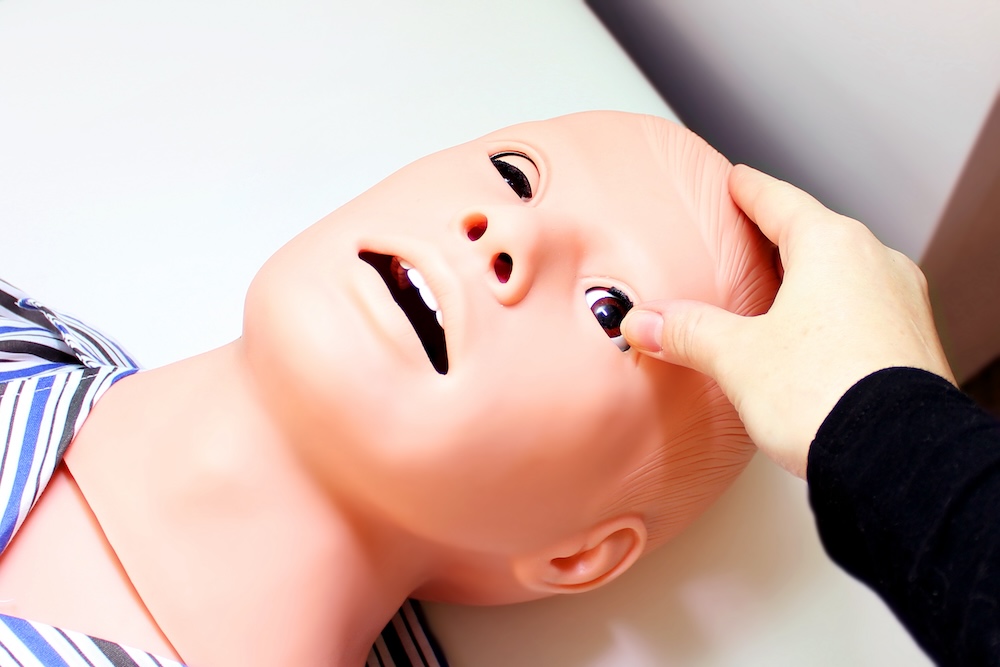
SimBaby has eyes that have many capabilities which include: normal, constricted and blown (dilated) pupils. This feature is able to be controlled via the SimPad by the clinical simulation technician and pupils also have the ability to be reactive when light is shined into them. Laerdal SimBaby has torso motion to demonstrate different levels of work of breathing and vocal sounds (crying, content, coughing, and hiccup). The fontanel can also be adjusted to present as either normal for bulging and the stomach has the ability to be descended as well.
Furthermore, SimBaby’s realistic features can also be broken down by a number of categories including: airway, Simulated Patient Monitor, pulmonary system, cardiovascular system, vascular access, software features and other features. Airway options include: an airway opening acquired by head tilt, chin lift and jaw thrust, oropharyngeal and nasopharyngeal airways, bag-valve-mask ventilation, orotracheal and nasotracheal intubation, sellick maneuver, LMA insertion, endotracheal tube insertion, fiberoptic intubation, gastric tube insertion, variable lung compliance, variable airway resistance, tongue edema, laryngospasm, pharyngeal swelling. decreased lung compliance, right mainstem intubation, tracheostomy management and gastric distention.
SimBaby’s Patient Monitor
SimBaby’s simulated patient monitors offer a highly configurable patient monitor, touch screen operation and a multi-level alarm. The product’s multimedia capability extends to radiology files, media files and lab results. SimBaby can also simulate several parameters including: ECG, SpO2, CO2, ABP, CVP, PAP, NIBP, TOF, and others.
SimBaby: Cardiovascular and Pulmonary Realism
The Laerdal SimBaby product’s pulmonary system offers spontaneous breathing with variable rates, depths, and regularities. There is also the ability to experience bilateral and unilateral chest rises and falls, normal and abnormal breath sounds (bilateral), and other lung sounds (like coarse crackles, fine crackles, stridor, wheezes, and rhonchi).
SimBaby’s cardiovascular system offers an extensive ECG library with rates from 20 to 360, CPR compressions that generate palpable pulses, a blood pressure waveform, and ECG artifacts. The cardiovascular system of SimBaby will produce Heart Sounds ranging from normal to systolic murmur, holosystolic murmur, diastolic murmur, continuous murmur, and gallop. Laerdal SimBaby is also equipped with many software features, including manual controls, webcam recording, event log review, and pre-programmed scenarios, making SimBaby an increasingly accurate learning tool.
Visit the Vendor Directory to See More Infant Simulators like SimBaby!