
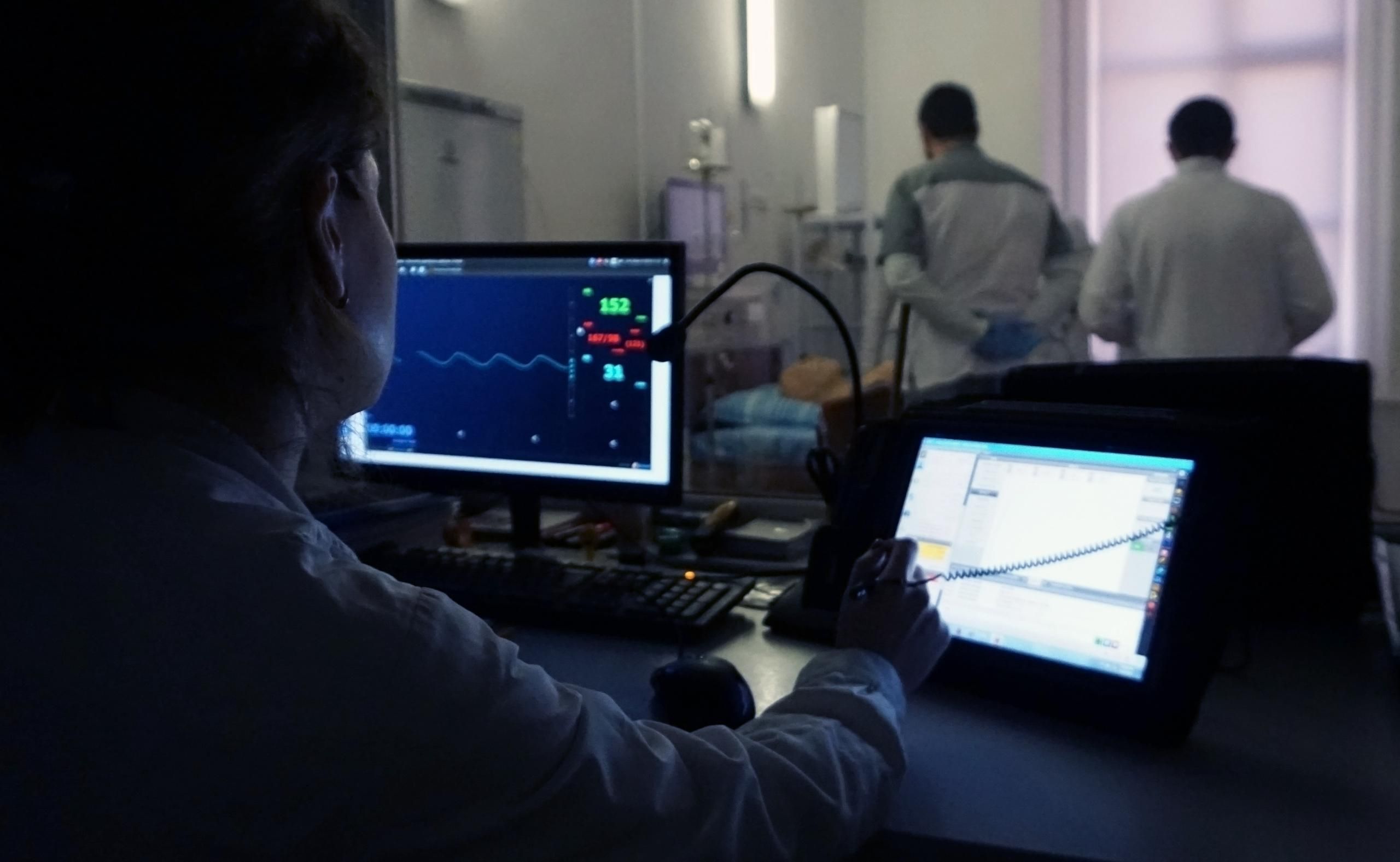
A Simulation Technician is a healthcare simulation operations professional who is responsible for providing support across several technical areas of medical simulation. Some companies and institutions also refer to Simulation Technicians as Simulation Operations Specialists or Simulation Technologists. These professionals come from a variety of backgrounds, meaning that some may have healthcare experience while others come with strong computer and audiovisual experience. After this article we suggest reading How to Become a Healthcare Sim Tech, reading Comprehensive Healthcare Simulation: Operations, Technology, and Innovative Practice and check for the latest sim tech positions in the HealthySimulation.com healthcare simulation jobs listing page.
Healthcare simulation technician careers have increased in popularity particularly over the last twenty years due to an increased awareness of the power of immersive learning in healthcare simulation for healthcare staff. The ways in which healthcare simulation scenarios and courses are delivered are often with technology of all kinds at the center of the healthcare simulation experience. As healthcare education technology is a fairly specialized field, the specialist role of the clinical simulation technician was born and has continued to evolve ever since.
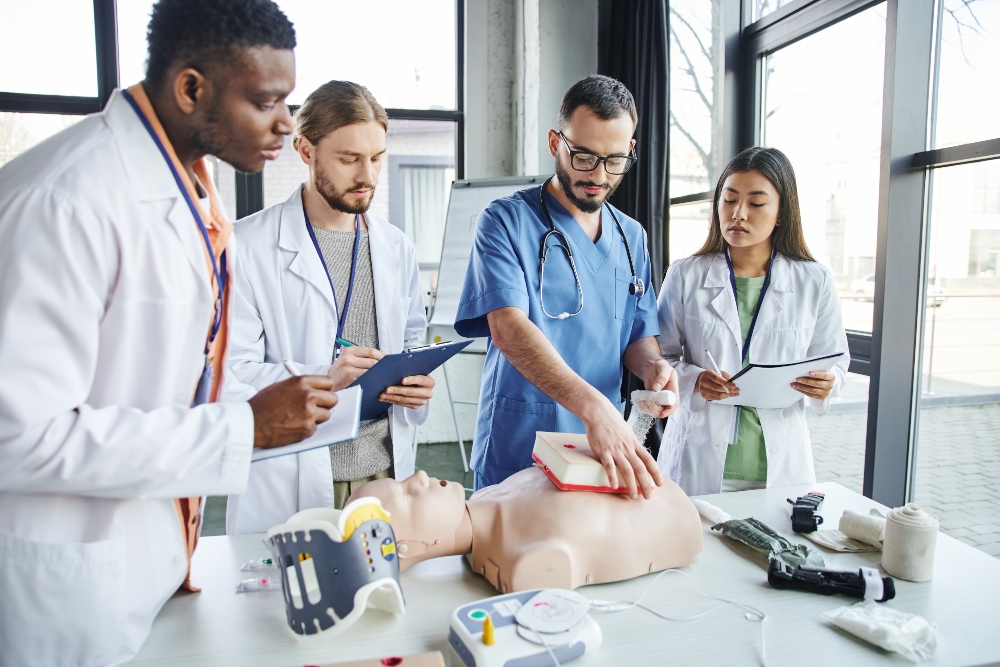
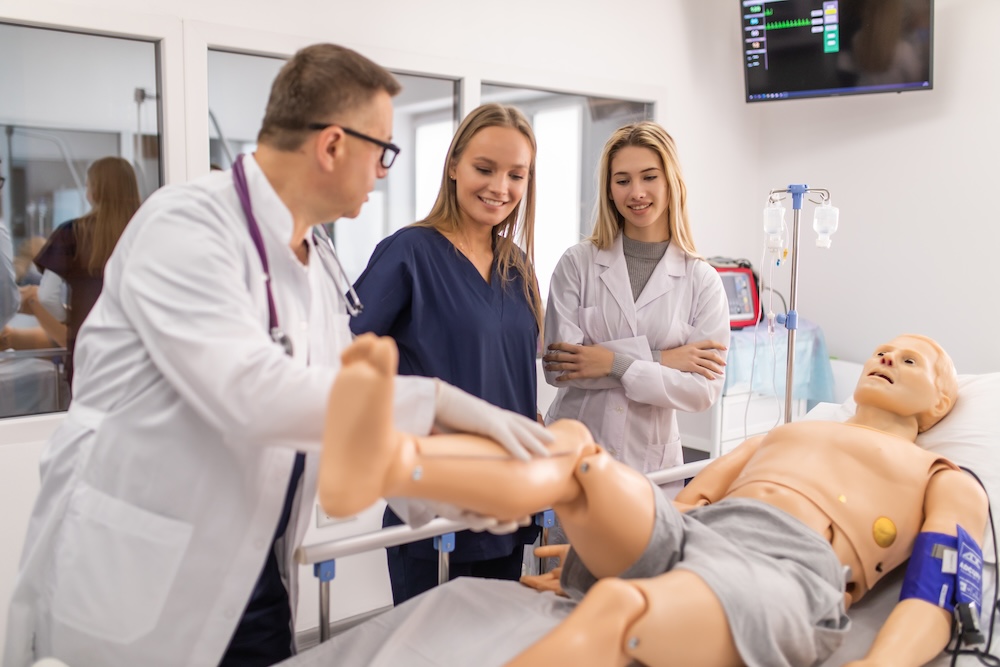
A healthcare simulation technician assists to orchestrate health providers and students to learn and be given the opportunity to practice medical and team based procedures in an immersive, life-like and psychologically safe educational environment. Health professionals from all specialties use all types of fidelity of clinical simulation manikins from high-fidelity down to low-fidelity healthcare simulation task trainers in order to improve clinical skill mastery and improve patient outcomes.A knowledge of this equipment or interest to learn about is a key part of the clinical simulation technician role.
In a survey-based study, “equipment setup and breakdown, programming scenarios into software, operation of software during simulation, audiovisual support for courses, and on-site simulator maintenance” were reported as the most common responsibilities among responding simulation technicians. Although computer skills are probably the most important skill set in this position, there are many simulation technologists working that started out with limited experience in IT. However, in this role, they have to become totally committed to simulation and have taken courses to improve any gaps in their knowledge.
In High Demand: Earning Power Depends on Location and Experience
How Much Should Sim Techs Earn? Simulation Technician salaries depend on experience, qualifications, and location. Entry level positions vary from $35,000-$45,000 USD per year. With experience and certification, salaries may rise from $55,000-$75,000 or more depending on location. As responsibilities increase, salaries tend to rise. Part-time rates typically range anywhere from $10-30 per hour with about $27 being the average for experienced Sim Techs.
View the HealthySimulation.com CE Course on From Hire to High-Performer: Building Elite Healthcare Simulation Operations Teams to learn more!
Here are the “levels” of sim techs and their average pay:
- Level I ~ $35,000/yr: Students working on their AA/BA with some healthcare experience (EMT, CNA, RNA, PM) with limited Audio/Visual (A/V) and standard computer skills.
- Level II ~$45,000 /yr: Relevant AA/BA, healthcare experience and/or license, demonstrated computer skills, and some A/V production ability.
- Level III ~ $52,000-$60,000 /yr: Relevant BA, 2+ years of A/V production experience, 5+ years of computer/IT experience (including some networking), optional: healthcare experience.
- Level IV ~ $65,000+ /yr: Simulation Technician experience, Relevant BA and possible Masters, 2 years of relevant work experience, 7+ years of computer experience and potentially IT certified, 3+ years of A/V production experience, optional: healthcare experience.
The demand for experienced simulation staff is increasing and therefore, once part-time simulation staff has gained some experience, they are often lured away to full-time positions with benefits. This is understandable but the high turnover of part-time staff makes continuity within a program difficult particularly in healthcare simulation programs with a limited budget.
A previous HealthySimulation.com article, authored by Lance Bailey, shares seven practical tips applicable to any setting for healthcare simulation technicians. These recommendations are foundational to time management and simulation center success.
Next Steps to Sim Tech Empowerment
Get a Routine: A lot of this Simulation Technician’s time is spent working alone and he shares that time seems to easily disappear – even with sometimes large pockets of time with no simulations planned. This means planning out what is expected of a Sim Tech from Monday through Friday. He finds comparing the list of tasks he needs to complete each day to what is scheduled in his Sim Labs and conference rooms helpful. Every morning, he goes over the calendar and gets a good idea of how the rest of his day and week will go.
Perform Quality Assurance Quality Control (QAQC): Some equipment may go left unused for weeks or months. He schedules QAQC time every Monday, as time allows. As a matter of routine, he checks all equipment, including audio and video components (televisions, projectors, overhead speakers, etc.), safe patient handling equipment, patient beds, high and low-fidelity manikins, and other medical simulation tools.
By scheduling this time, he can be sure that all items, including those which are not routinely used, are in good working order, well ahead of when they may be needed. There’s nothing worse than having a piece of equipment not working properly for a scheduled simulation.
Plan Ahead: When coordinating a simulation, plan well ahead of time. This means meeting with the person who is in charge of instruction to plan and set expectations. Give yourself a buffer of preparation time before the simulation and time after the simulation to clean up and reset. Sim Techs may have to hold their ground in blocking out adequate preparation time, but this is crucial for a successful and professional simulation
View the HealthySimulation.com Webinar From Hire to High-Performer: Building Elite Healthcare Simulation Operations Teams to learn more!
Google and YouTube are Friends: For those Sim Techs trying to troubleshoot a piece of equipment or high-fidelity manikin and can’t figure out what’s going on using the product manual, they have other resources. In this Simulation Technician’s experience, he can usually get what he needs online (with helpful pictures or videos). He recommends starting with Google and YouTube before reaching out to the helplines.
Update Software Regularly: While this should be included in QAQC checks, this step deserves emphasis. Windows frequently has updates that arrive weekly and SimMan3G software updates, for example, drop once or twice a month. In order to keep your equipment running and keep computers protected, keep everything updated routinely.
Create a Sim Lab Manual: If there is no instruction manual or guide for a sim lab, begin by writing one. This will ensure that the sim tech always knows what needs to happen. Should the simulation technician move on to another job, they will leave a road map for your successor.
Get Certified: The Certified Healthcare Simulation Operations Specialist (CHSOS) certification, and additional -A Advanced designation, are offered by the Society for Simulation in Healthcare. Sim Techs in the Asian region can also explore a new certification announced at S3 2025.
Attend & Join SimGHOSTS: Covered in more detail below, check out SimGHOSTS for all the best simulation technician resources, job listings, document templates, technical forums, annual hands-on training workshops, and more!
View the new HealthySimulation.com Community Simulation Technology Specialists Group to discuss this topic with your Global Healthcare Simulation peers!
Simulation Technician Organizations
SimGHOSTS: SimGHOSTS, also known as The Gathering Of Healthcare Simulation Technology Specialists, is an international United States-based non-profit organization. The organization is dedicated to supporting individuals and institutions operating medical simulation technology and spaces through hands-on training events, online resources, and professional development.
By offering support and resources to medical simulation professionals, SimGHOSTS hopes to create a healthcare education culture where people are empowered to use simulation technology to improve learning and patient care outcomes. For this reason, SimGHOSTS has created six core values, the first of which is to innovate the world of healthcare simulation and patient safety.
Other organizational core values include advocating for those operating healthcare simulation technology spaces, educating the professional community to improve outcomes, and networking with global community members at regional events and online hubs. The last two core values are to engage champions, institutions, and organizations, and zeal for the craft of simulation in healthcare throughout the community and profession.