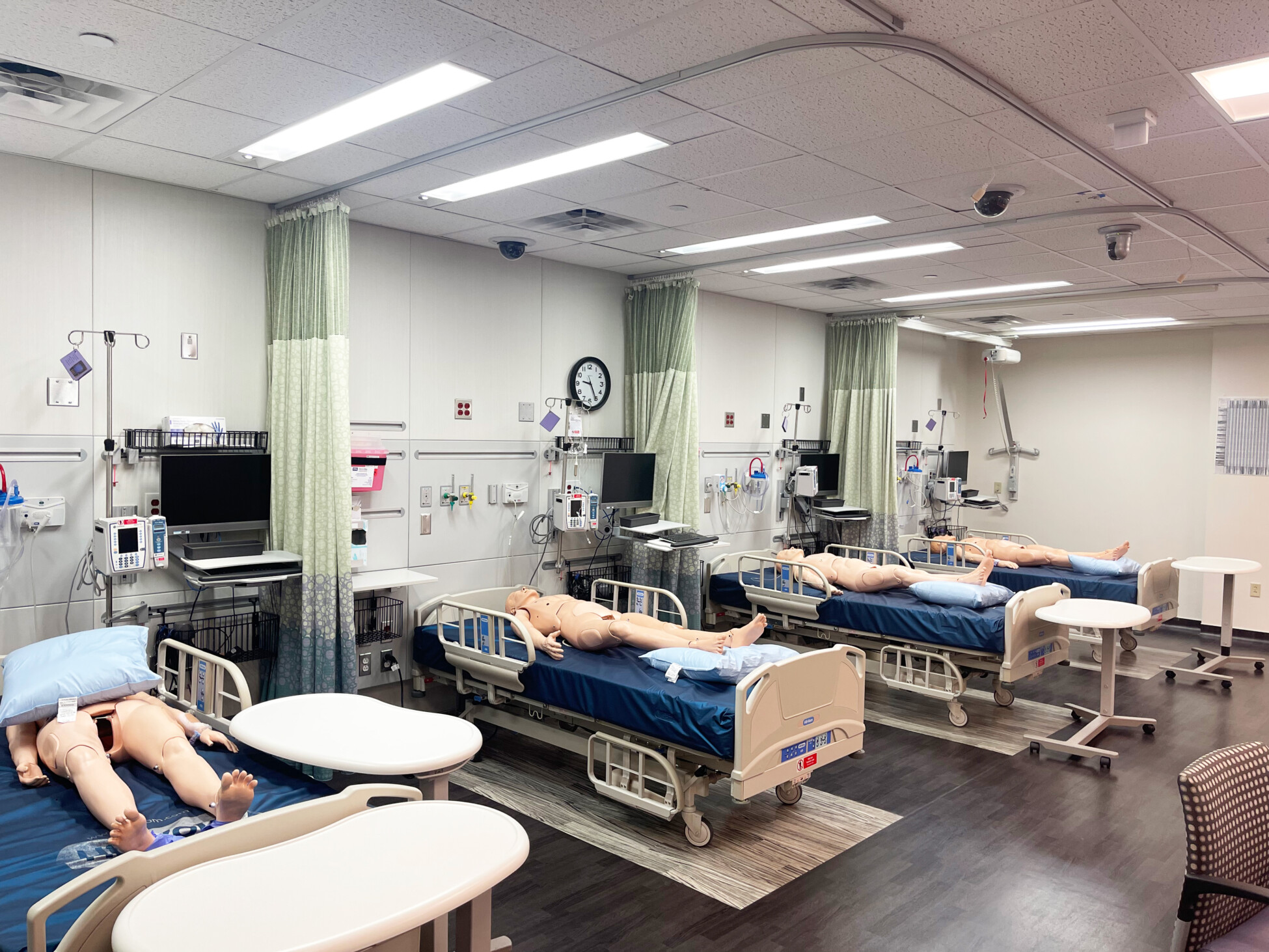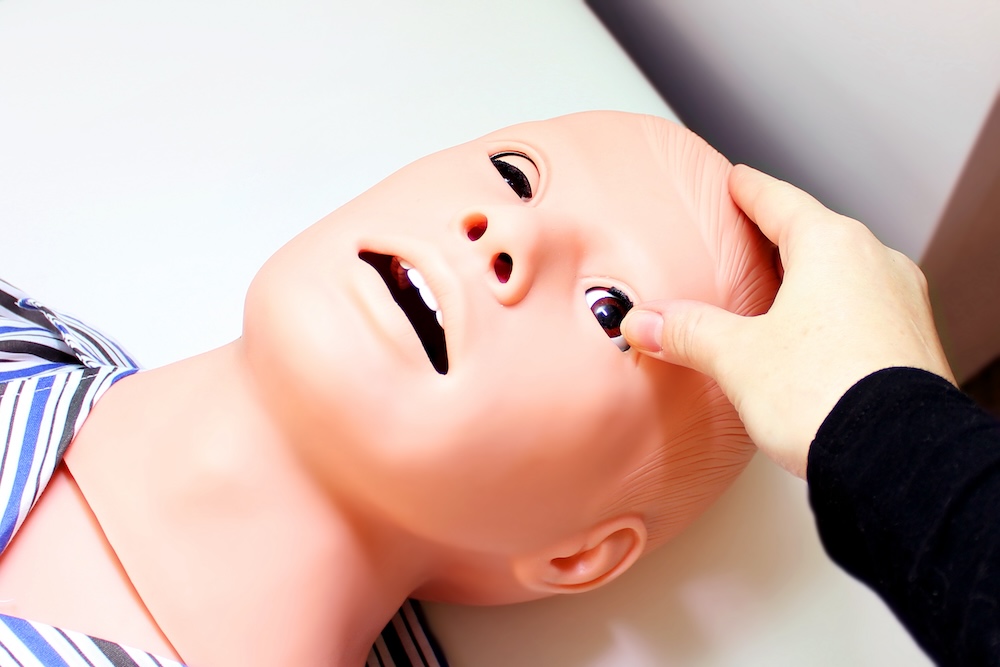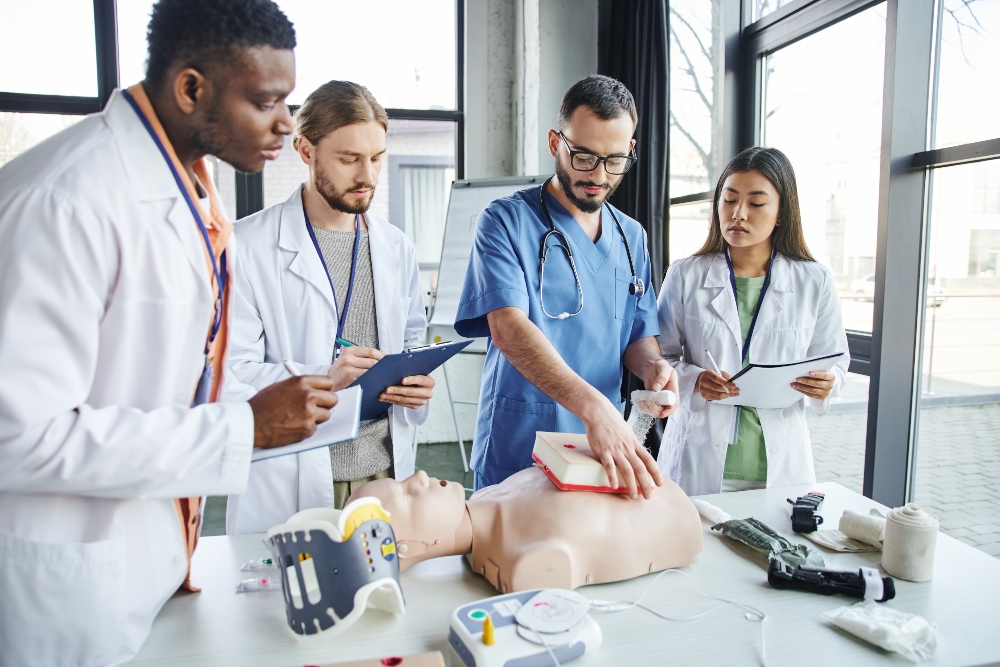

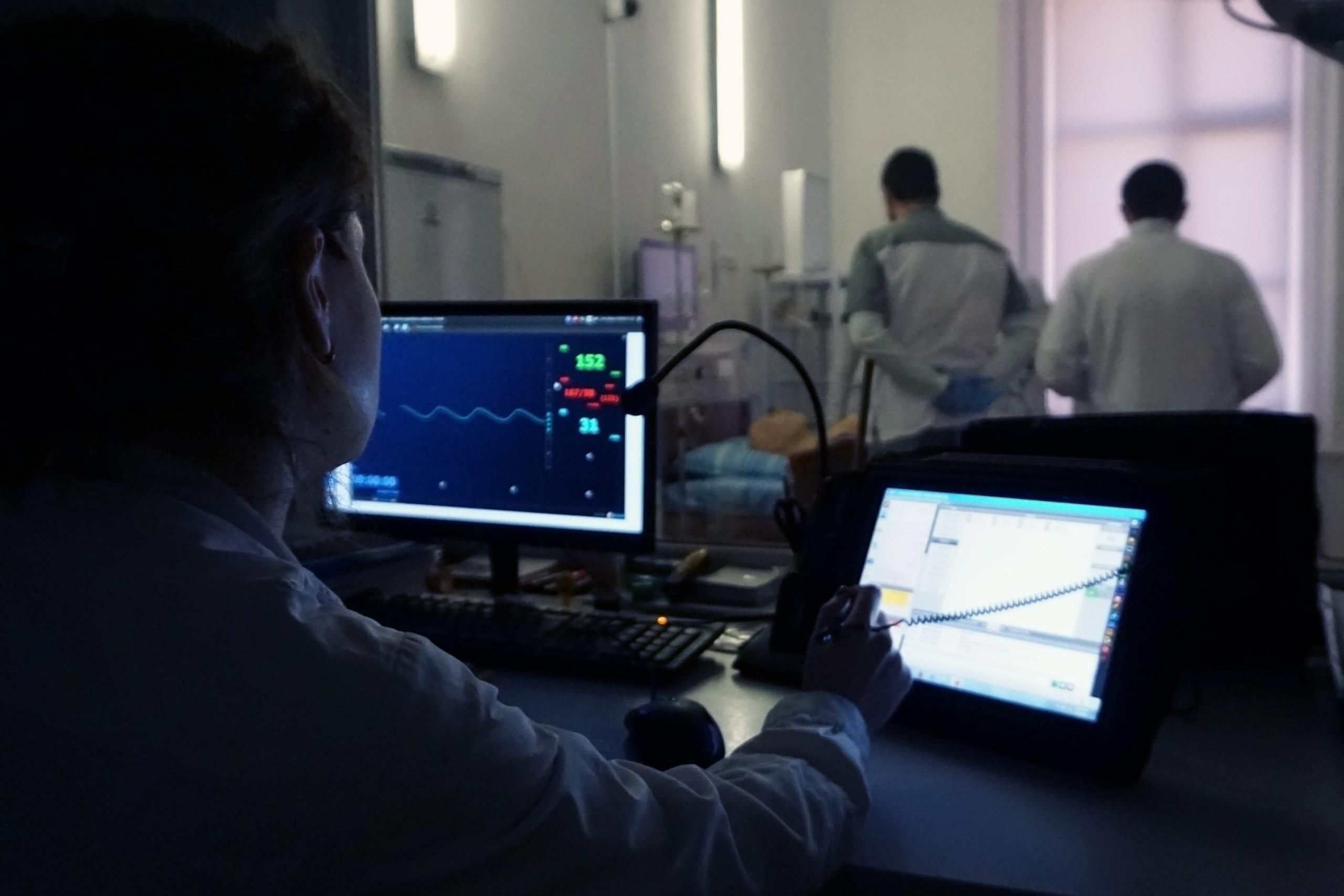
A Simulation Center is a dedicated area within a healthcare education building, medical center, hospital or training facility which is devoted to healthcare simulation. Healthcare organizations simulate clinical care activities at healthcare simulation centers which may include some or all of the following: use of life like and high fidelity manikins with varying levels of complexity (human patient simulation), virtual reality computerized animations, virtual simulations, specialized trainers for repeated practice of medical interventions (task trainers) and actors trained to behave and respond as patients (standardized patients). Across the world these immersive educational facilities are often called Simulation Centres.
All healthcare simulation educational methodologies are designed to instruct doctors, nurses and other healthcare practitioners through a process of immersive learning in which the learners respond to various patient clinical conditions and then reflect upon their own responses of clinical care to make changes as needed through debriefing. Nursing simulation, Surgical Simulation, and Healthcare simulation have become widespread in the healthcare field, and hence, there has been a huge increase in the number of Simulation Centers across the globe.
Simulation Centers can vary in size but are dependent on the educational goals of the particular institution that houses the simulation center and the budget for the construction, operation and staff levels of the simulation center. Typically, a sim center will have a clinical simulation scenario room which includes at least one computer-based patient manikin, an observation room and a debrief room. Remote learners or faculty may use the observation room to view the simulation scenario in real time through video casting. The debriefing room should be a separate space from where learners perform the scenario, enabling participants to discuss and reflect on the events. This guided reflection helps to close gaps in knowledge, attitudes, and skills, ultimately improving future patient care.
In many medical simulation training centers, the observation room serves as the debriefing room. In addition, there is usually a separate control room where the simulation technician or operator facilitates the scenario. This simulation team member is sometimes also dubbed a Simulation Technology Specialist who remotely controls the patient manikin, such as the Laerdal SimMan3G. The healthcare simulation technician is also responsible for setting up the clinical simulation equipment and applying any special effects medical makeup called Moulage.
In addition, a clinical simulation educator will be present in the control room. The clinical simulation educator, who often speaks the voice of the patient manikin controls the physiological and spoken responses of the patient manikin. This usually is in response to the clinical interventions of the learners within the healthcare simulation lab. These examples show how a small healthcare simulation center might be set up, as the healthcare simulation community states, “Once you have seen one healthcare simulation center, you have seen one healthcare simulation center.”
View the new HealthySimulation.com Community Simulation Lab Planning Group to discuss this topic with your Global Healthcare Simulation peers!
Now imagine a large-scale healthcare simulation center with multiple clinical sim labs spaces, control rooms and debrief areas. Add in patient clinical examination rooms with standardized patients, rooms full of task trainers, banks of computers and conference facilities and the simulation center could easily occupy thousands of square feet. These simulation centers cost millions of dollars to build and operate and are only found in larger medical centers and universities. Funding for simulation centers comes from donations, grants and university/medical center funding. Some simulation centers generate funds by renting out their spaces to other institutions or offering courses for which they charge a fee.
To build a simulation center, this involves a huge amount of planning. All the stakeholders come together and have input into the construction. The technical logistics and equipment required are complex. Some simulation centers have clinical simulation laboratories that exactly mimic an operating room, a delivery room, an emergency department, a medical surgical floor room, an ICU room etc. Experts from medical specialties and clinical simulation educators need to have input into the planning phase of the construction. Once the construction is complete, funds will be needed for ongoing maintenance, repair and replacement of healthcare simulation equipment as it ages and requires replacement.
Importance of Working With Experienced Sim Center Design Consultants
Working with architectural firms that have proven healthcare simulation center design experience is essential for ensuring facilities fully support modern education, training, and operational needs. These specialized firms understand critical considerations such as workflow design, sound isolation, A/V infrastructure pathways, storage requirements, and the spatial demands of high-fidelity manikins and clinical equipment. Partnering with medical simulation design consultants further helps organizations avoid costly mistakes—such as door frames too narrow for patient beds, improper ceiling support for lifts or cameras, or overlooking HVAC capacity in server rooms—which can lead to expensive rework and long-term operational inefficiencies. By engaging experts early, programs can maximize space utilization, enhance learner realism, and protect their investment. The HealthySimulation.com vendor directory provides a curated list of leading architectural firms experienced in healthcare simulation center design, helping institutions find the right partners for their projects.
Engaging a specialized consultant to design A/V systems, including recording platforms, server and storage rack configurations, control room layouts, and debriefing room displays, provides simulation programs with a strategic advantage during new construction or renovation. These experts help institutions select reliable, interoperable products, plan proper conduit and cable pathways, ensure adequate electrical and cooling capacity, and design user-friendly spaces that support effective teaching and documentation. Without this guidance, organizations risk costly oversights that may only surface after walls are closed, requiring disruptive and expensive retrofits. Investing in proper A/V design during construction represents the ounce of prevention that can save the pound of correction—protecting budgets, reducing downtime, and ensuring the simulation center is equipped for long-term technological growth.
Most Common Simulation Center Staff
Clinical simulation centers need a strong team of qualified professionals to deliver simulation-based education, manage schedules, and provide essential oversight for the center’s success. The Director of Simulation is responsible for providing strategic leadership for the entire healthcare simulation program, ensuring alignment with institutional goals, accreditation standards, and evidence-based practice. This role oversees program operations, budget, staff, curriculum integration, and long-term development.
In addition to the Director of Simulation, the Simulation Educator designs, facilitates and debriefs clinical simulation experiences. This role supports competency development for the specific health professions education program by applying educational theory and the Healthcare Simulation Standards of Best Practice to maintain high-quality simulation activities that improve learner outcomes and patient safety.
Simulation centers which utilize Standardized Patients, also called Simulated Patients (SPs) will have a coordinator position who is responsible for recruiting, training and managing the SPs who portray realistic clinical scenarios for learner assessment and education. This role collaborates closely with the simulation educator and simulation operator specialist for script development and adherence, performance feedback and fidelity consistency.
View the HealthySimulation.com Webinar Important Considerations When Designing a New Simulation Center to learn more!
The Simulation Technology Specialist, also called the Simulation Operations Specialist (SimOPS), is an essential part of the Simulation Center who operates and maintains the complex equipment. This includes A/V Systems, computers, surgical and manikin simulators, virtual reality equipment and other technology-based systems. Often, the SimOPS personnel are the team member who ensures the scenario runs smoothly by setting up the environment, patient programming and moulage application.
In a few simulation centers, new medical products like those from Laerdal, Elevate Healthcare or Gaumard are tested and researched. There is the ability to practice new surgeries and new protocols for medical procedures are able to be developed in the simulation center environment. These rather specialized activities add another layer of complexity and also opportunity for innovation to simulation centers.
Simulation centers offer organizations a valuable opportunity to generate revenue through multiple sustainable pathways. One of the most common approaches involves delivering Healthcare Simulation courses, workshops, and certification education programs across all levels, where participants pay to attend high-quality experiential training. Beyond education, Simulation Centers increasingly serve as a controlled environment for internal and external research, providing a safe and standardized setting to study clinical processes, test interventions, or validate new protocols. Product development teams in other industries, such as film development companies, will also pay for space use to produce movies or commercials. These diverse revenue streams position Simulation Centers as a strategic asset that supports innovation, education and organizational growth.
Simulation Center Accreditation
Simulation center accreditation is possible through global groups, including the Society of Simulation in Healthcare (SSH), Society in Europe for Simulation Applied to Medicine (SESAM), Association for Simulated Practice in Healthcare (ASPiH), and Association of Standardized Patient Education (ASPE). The International Nursing Association for Clinical Simulation and Learning (INACSL) also has the Healthcare Simulation Standards Endorsement Program, an international quality-assurance initiative to recognize organizations which consistently apply the standards of best practice to their simulation programs. Accreditation and endorsements serve as external validations that demonstrate an organization or institution’s excellence in designing, delivering, and evaluating healthcare simulation.
The Simulation Center offers a valuable opportunity to enhance health professions education, ultimately leading to improved patient care and safety. Donors and sponsors, including hospital and university foundations, often choose to support these centers through endowments and donations. These contributions help fund the immersive, hands-on training that prepares healthcare professionals for real-world challenges, ensuring a lasting impact on the quality of healthcare in future generations.