
One essential element of healthcare simulation is the use of moulage to enhance clinical realism. Simulation educators, specialists, or technicians use makeup, props, and prosthetics to create injuries or conditions on manikins and standardized patients. While the “shock and awe” factor can capture attention, simulation educators must ask: Does the moulage align with the scenario’s objectives? This HealthySimulation.com article by Ciara Berry, DNP, RN, CHSE, CNEcl, explores the importance of intentional use of moulage in healthcare simulation, the connection to expected outcomes, the risks of excessive use, and the value of strong collaboration between simulation faculty and operations teams. Download the checklist below!
The Importance of Moulage in Medical Simulation
Moulage helps support suspension of disbelief in simulation by creating a realistic clinical scene. The International Nursing Association for Clinical Simulation and Learning (INACSL) highlights that moulage can enhance the physical fidelity of a scenario to help learners achieve the scenario outcomes. Accurate use of wounds, bruises, or skin changes provides visual cues that match the scenario goals. This level of detail helps guide learners toward correct assessment and clinical action. Moulage adds value by enhancing realism and helping learners treat the scenario as a true patient-care experience.
Moulage helps cue learners to critically think through visual representation. Cyanosis around the lips or small pinpoint rashes may signal a respiratory or blood-related concern. These signs push learners to prioritize appropriate actions. When done with intent, moulage helps immerse learners in the scenario and reinforces retention of clinical knowledge. However, moulage must serve a clear educational purpose. While some applications may evoke surprise or discomfort, shock alone should never justify using moulage. Instead, moulage should function as a deliberate instructional aid that helps the learners navigate toward the learning objectives.
View the HealthySimulation.com Webinar Ouch! An Introduction on How to Create Realistic Trauma Moulage to learn more!
Moulage’s Role in Matching the Clinical Training Objectives
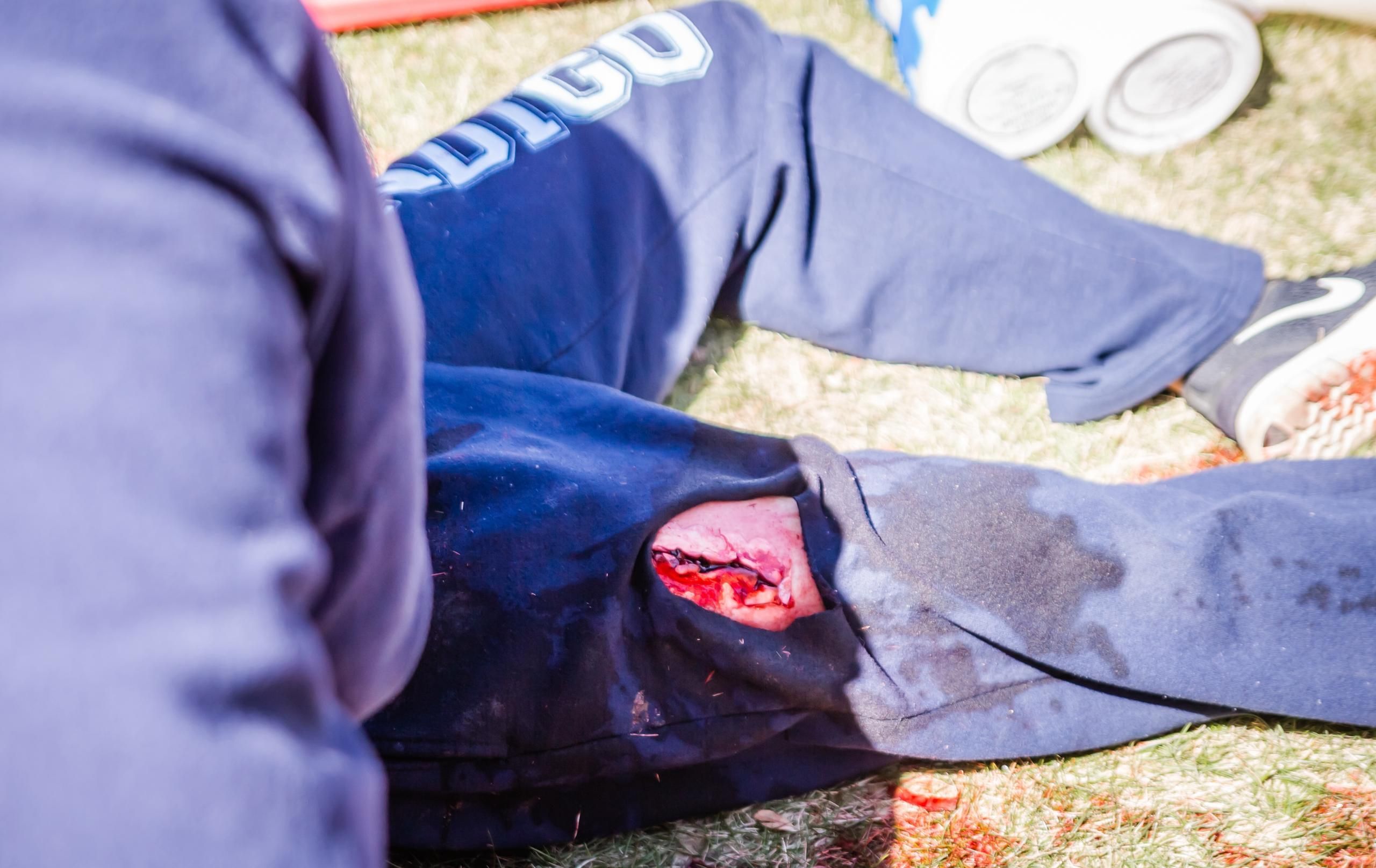
When matched with the scenario’s purpose, trauma moulage can support a wide range of learning outcomes. For students early in their education, clinical moulage supports physical assessments by presenting realistic signs and symptoms for visualization. Advanced students can enhance their clinical judgement skills through assessment and recognition of more complex cues. Consider a trauma scenario with a compound fracture. Exposed bone, active bleeds, and debris in the wound direct learners towards key priorities such as hemorrhage control and infection prevention. In a different case, bruises and torn skin on an older adult may raise concerns about abuse and guide the learner to use effective communication to advocate for the patient.
Moulage makeup also helps to prepare learners for the reality of traumatic clinical environments. Some learners may feel discomfort or fear when they encounter complex clinical presentations while in clinical rotations. Simulation and moulage give learners a chance to face and manage emotional responses to realistic clinical presentations before they encounter them in real situations. Prebriefing provides an important opportunity to prepare learners for the visual and emotional elements they may encounter during the clinical scenario. Facilitators must take care to protect psychological safety and create a supportive environment where learners feel safe to fully engage in scenarios with higher levels of physical fidelity.
Faculty can use moulage to help learners achieve specific learning goals. For example, if airway safety is the focus of a burn simulation, applying moulage to the face, neck, or chest can visually cue the presence of these injuries and prompt learners to recognize and address potential airway complications more quickly. The intentional use of moulage captures learners’ attention, reinforces clinical prioritization, and increases the likelihood that they will meet the activity’s learning objectives.
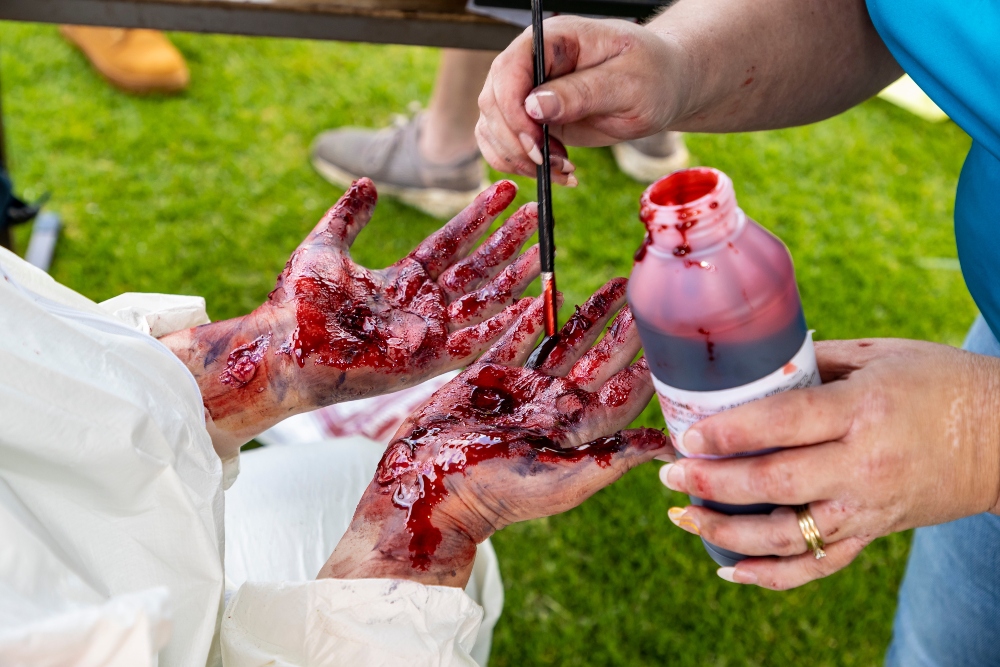
Moulage products include simulated body substances like mucus and vomit, trauma moulage, moulage kits, simulated wounds, moulage crafting materials (like makeup), silicone models, trauma skills trainers, simulated blood, olfactory smells, replaceable patient skins, and more.
Not Too Much Moulage: When Realism Becomes a Distraction
While moulage can enhance immersion, excessive or inaccurate use can work against the scenario’s purpose. When a simulation experience is planned, the simulation team should consider what moulage is desired and why.. Teams should intentionally consider the needed level of fidelity and how realistic the moulage must be to best support the learners in meeting their outcomes.
Sometimes, the moulage just does not fit the story. A COPD scenario should not include wounds that resemble significant trauma injuries unless recognition or treatment of that trauma is a specific part of the scenario and learning objectives. Poor alignment may lead learners to draw incorrect conclusions or miss the intended focus. The key is balance. Moulage should provide just enough realism to support recognition of key cues and prompt clinical actions. Before any scenario, simulation faculty should ask: Does this application of moulage support or hinder the learner’s ability to reach their learning objective? If not, the team may need to revise or reduce the moulage to keep learners on track.
View the new HealthySimulation.com Community Moulage Group to discuss this topic with your Global Healthcare Simulation peers!
Collaboration Between Simulation Educators and Operations Teams to Streamline Processes
Effective moulage depends on strong teamwork between simulation educators, faculty, and the simulation operations staff. Simulation specialists may have experience in makeup, special effects, or technical setup. Faculty and educators bring both clinical and simulation expertise that allows them to understand which type of moulage would best help learners achieve the scenario objectives. Strong collaboration allows both sides to combine their strengths. Faculty can identify critical cues, and operations staff can build a realistic, accurate setup. This ensures that each scenario uses purposeful moulage rather than decoration without intent.
Functionality is also important. Does the moulage need to last through multiple sessions, or only used once? Will learners need to touch, assess, and treat the injury represented by the moulage? The team must consider each of these factors to decide what to include and how to integrate them into the scenario. Moulage that lacks the necessary functionality and may not maintain realism throughout the scenario can reduce learner engagement as the scenario progresses.
After each session, the simulation team should reflect on the experience. Did learners notice the moulage? Did moulage help or cause confusion? These insights guide scenario improvement and help support better outcomes over time.
Download the Moulage Design Checklist Here!
To streamline the process, simulation teams can create a moulage checklist linked above. This ensures that all members of the simulation team understand what each scenario requires and promotes consistent use across the program. A moulage design checklist can help ensure that each simulation scenario aligns with the intended objectives and provides a clear guide for faculty and technical staff to work together accurately and consistently. The checklist outlines which visual cues to include, based on the scenario goals, and helps avoid unnecessary or distracting details. A checklist also supports standardization across sessions and campuses, creating a consistent experience for all learners. After the scenario, the checklist allows the team to evaluate the effectiveness of the moulage and adjust as needed to improve future sessions.
Vendors which provide moulage crafting materials include TraumaSIM, Moulage Concepts, Military Moulage, Reynolds Advanced Materials, and others. More moulage vendors can be found globally in the new HealthySimulation.com Vendor Directory.
Be Thoughtful with the Use of Moulage in Healthcare Simulation
Moulage can help turn a simple simulation into a powerful tool to support learner development. Far more than makeup or blood, moulage provides cues that prompt learners to think critically and apply their skills. However, to deliver full value, moulage must be closely tied to scenario objectives and reflect a purposeful design. When facilitators work closely with the operations team and focus on intentional use of moulage, simulation programs can deliver more meaningful, effective experiences. The right use of moulage not only “wows” the learner but also builds skill, confidence, and clinical judgment. The best moulage should support, not overshadow, the overall purpose of the simulation scenario.
Check out TrumaSIM’s Trauma Moulage Course with Optional Kit!