
The power of trauma simulation lies in the learner’s ability to suspend disbelief the moment a clinical environment feels so authentic that the training becomes a high-stakes reality. While advanced patient simulators provide physiological responses, the visual and tactile realism is often achieved through moulage. The Healthcare Simulation Dictionary (pg. 23) defines moulage as “Techniques used to simulate injury, disease, aging, and other physical characteristics specific to a scenario; moulage supports the sensory perceptions of participants and supports the fidelity of the simulation scenario through the use of makeup, attachable artifacts (e.g. penetrating objects), and smells.” Moulage dramatically escalates the fidelity of a scenario. For programs focused on emergency and trauma care, moulage mastery is not merely an aesthetic choice; moulage is a critical component that enhances immersion, triggers emotional responses, and ensures the accurate assessment and treatment of injuries to promote patient safety. This HealthySimulation.com article by contributor Dr. Mario Arturo Luna Lamas is a guide that outlines the essential medical simulation techniques required to create impactful and realistic trauma moulage for your simulation center.
Importance of Clinical Moulage in Healthcare Simulation
The importance of realistic trauma moulage cannot be overstated. When a student encounters a wound that looks, feels, and bleeds accurately, the immediate cognitive and affective response mimics that of a real-world emergency. This heightened realism compels learners to prioritize, communicate effectively, and manage their stress, all of which are essential skills in high-pressure situations like a motor vehicle accident or a battlefield scenario. The investment of time in the creation of moulage, whether for surgical simulation or initial triage in the simulation lab, optimizes the learning environment and maximizes return on investment for the entire program.
Foundational Clinical Moulage Kits and Supplies
A highly effective trauma moulage kit does not require excessive expense. However, moulage does demand the right mix of materials. The foundation of any kit should include non-toxic, skin-safe products. Essential items include:
- Wax and Clay: Modeling wax, often called trauma or scar wax, is crucial to create three-dimensional effects, like bone protrusions, laceration edges, and embedded foreign objects.
- Silicone and Gelatin: These materials are used to create realistic skin textures and blisters. Gelatin is inexpensive and easy to use, but lacks the durability of silicone, a material that allows for reusable wounds.
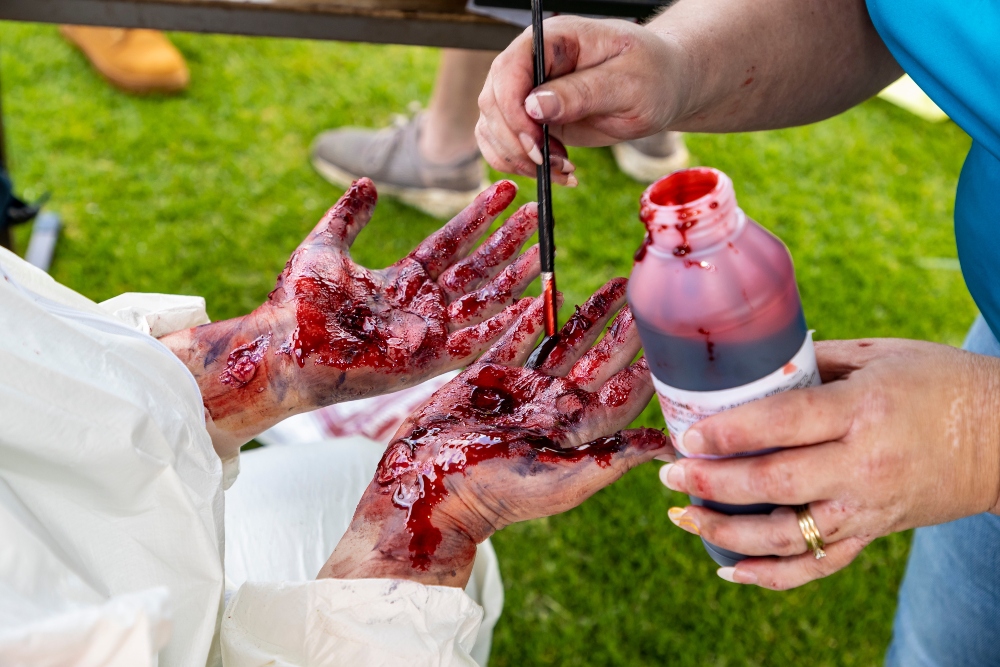
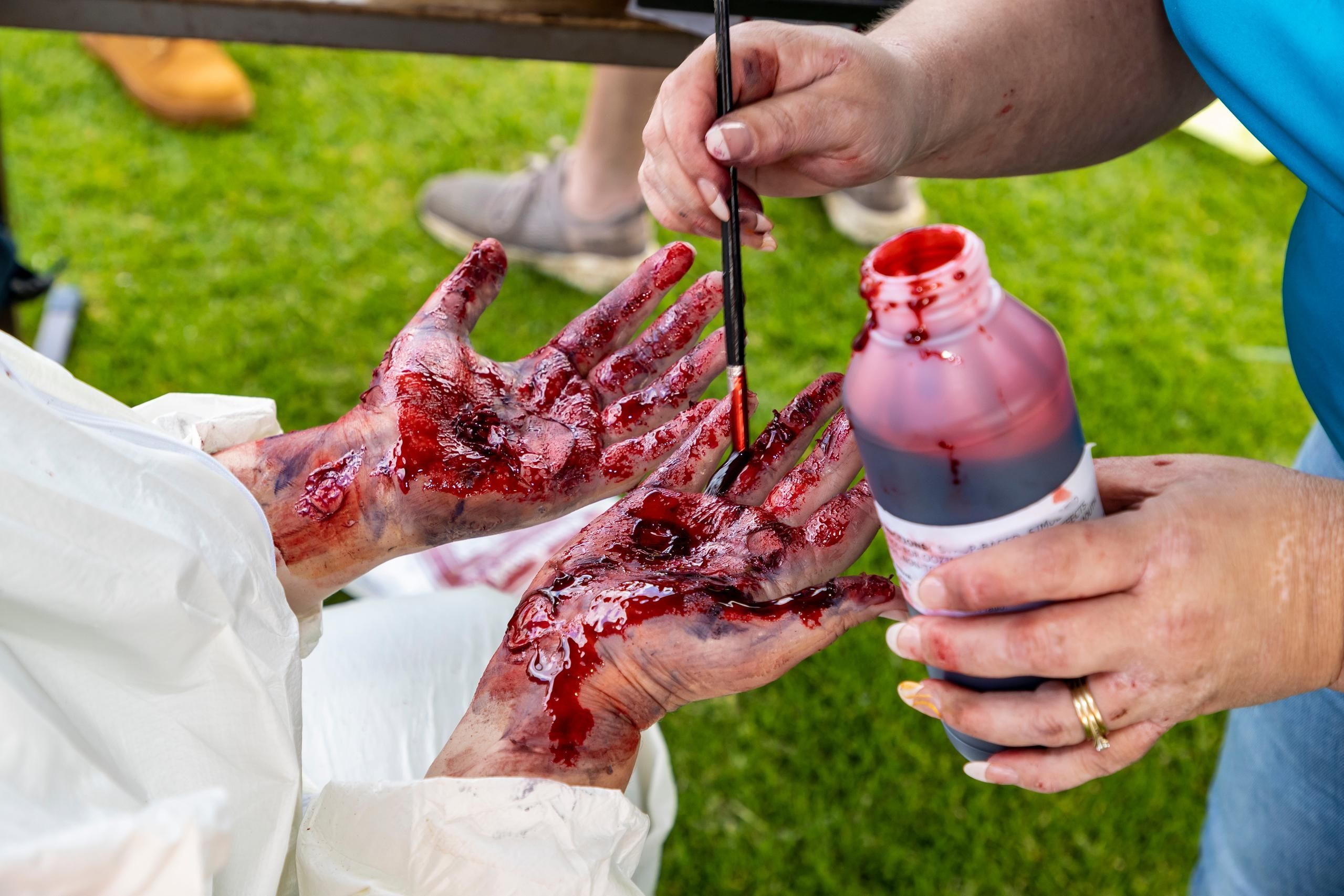
- Simulated Blood: A variety of simulated blood is needed: thick, coagulated blood for older wounds; dark, venous blood; and bright, arterial blood. One must understand the viscosity and color appropriate for the type and age of the injury one prepares.
- Coloring Agents: A selection of theatrical makeup (creams and powders) in shades of red, blue, purple, yellow, and green is necessary to simulate bruising, pallor, and tissue damage.
The most effective approach involves standardization of the moulage kit for rapid setup. The organization of supplies by injury type (e.g., burn kit, laceration kit) speeds up preparation time, which is often limited in a busy simulation center.
View the HealthySimulation.com Webinar Ouch! An Introduction on How to Create Realistic Trauma Moulage and TraumaSIM’s CE Course TraumaSIM’s Introduction to Moulage Course & Optional Kit to learn more!
Creation of Realistic Lacerations and Abrasions
Lacerations are common in trauma scenarios and require careful attention to detail. For a deep cut, the moulage technician should use a thin layer of modeling wax to build up the skin edges, to create a clear break or tear. One must ensure the edges look irregular, as real-world trauma rarely produces clean lines. Using a small tool or brush to stipple the surrounding skin area with a mix of red and brown makeup simulates mild bruising and dirt.
For abrasions (scrapes), a layer of liquid latex or a small amount of gelatin can be applied thinly and allowed to partially dry. Then, gently pat the area with a dark brown or black cosmetic sponge to simulate gravel or road rash embedded in the skin. The final step involves the application of a thin, controlled flow of simulated blood to pool lightly in the wound, to ensure the blood flows in a manner consistent with gravity and the patient’s position. This attention to detail dramatically increases the high-fidelity simulation experience.
Simulation of Burns: Depth and Appearance
Burn simulation can be a challenge because the visual appearance changes drastically with depth for first-, second-, or third-degree burns.
- First-degree burns (superficial) should appear reddened and slightly swollen. The technician should use a light, flushed red makeup and gloss to simulate moist, inflamed skin.
- Second-degree burns (partial-thickness) require the formation of blisters. Small water- or glycerin-filled bubbles, secured with a thin layer of liquid latex or prosthetic adhesive, effectively mimic blisters. The surrounding tissue should show mottling.
- Third-degree burns (full thickness) are often dry, leathery, and charred. This effect can be achieved by applying gray, brown, and black makeup over the skin, using modeling clay or liquid plastic to create the hard, contracted texture of damaged tissue.
The key to successful burn moulage in clinical simulation is to ensure the location and pattern of the burns match the mechanism of injury described in the scenario.
View the new HealthySimulation.com Community Moulage Group to discuss this topic with your Global Healthcare Simulation peers!
Incorporation of Bleeding and Secretions
The dynamic nature of trauma requires active, controlled bleeding. Static wounds, where blood simply sits, diminish realism. A sim tech must utilize internal or external bleeding mechanisms. Many patient simulators include proprietary bleeding ports that can be linked to external pumps. For scenarios in which the manikin lacks this feature, a simple manual pump system (such as a bulb syringe concealed beneath the clothing or bedding) allows the technician to control the flow and volume of simulated blood.
Beyond blood, the sim tech specialist must include other secretions to fully immerse the learner. Vomit, clear fluid for cerebrospinal fluid (CSF) leaks, and mucus should be prepared using non-toxic food products, such as colored oatmeal or gelatin mixtures. Placing these secretions in clinically relevant locations (e.g., blood near the mouth or CSF from the ear) requires learners to assess the scene comprehensively and apply appropriate barrier precautions. Surgical simulation often requires the ability to create controlled internal bleeding, which prompts the team to act decisively.
How to Maintain Realism in the Simulation Lab Environment
Effective moulage extends beyond the manikin; moulage integrates the injury with the environment of the sim lab. This involves using stage blood spatter on the floor, clothing torn to match the wound location, and debris scattered appropriately to reinforce the trauma narrative. The technician should ensure the scene’s fidelity remains high without the hindrance to the team’s ability to provide safe care.
After the scenario, the moulage must be quickly cleaned and prepared for the next teaching session. The establishment of standardized procedures for cleaning and storing moulage supplies is critical for the long-term efficiency of the simulation center. The reuse of silicone appliances and the maintenance of organized kits minimize waste and maximize the speed at which the sim tech can transition between complex scenarios, which supports the entire medical simulation in the healthcare curriculum.
Training and Continuous Learning in Moulage
Given the importance of this specialized skill, healthcare simulation programs should invest in training for their staff. Dedicated workshops or certification courses in medical moulage provide the necessary expertise in material handling, safety, and clinical accuracy. Continual learning is necessary to keep techniques fresh and introduce new, innovative materials to the process. To help maintain the highest standards of realism in trauma simulation in healthcare, simulation professionals need to share the best practices with other sim tech professionals at conferences or through online communities. This continuous effort ensures the visual fidelity of the scenarios remains cutting-edge, directly contributes to improved clinical performance, and ultimately leads to better patient safety outcomes.