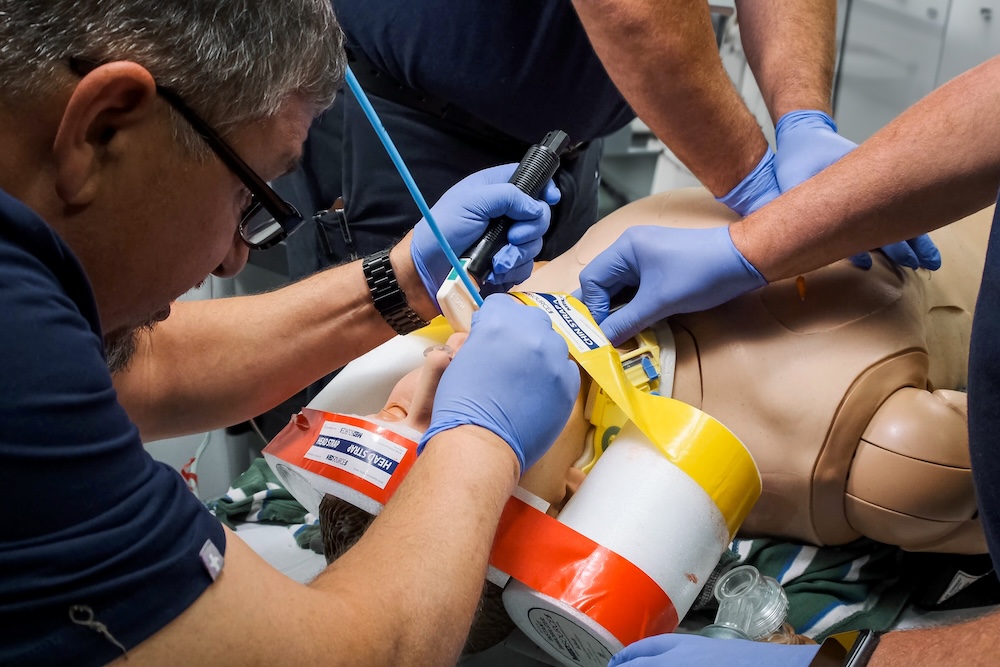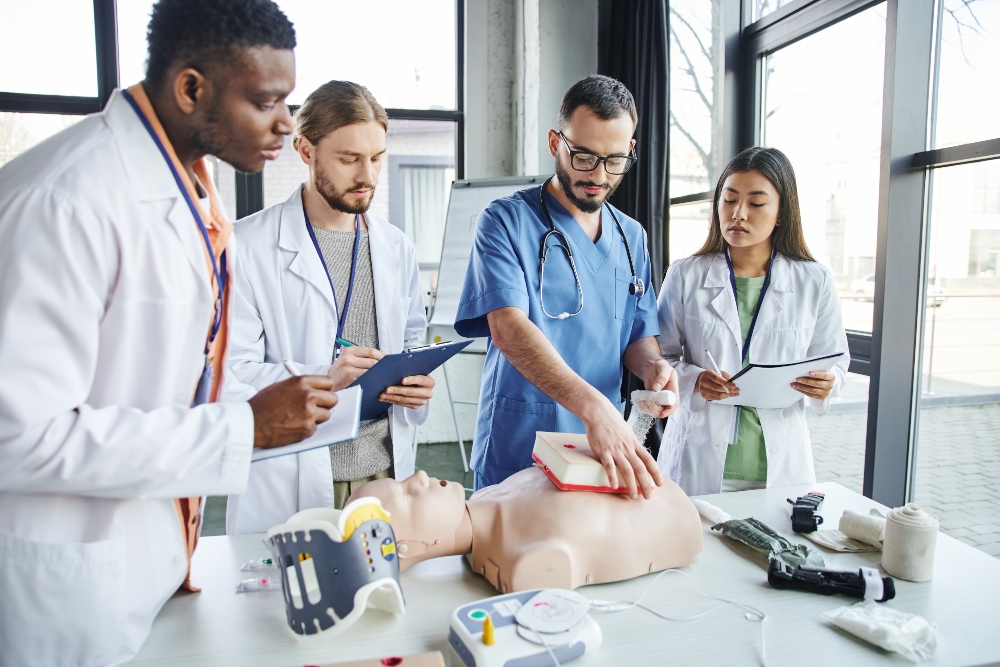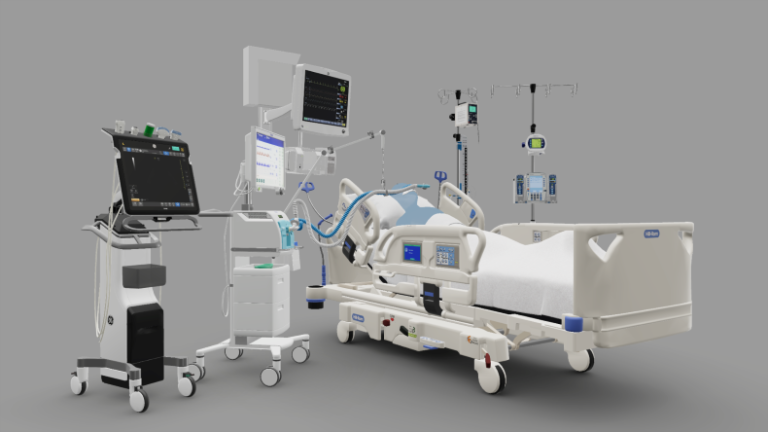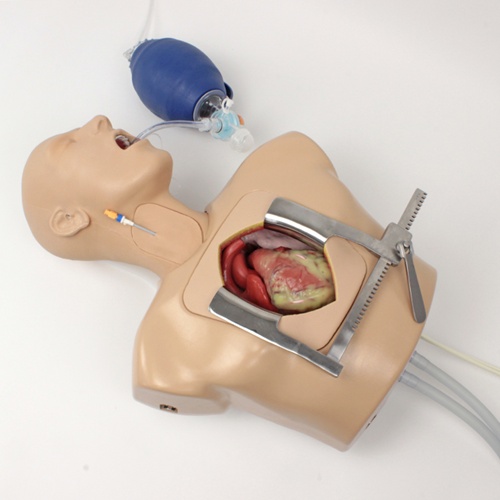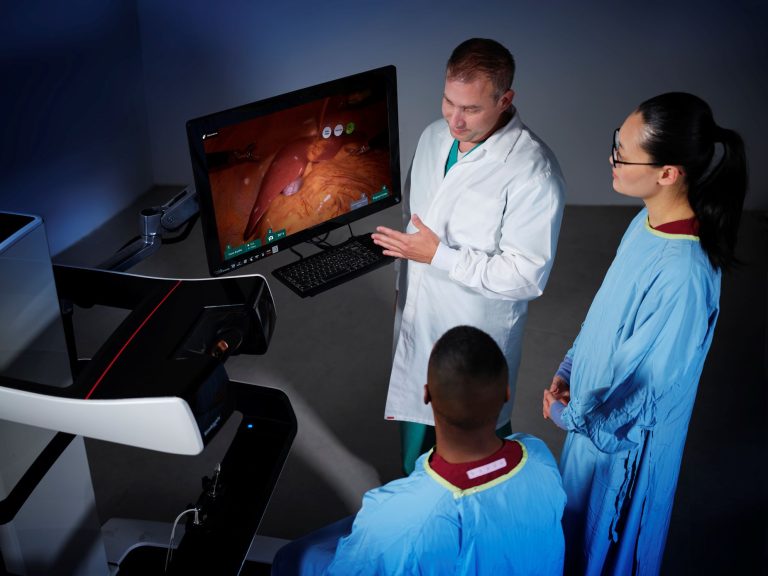


Surgical Simulation is a specialization of medical simulation in which healthcare trainees and healthcare professionals learn modern surgical interventions with the use of surgery simulator technology. Surgery Simulations can range from simple suture practice for a single learner to advanced robotic Surgery Simulations for an entire interprofessional surgical team. Healthcare professionals who focus on education through the use of Clinical Simulation methodologies and technologies should be aware of the various aspects of Surgical Simulation, which includes recent technological advancements, such as virtual reality. This HealthySimulation.com article will provide an overview of surgical simulation.
The Case for Surgical Simulation
The surgical field has long been one of the top medical specialties to incorporate healthcare simulation, alongside the field of anesthesiology. This is due, in part, to the high costs inherent to train surgical learners and trainees along with a lack of access to surgical training materials like cadavers. The stresses and risks of learning surgical techniques in an “on-the-job” fashion makes this a less than ideal option from a patient safety perspective. Surgical learners and trainees require a high volume of exposure to surgical procedures in a safe environment to properly train and acquire the coordinated hand-eye movements necessary to utilize specialized surgical tools and manipulate biologic tissue without risk to human patients.
In response to challenges in the surgical training process, surgery simulators from companies such as VirtaMed, Surgical Science, Simulab, and other vendors have been shown to reduce costs, lessen medical errors, decrease lethal infection rates, and improve provider performance. For example, a technique such as learning to place a central line is an essential skill for emergency medicine and internal medicine physicians to acquire. However, central line access can be difficult for medical students to gain an adequate amount of exposure and practice of this clinical skill while limiting the risk to themselves and their patients. Research has shown that adaptation of a specialized Surgical Simulator, known as a SimuLab CentraLineMan, can provide dramatic cost savings and better prepare students at the critical moment when acquisition of a central line procedure skill is needed. This, in turn, leads to a reduction of central line-associated bloodstream infections at an institutional level.
View the HealthySimulation.com Webinar Operating Room IPE Team Training with Surgical Simulation to learn more!
Types of Surgical Simulators Available
High-fidelity surgery simulators exist but are not limited to specialty fields of laparoscopic surgery, neurosurgery, endoscopic surgery, trauma surgery, cardiac surgery, and interventional surgery. These products can serve a dual purpose which is to help educate new students as well as assistance to current surgical professionals who wish to perfect their mastery of specific surgical skills and techniques. Surgical simulators can enhance the educational process via integrated learning curriculums, performance-based statistical reports (such as tracking the number of movements a surgeon makes while completing a task), and screen records for surgical debrief and assessment purposes.
Surgical Simulation Training and Certification
Because of their valuable real-time 3D rendered animation, haptic feedback devices, and ability to manipulate realistic hardware instrumentation, the surgical community has readily adopted high-fidelity surgical simulators. For example, The Fundamentals of Laparoscopic Surgery (FLS) certification by SAGES requires a skills demonstration through a timed performance of Surgical Simulation exams to qualify for a license. This demonstrates the confidence of educators and credentials of experts in the ability of Surgical Simulation to translate into actual skills proficiency. Some other certifications and courses which use surgical simulation are:
- Fundamentals of Endoscopic Surgery (FES)
- Fundamentals of Robotic Surgery (FRS)
- ACS/APDS Surgery Resident Skills Curriculum
- Advanced Trauma Operative Management (ATOM)
- Basic Endovascular Skills for Trauma (BEST) course
- Orthopaedic Surgical Simulation Labs
- Neurosurgery Boot Camps
- da Vinci Simulation Training Courses
- TeamSTEPPS Surgical Simulations
Specific Surgical Simulator Brands
Leading brands that provide robust Surgical Simulation training systems include Simulab, Elevate Healthcare (formerly CAE), VirtaMed, Simbionix (now a part of Surgical Science), UpSurgeon, Inovus Medical, FundamentalVR, Osso VR, PrecisonOS, Symgery (formally known as OSSimTech), Maxon, Simulab, and Medical-X, among many others. These surgical simulators, which could be digital virtual patient or physical manikin, can help surgical learners in a variety of capacities, which includes increasing their competence in the these surgical areas among many others:
- Chest tube insertion
- Lumbar puncture
- Needle Decompression
- Tracheostomy
- Pericardiocentesis
- Diagnostic Peritoneal Lavage
- IV Cutdown
- Laparoscopy
- Endoscopy
- Ultrasound-guided procedures
- Arthroscopy
- Urologic procedures such as TURP or TURB
- Bronchoscopy
- Spinal surgery
View the new HealthySimulation.com Community Surgical Simulation Group to discuss this topic with your Global Healthcare Simulation peers!
There are multiple vendors that offer surgical curricula, platforms, and courses. Here is just a brief list of examples:
- Elevate Healthcare: Vimedix (ultrasound + procedural), CathLab VR
- ImmersiveTouch: VR neurosurgical and spine simulations
- Surgical Science: Simbionix: LAP Mentor, GI Mentor, URO Mentor, RobotiX
- VirtaMed: ArthroS, HystSim, UroSim, LaparoSim, Accredited simulation-based arthroscopy training
- View the Vendor Directory to Find More Surgical Simulator Companies.
Beyond invasive surgical techniques, basic surgical trainers to practice surgical skills like sutures and suture knot ties are also available from Limbs & Things, Remedy Simulation, Inovus Medical, and many other vendors. These surgical task trainers can help learners of all levels increase their competence and confidence.
The Impact of Surgical Simulation
Surgical Simulation can increase medical students’ and surgical clinicians’ exposure to surgical scenarios. This exposure can also help with other challenges of surgical training, such as standardization. When medical students can train with use of the same Surgical Simulation methods, their performances and outcomes can be more easily assessed and compared. This makes the evaluation process more fair and equitable. Instead of variable materials to practice and learn on.
Some of the benefits of surgical simulation training include deliberate practice to master skills and techniques through repeated and structured feedback. This is not an option with human patients. This can lead to error reduction and proficiency-based progress based on an individual’s performance, not a predetermined timeline. Proficiency is measured through objective assessment to evaluate performance metrics with the uses of validated checklists.
Surgical Simulation can also benefit learners in times of global uncertainty, such as in the COVID-19 pandemic. In the pandemic, the number of students allowed into operation rooms for observation purposes to learn was severely limited, if not entirely suspended. To practice surgical skills on live patients, for those surgical learners who did have access, also posed the risk of viral exposure. However, a simulated surgical environment confers none of these risks. Instead, this allows for a controlled, safe environment in which learners can acquire the surgical skills necessary to advance in their education with a reduction in the risk to themselves and their patients. This means that the acquisition of surgical knowledge does not need to be put on hold, and the crucial education of surgical students can continue uninterrupted, regardless of external factors.
The Role of Virtual Reality in Surgical Simulation
Due to recent advances in Virtual Reality in Medicine, virtual surgery training is a growth sector within the broader field of Healthcare Simulation. One critique of virtual reality in Surgical Simulation is that the manipulation of surgical instruments in virtual reality is not as realistic as the manipulation of these surgical tools in real life. While this may be true now, it may not always be the case. Additionally, the cost-effectiveness of VR headsets and the ability of Healthcare Simulation educators to create an infinite number of new scenarios guarantees that Virtual Surgery training is here to stay. Vendors who provide VR surgery training programs include FundamentalVR, Osso VR, PrecisionOS, Touch Surgery, VirtaMed among others.