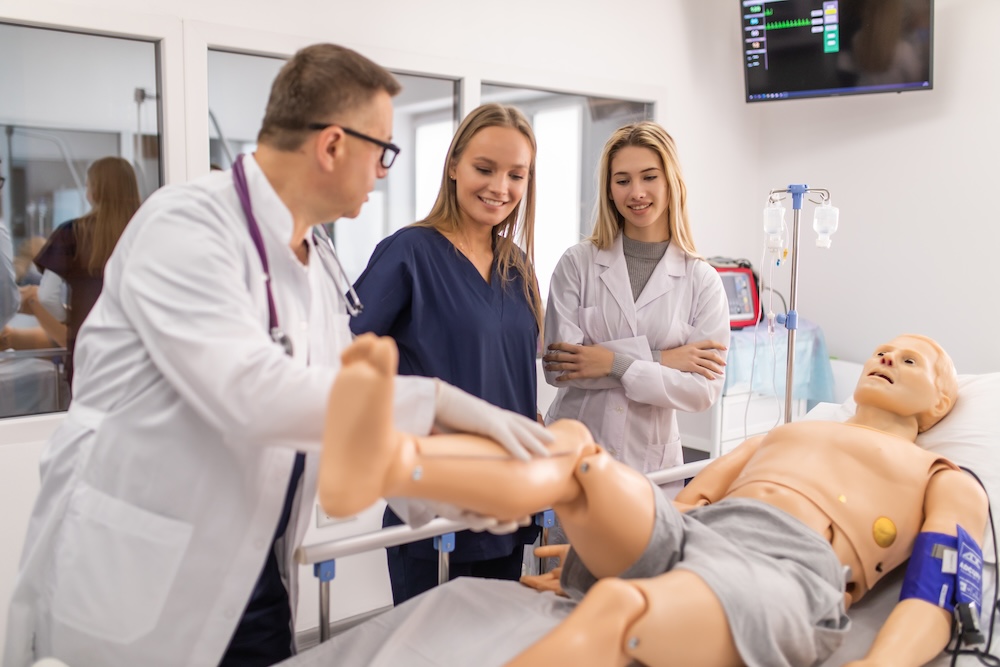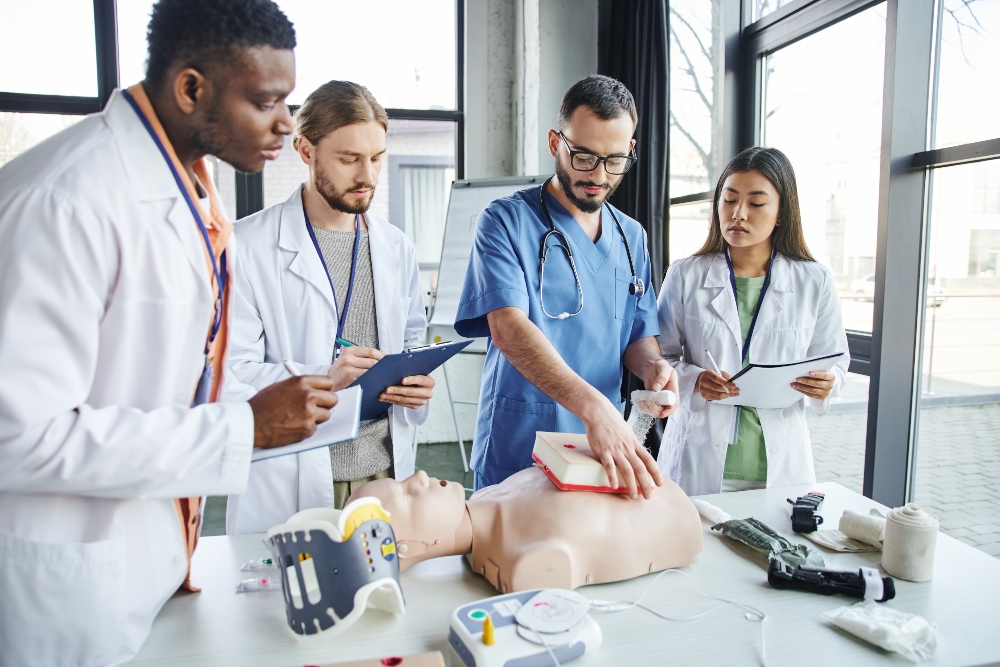

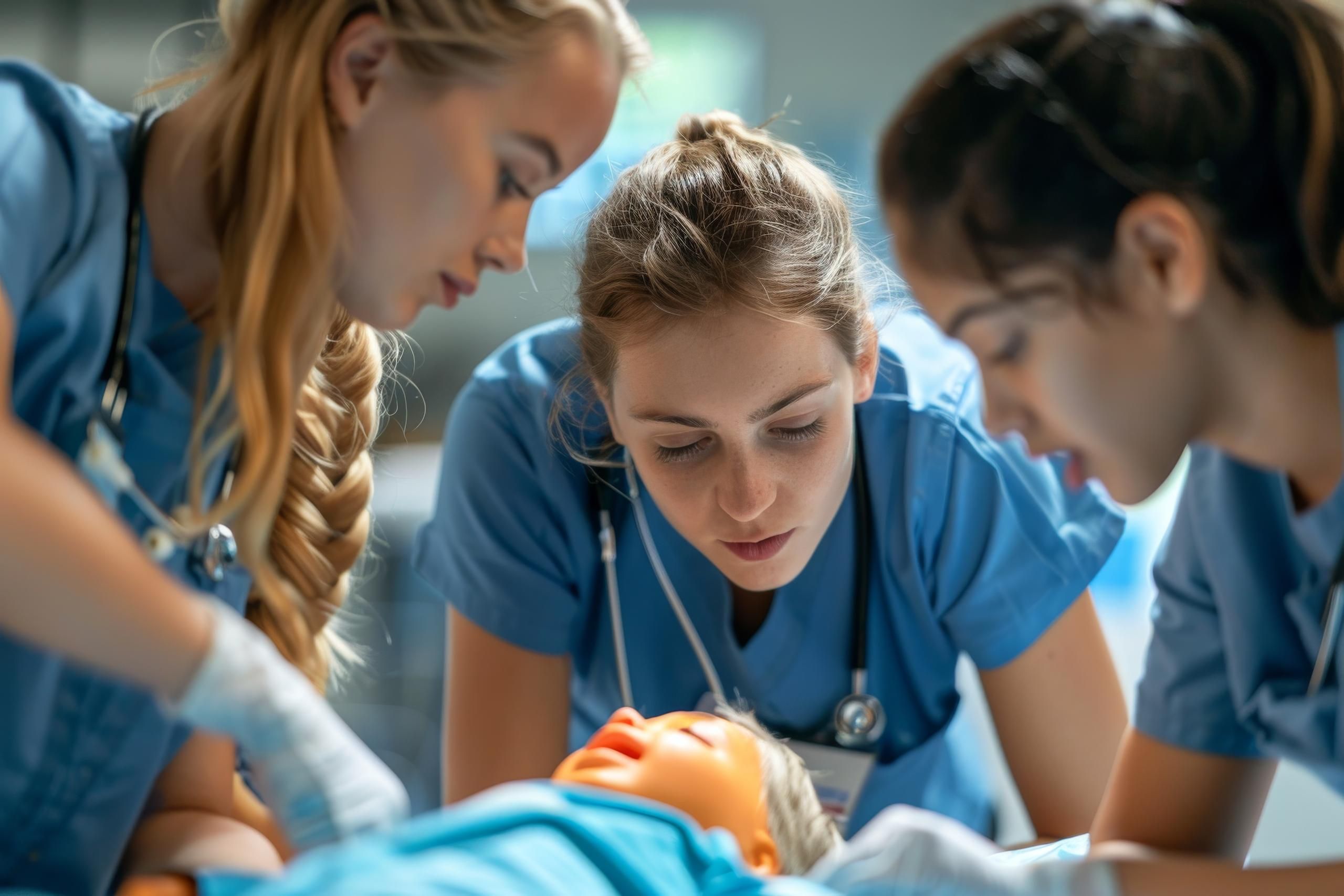
Nursing Simulation-based education begins at the undergraduate and continues into graduate levels as well as for professional development and in situ clinical simulation within medical centers, long-term care facilities, and anywhere that nurses practice clinically. Nursing Simulation is a subset of healthcare simulation and is the modern way to educate and train nursing professionals without the risk of patient injury. Historically, initial nursing education consisted of short periods of classroom lectures intermingled with extensive periods of bedside nursing. Over the last century, nursing education has moved into educational institutions such as community colleges and four-year universities. At these nursing schools, educational methodologies included lectures with visual aids and case studies, skills lab practice, and clinical rotations. Nursing Simulation is the educational foundation for all nursing-related clinical practice across the globe. In this HealthySimulation.com article, nursing simulation practice and resources will be explored.
Key Simulation in Nursing Resources:
- INACSL
- INACSL Standards
- Clinical Simulation in Nursing Journal
- NLN and SIRC
No matter how many lectures a learner attends or how much reading is done, there is no substitute for hands-on experience. Yet, face-to-face patient experience is often limited in undergraduate education. A knowledge gap between theory/skills lab experiences and application to bedside nursing exists. Both nursing students and new graduates often found difficulty in the adjustment to real-life practice. Healthcare simulation gives learners the opportunity to close the gap between theory and clinical practice. Nursing Simulation allows learners to practice and make mistakes in a safe environment prior to assessment and care of real patients in clinical care. Learners are able to play the “what if” game and connect actions and non-actions to outcomes through reflection.
What is Nursing Simulation?
First and foremost, nursing simulation is a teaching strategy and not a technology. People unfamiliar with medical simulation often think that complex and sophisticated equipment is an essential component of nursing simulation. However, nursing simulation is not the equipment but rather the educational methodology, which is the key element and allows students and nurses to “think on their feet, and not in their seat”. Nursing Simulation provides an opportunity for students and qualified nurses to practice their response to various clinical situations and then to reflect on their performance, what went well, and what needs to be changed.
Watch the HealthySimulation.com featured webinar Gain Recognition with INACSL’s Healthcare Simulation Standards Endorsement Program to learn more!
This reflective practice is the key to the development of clinical skills and judgment provided in high-quality nursing care. Only the learners themselves can change their response (behavior) in any given clinical situation. However, nursing simulation gives learners the vessel to be able to refine these clinical responses in healthcare simulation scenarios and to reflect on how to improve in the future.
Nursing Simulation is used not only in formal nursing education but also in medical facilities for mandatory education (e.g. Basic Life Support and Advanced Cardiac Life Support), introduction to new protocols (e.g. sepsis and stroke), and to prepare nursing staff for clinical situations which occur rarely and for which, without regular practice, nurses may be unprepared (e.g. postpartum hemorrhage and pediatric critical events such as the shockable cardiac arrest algorithm). Nursing simulation-based education is particularly useful to train for clinical situations that require a rapid team response and “soft skills” such as communication and team interactions.
Phases of Simulated Nursing: Development of Learning Objectives and Outcomes
Each Nursing Simulation should have a detailed scenario (script) with clearly identified learning objectives. Nursing simulation scenarios are developed by healthcare simulation educators and or content experts in collaboration with subject matter experts. They are designed so that the learners can complete learning objectives within the time allotted to the clinical simulation scenario. The objectives must be SMART: specific, measurable, achievable, realistic, and time-measured. To accomplish the Nursing Simulation outcomes and objectives, the clinical learning experience involves three components: Pre-brief, Scenario, and Debriefing.
Phases of Healthcare Simulation: Pre-Brief
The period prior to a clinical simulation is known as a pre-brief. Depending on the level of the learner, the pre-brief may involve a process to pass onto learners, an introduction of a simulated patient or manikin, ground rules, expectations, and required information for participants to facilitate achievement of the outcomes. Particularly for new undergraduate nursing students, the process to share and send out information up to a week ahead can be useful so nursing students are able to prepare for the healthcare simulation day as they would for a clinical day. Sometimes the pre-brief may consist of a review of clinical care standards that will be applied during the clinical simulation. While at other times, the pre-brief may be limited and given as the clinical situation evolves, as is seen similarly in clinical practice.
View the new HealthySimulation.com Community Nursing Simulation Group to discuss this topic with your Global Healthcare Simulation peers!
Phases of Clinical Simulation: Simulation Scenario
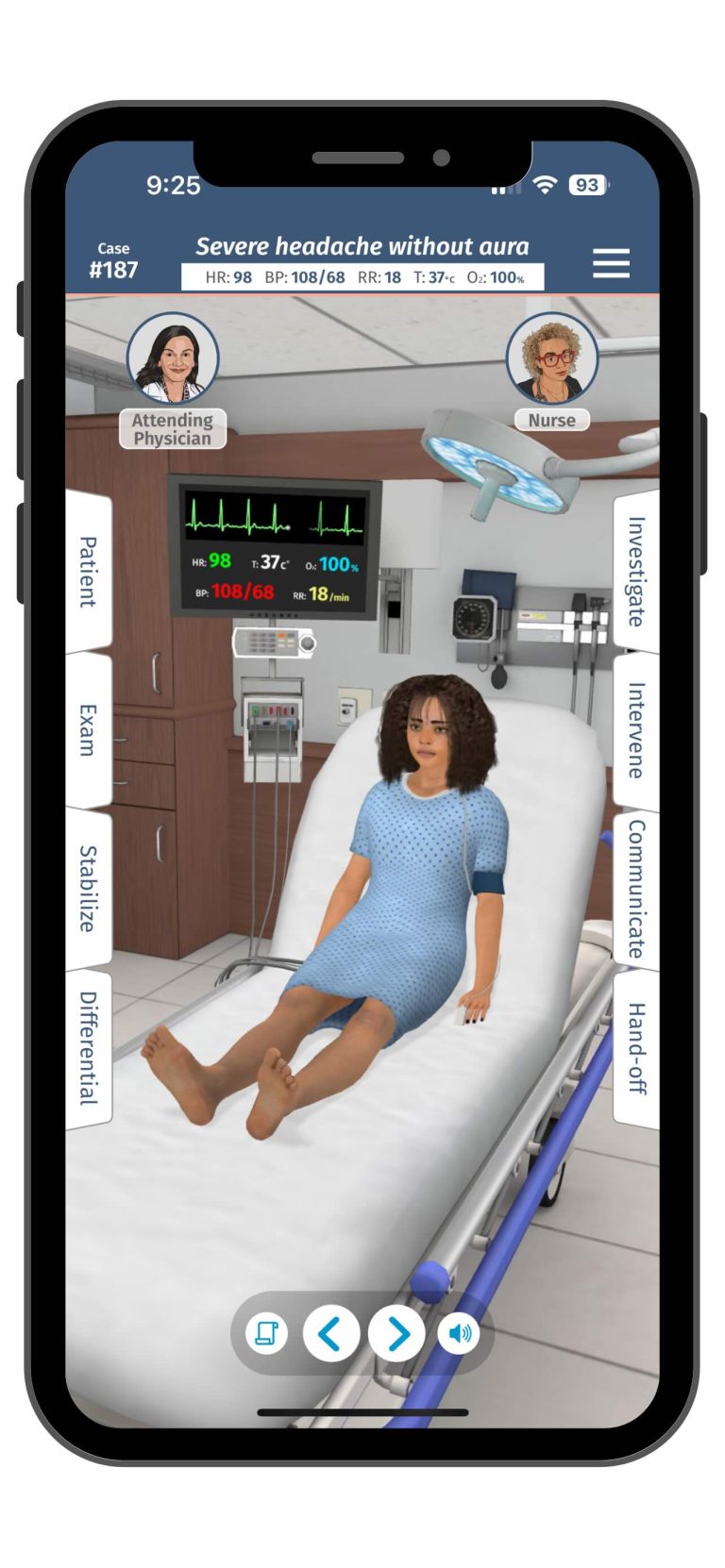
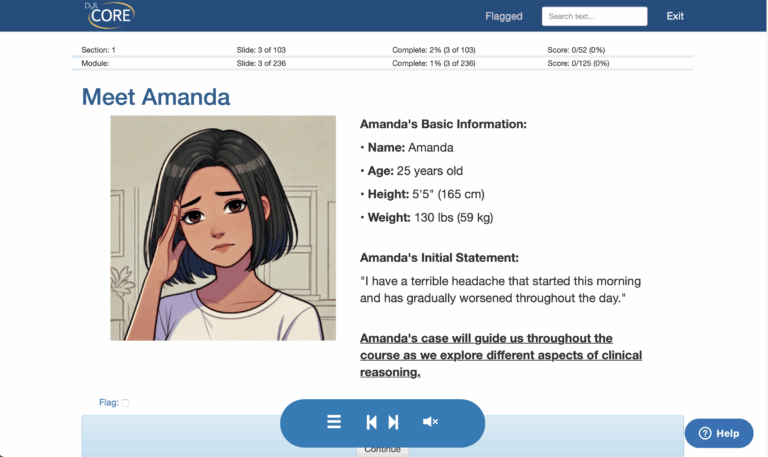
The second component is the actual clinical simulation scenario. The nursing simulation scenario involves the care of a patient (actor, manikin, fellow student, virtual patient, or nurse) with the required medical history. The patient’s response will depend on the interventions of the nurse or student. An attempt is made to match the healthcare simulation scenario to the clinical environment as much as possible. This is known as environmental fidelity, which is usually increased with the use of medical makeup or moulage, to better represent realistic patient presentations.
Without environmental fidelity, learners have to pretend they are using equipment that is absent from the nursing scenario. This detracts from learning through a lack of fidelity and can add to create a situation where students are not prepared to enter clinical practice, and they may not know how to operate clinical equipment in the hospital. This can potentially impact the knowledge base of nursing students and contribute to patient harm, in the worst-case scenario.
Phases of Medical Simulation: Debriefing
The final and most important stage of the healthcare simulation is the clinical simulation debrief. In the debrief, the learner reflects on their own behavior and makes sense of their own performance and whether they need to make changes for next time. A foundation of psychological safety is essential in all elements of nursing simulation, particularly in the debrief of the healthcare simulation scenario, to ensure that learners can learn effectively and safely. There are multiple methods of debriefing. An institution may want to select one type of debriefing, so that all faculty are trained in the same method and learners know what to expect in debriefing.
Benefits of Nursing Simulation
Healthcare simulation literature is full of examples of the benefits of Nursing Simulation in nursing education and training. For any Nursing Simulation to be successful, the school or medical center must ensure that their program is based on current best practice and is taught by well-trained, experienced faculty. Free standards can be found at the International Nursing Association for Clinical Simulation and Learning (INACSL) website.
Many Nursing schools and medical centers have a healthcare simulation laboratory or clinical simulation center (clinical simulation centre) where high-fidelity clinical simulation is conducted and where various healthcare simulation equipment, such as birth simulators, is housed. Nursing Simulation has become such an important part of nursing education that many boards of nursing review and approve healthcare simulation practices at each accredited school.
Nursing Simulation is one of the major teaching methodologies recommended by QSEN (Quality and Safety Education for Nurses) and the NCSBN (National Council of State Boards of Nursing). Nursing Simulation provides students and qualified nurses a safe learning environment where safety, culture, communication, teamwork, rare clinical conditions, bedside emergencies, and many aspects of modern healthcare can be experienced in a realistic environment and a safe space to explore the experience afterward.