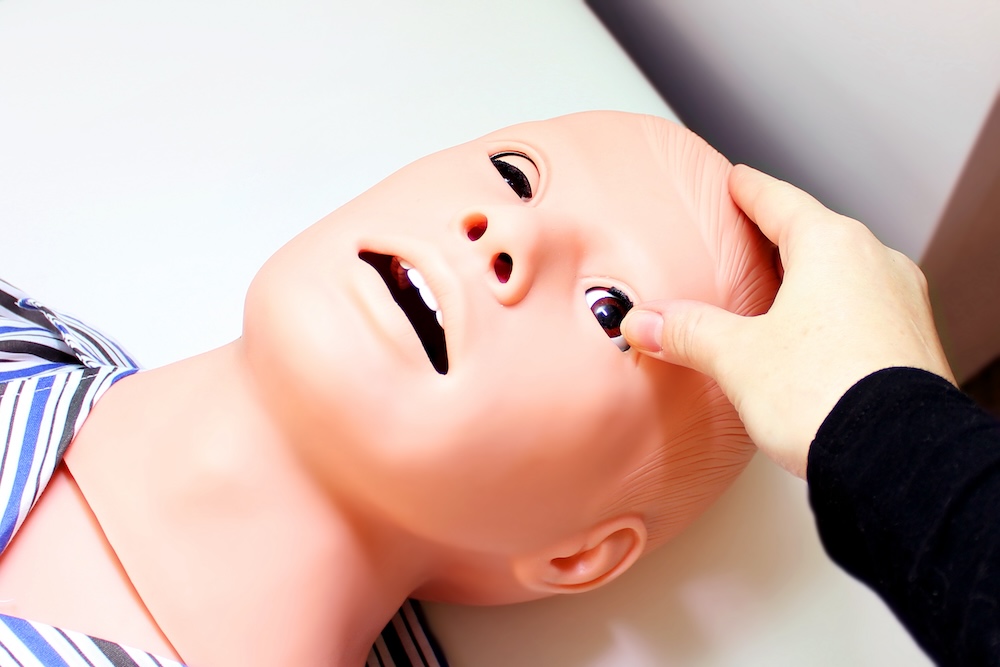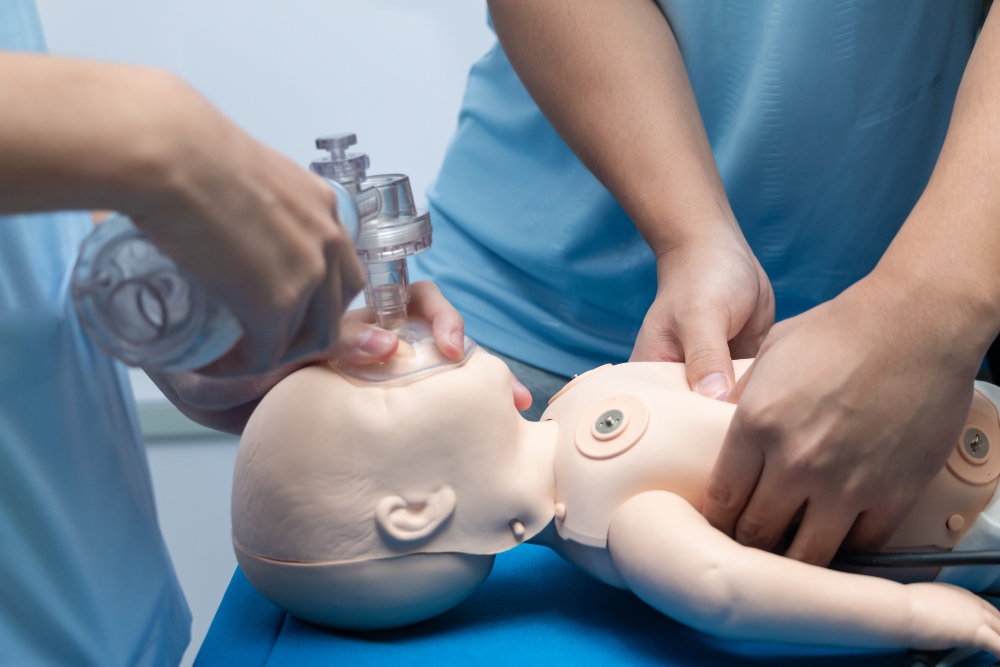

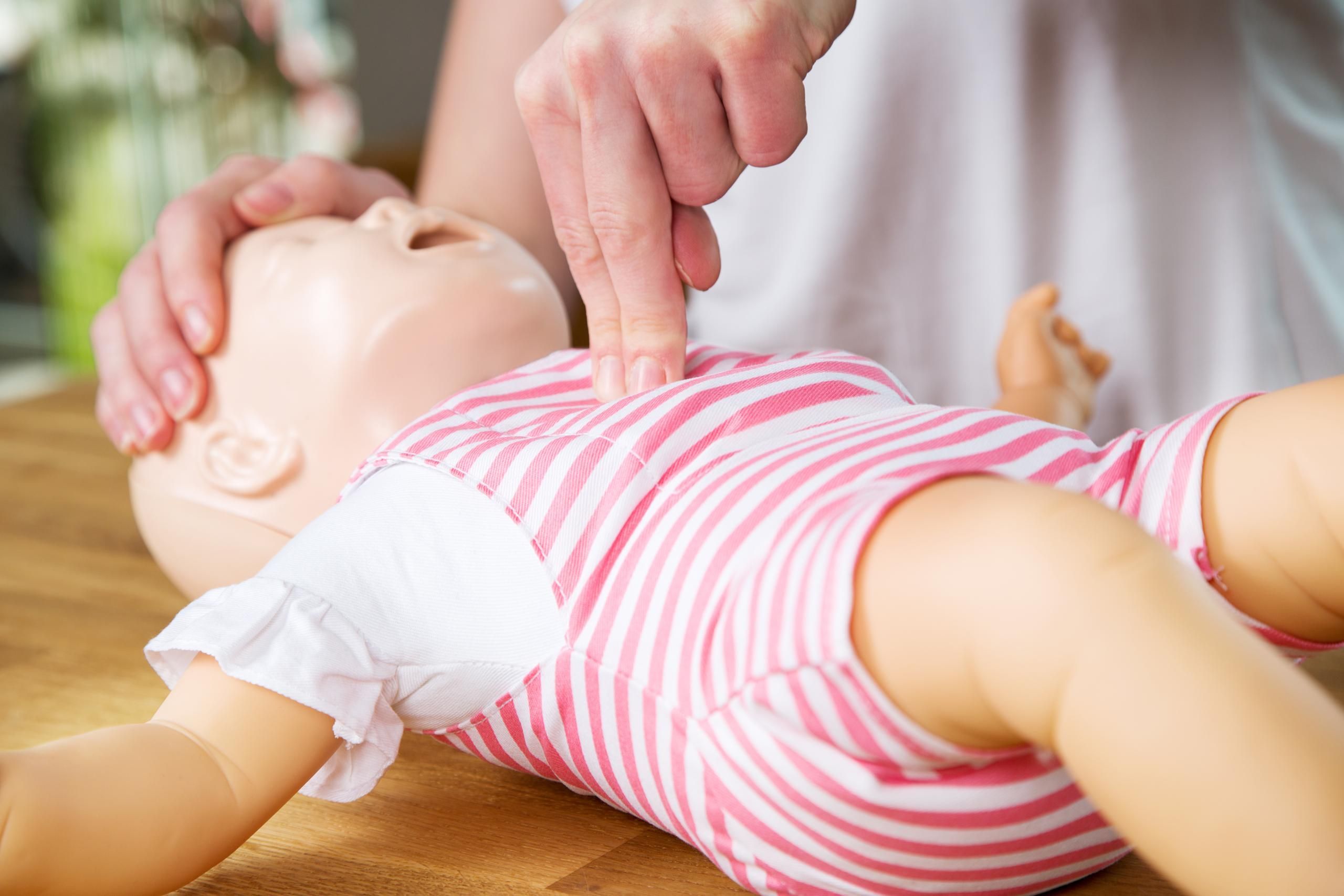
Infant Manikins, aka pediatric manikins or infant patient simulators, are life-like patient simulators that represent the body of a newborn patient. These products are known to offer effective infant cardiopulmonary resuscitation (CPR) training without compromising realism or quality. Furthermore, the convenient packaging of these manikins makes hands-on practice affordable for every learner. Note that there are a wide range of infant-based educational manikins available, from more basic products geared towards the education of high school students to more advanced simulators used to train emergency and pediatric medical teams.
Types of Infant Manikins
These types of infant simulators and models can offer real-life experiences that address a range of healthcare circumstances, including Shaken Baby Syndrome, prenatal education, infant safety, substance abuse education, child care skills, CPR, special needs care, and more. Each hands-on learning module typically includes everything a learner needs, from powerful, hands-on activities to a complete curriculum and supplies.
With such a lifelike infant appearance and sophisticated performance modules, these healthcare simulation products offer a realistic, practical physiology for infant care training. The technology enables learners to focus on a broad range of pediatric skills related to infants, gaining exposure to and practical experience with life-threatening pediatric problems.
Research shows that healthcare learners’ and providers’ skill retention declines within three months of the completion of a training module. Therefore, most healthcare workers do not get the experience they need to maintain skills outside of infrequent training intervals. Having access to an infant manikin revolutionizes the way training can take place, leading to an easily accessible and wireless training solution.
View the HealthySimulation.com Webinar Leading the Future of Peds Simulation with IPSS: The International Pediatric Simulation Society to learn more!
There are multiple infant simulator vendors available on the market, such as those from Elevate Healthcare, Laerdal, Gaumard, and Nasco. An overview of currently available infant manikin products is provided below.
Elevate Healthcare Infant Manikin
Elevate Healthcare’s first tetherless and completely wireless infant simulator, Luna, offers a complete range of options for essential training in the care and medical treatment of a neonate in crisis. Luna is remarkably lightweight and realistically represents a baby from birth to 28 days after delivery. Built on a scalable platform to meet critical healthcare education objectives and compliance requirements in newborn nursing, the Neonatal Resuscitation Program (NRP), and Pediatric Advanced Life Support (PALS), CAE Luna enables learners to practice and gain proficiency in newborn assessment, neonatal resuscitation, advanced life support, and more.
Luna is purpose-built for high-stakes, high-fidelity infant training. Supporting critical interventions like tracheostomy care, resuscitation, and vascular access, Luna offers a compact form with robust clinical realism. Educators can simulate everything from a healthy newborn check to respiratory collapse, which gives learners the tools to act quickly and compassionately in real-life scenarios.
View the new HealthySimulation.com Community Pediatric Simulation Group to discuss this topic with your Global Healthcare Simulation peers!
Laerdal Infant Manikins
One Infant Manikin on the market is the Baby Anne CPR simulator created by Laerdal. Much like the product’s adult counterpart, the Anne Simulator, the Baby Anne is designed to represent an infant female body. This highly realistic infant female simulator helps learners to understand the different aspects of modern nursing education and combine them with clinical infant care practices. Baby Anne is a lower fidelity manikin than Laerdal’s SimBaby, their premier infant simulator.
Laerdal SimBaby: Designed to represent a 9-month-old infant, SimBaby is a high-fidelity tetherless simulator that allows learners to practice recognizing and responding to critically ill infant patients. It supports advanced assessment and intervention skills — including chest rise/respirations, effective airway maneuvers, shock and arrest responses — and facilitates interdisciplinary team training. This kind of high-fidelity platform is highly valued for low-frequency, high-risk pediatric events.
Laerdal Nursing Baby Simulation Mannequin: A basic infant manikin (approx. 6-month-old) used for foundational pediatric nursing and care skills practice, such as handling, positioning, and basic assessment.
Laerdal ALS Baby Manikin: A basic pediatric resuscitation trainer representing an infant that supports realistic airway management and advanced life support practice for individual learners.
Laerdal Little Baby QCPR: A realistic infant CPR manikin that provides objective, real-time feedback on chest compressions and ventilations, helping learners improve pediatric resuscitation quality through app-based monitoring.
Gaumard Infant Manikins
Gaumard Susie and Simon Newborn Care Simulator: These advanced manikins simulate one- to eight-week old babies. These simulators are used to teach enema administration, tube feeding, gastric suction, and heel-stick and finger-prick techniques.
Gaumard Newborn PEDI Nursing Skills Patient Simulator: This newborn simulator combines a realistic intubatable airway, an injection training arm, an intraosseous infusion system, and numerous venous and arterial sites to help participants practice and develop the full-range of newborn nursing skills. This healthcare simulator allows learners to practice airway management, CPR, IV placement, and catheterization techniques.
Nasco Healthcare Infant Manikins
Stat Baby Advanced: A high-fidelity infant simulator with advanced physiological features controlled via an iPad interface, enabling instructors to manage scenarios, track performance, and train assessment/clinical skills beyond basic care.
Baby Boy and Baby Girl Infant Simulator Manikin: Full-body newborn-sized manikins representing a baby boy or girl, used to teach general infant care and patient handling skills in pediatric healthcare education, which includes standard newborn assessments and interactions.
Life/form Micro‑Preemie Simulator: A highly realistic 25-week preterm infant simulator used for neonatal skills training, offering flexible anatomy and opportunities to practice a variety of procedures at the limits of viability.
Life/form Special Needs Infant: A newborn-size infant model that allows learners to practice specialized care procedures (e.g., tracheostomy, gastrostomy, nasogastric care, and catheterization) alongside general caregiving tasks to develop nursing care plans for infants with complex needs.
CPR Prompt Training Pack plus Prompt Plus and Baby Buddy Plus: Infant CPR practice manikins, Prompt Plus and Baby Buddy Plus, with proper anatomical landmarks and feedback features such as audible clicks and visible chest rise, designed to teach effective infant CPR technique in classroom and skills lab settings.
MedVision Mia High-Fidelity Newborn Manikin
MedVision Mia High-Fidelity Newborn: Mia is a leading-edge newborn/infant high-fidelity simulator designed to meet the challenges of specialist training in neonatal care. From basic assessment to critical thinking skills in emergency scenarios, Mia is designed to enable profound learning experiences that are transferable to clinical practice, promoting safer patient care and improved outcomes.
Real-World Use of Infant Patient Simulators
Today, a well-known organization that utilizes infant manikins is the American Red Cross. Listed on the organization’s website under “training and certification” tools, these manikins come in a variety of skin tones, sets of multiple manikins and with or without CPR monitors. For example, the American Red Cross’s “Medium Skin Infant Manikin with CPR Monitor,” is a Prestan Professional Infant CPR-AED Training Manikin with a medium complexion. This product comes with 10 infant face shield and lung bags, a CPR monitor, an instruction sheet, and a red nylon carrying case featuring the Red Cross logo.
Another real-world example of this technology comes from the Johns Hopkins All Children’s Hospital Center for Medical Simulation and Innovative Education. Here, Physicians, Nurses, Therapists, and support team members are dedicated to providing safe, advanced, and well-trained care. This has led them to educate and train health care professionals and families alike in real-life, high-risk situations.
Simulation training at Johns Hopkins All Children’s Hospital places the learner (often a parent) in real-life clinical scenarios, overseen by an expert team of simulation specialists. Each training experience includes real-life scenarios, hybrid simulation, and a debriefing. The goal of these training sessions is to provide learners with feedback, evaluation, and an opportunity to reflect on training related to caring for an infant during a medical emergency.
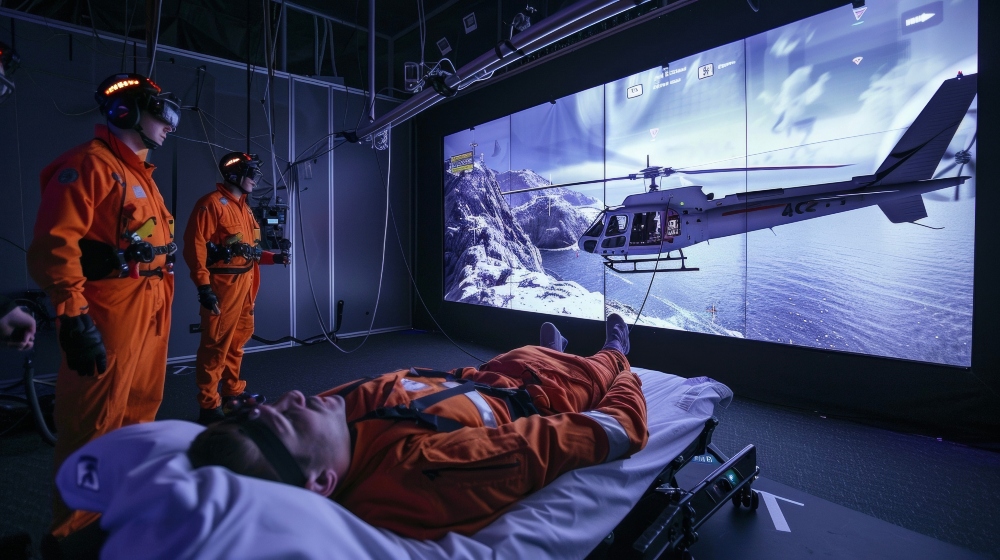
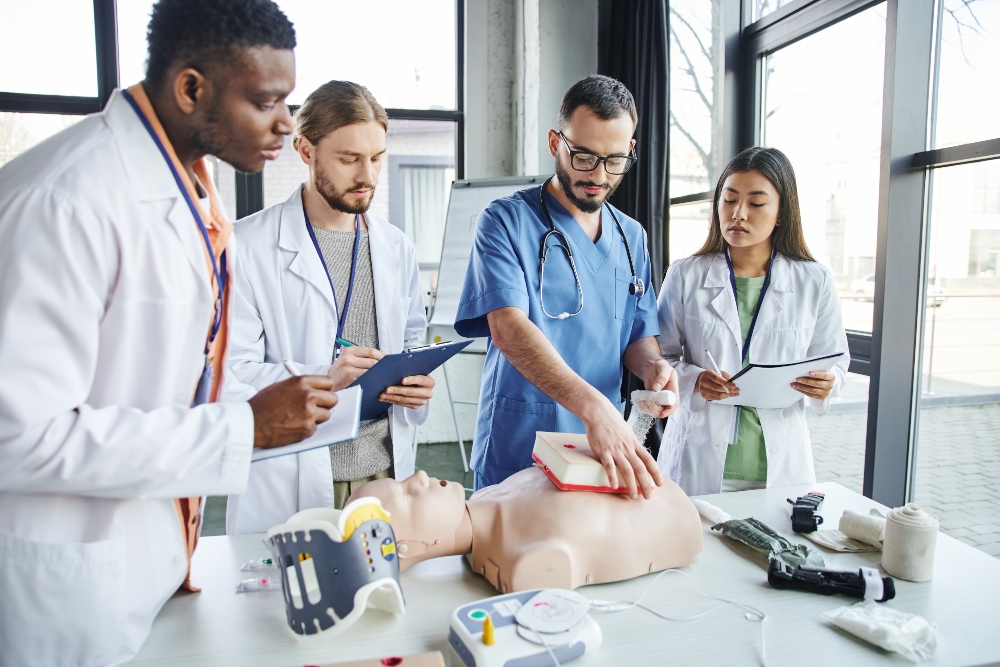
Overall, many people benefit from real-world training in a simulation center. The people benefiting the most tend to include hospital staff, parents and caregivers, hospital systems, and research organizations. Healthcare simulation via manikins, including infant manikins, has helped the world of healthcare and technology to discover solutions and close the gaps between innovation, while adopting new practices and equipment.