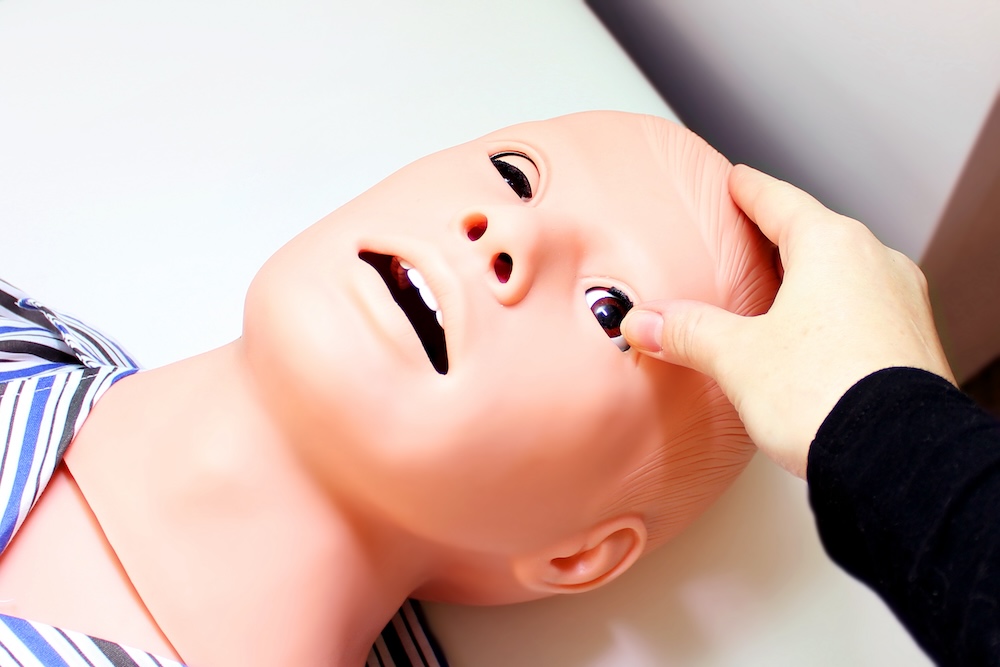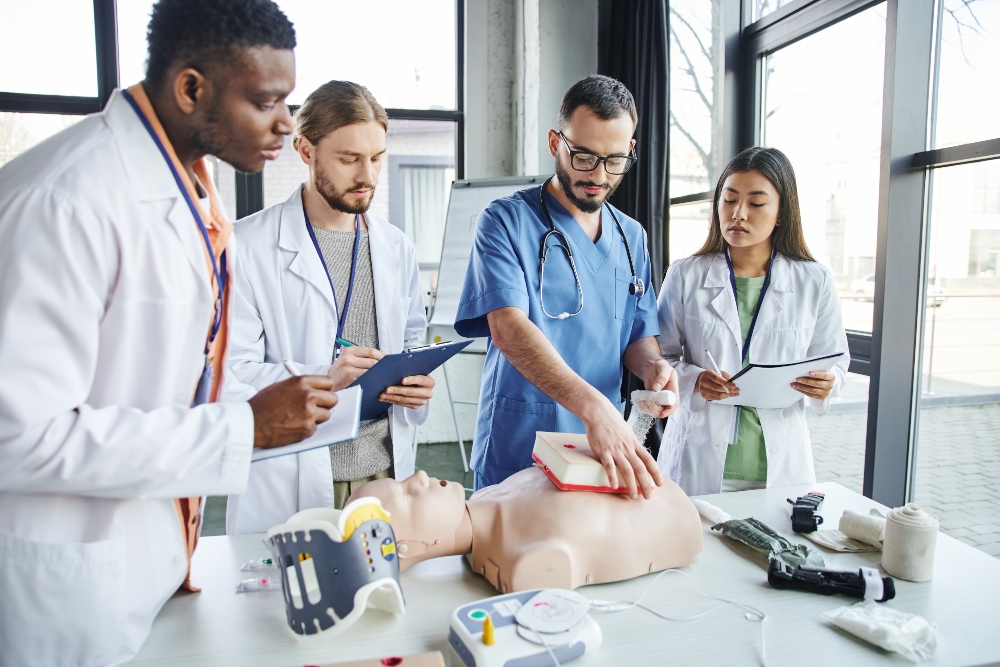

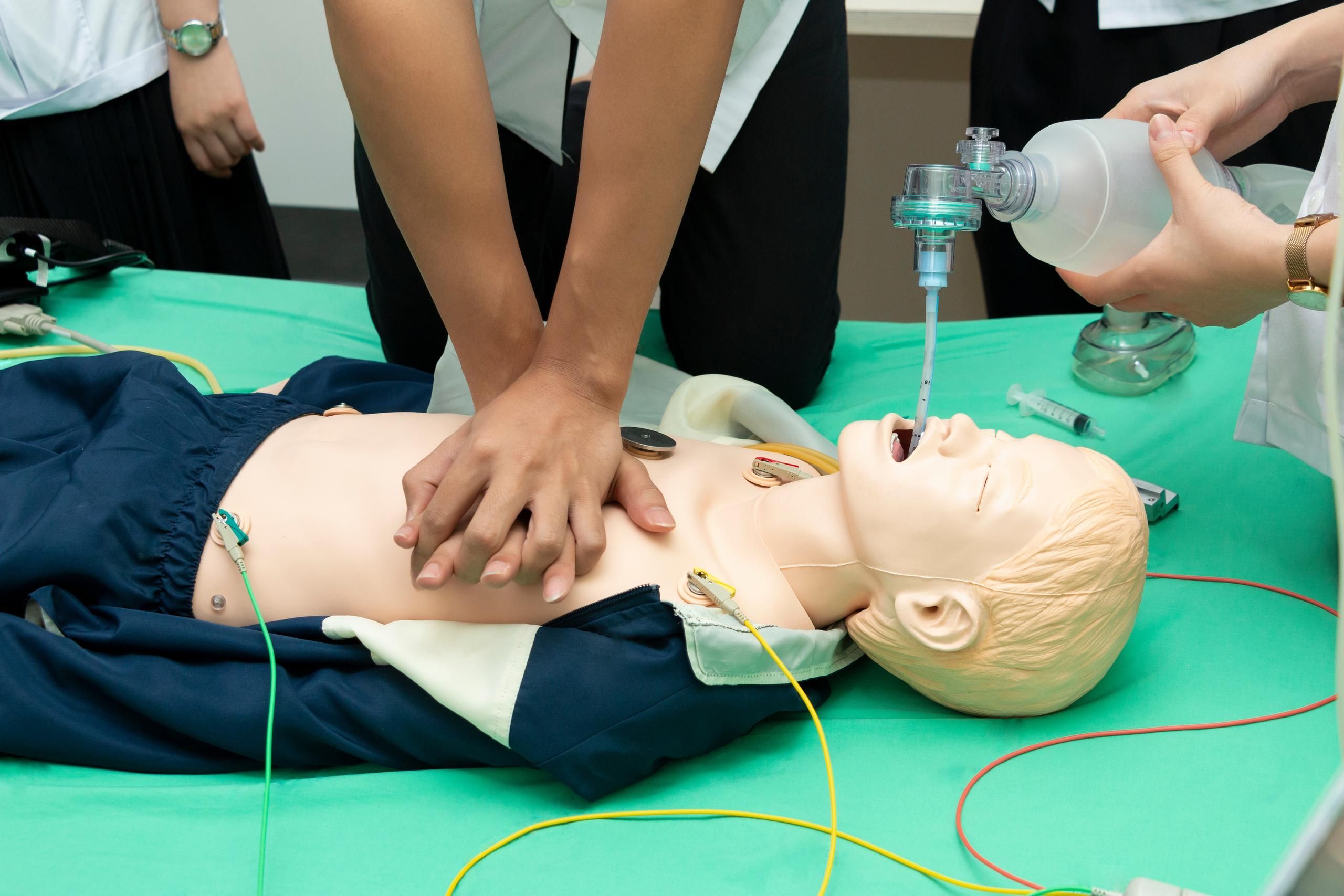
High-Fidelity Simulation is a healthcare education methodology that uses sophisticated, life-like manikins (sometimes called mannequins), virtual-reality patients, or simulated patient actors in realistic patient environments, providing a high level of interactivity for the learner. Healthcare Simulation scenarios can take place anywhere, from austere environments for EMS or Military Simulations, to clinical environments like surgical simulation inside a clinical simulation center. These computer-driven, complex manikins are also known as high-fidelity manikins, human patient simulators or high-fidelity simulators. In more recent years, Extended Realty (XR) technologies like Virtual Reality (VR) headset immersive encounters from vendors like SimX, UbiSim, or OssoVR, have also started to provide highly realistic high-fid simulation experiences.
In Healthcare Simulation, the degree to which a particular manikin or other simulator technology can reproduce or mimic environmental, psychological and human physiology is known as fidelity. Clinical simulators that most closely resemble human anatomy are designated high-fidelity. In contrast, a static manikin with very limited technological functionality is designated as low-fidelity. Low-fidelity manikins are also known as task trainers and may be used for repeated practice of clinical skills such as catheter placement or wound care.
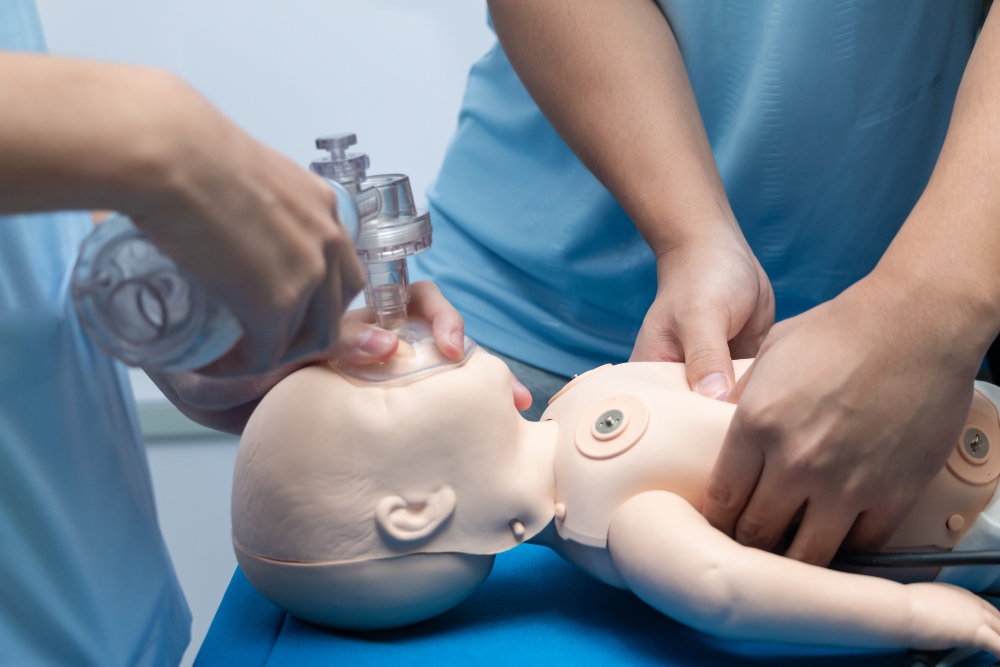
Most high-fidelity manikins have sophisticated software and technology which are designed to have realistic features such as chest wall expansion with breathing, variable heart rates and tones, measurable blood pressure, and palpable pulses. They vary in their particular components but may include EKG displays, pulse oximeter, arterial waveforms, pulmonary artery waveforms and anesthetic gases. A variety of procedures can be performed on the manikins such as bag-mask ventilation, intubation, defibrillation, chest tube placement, cricothyrotomy and chest compression.
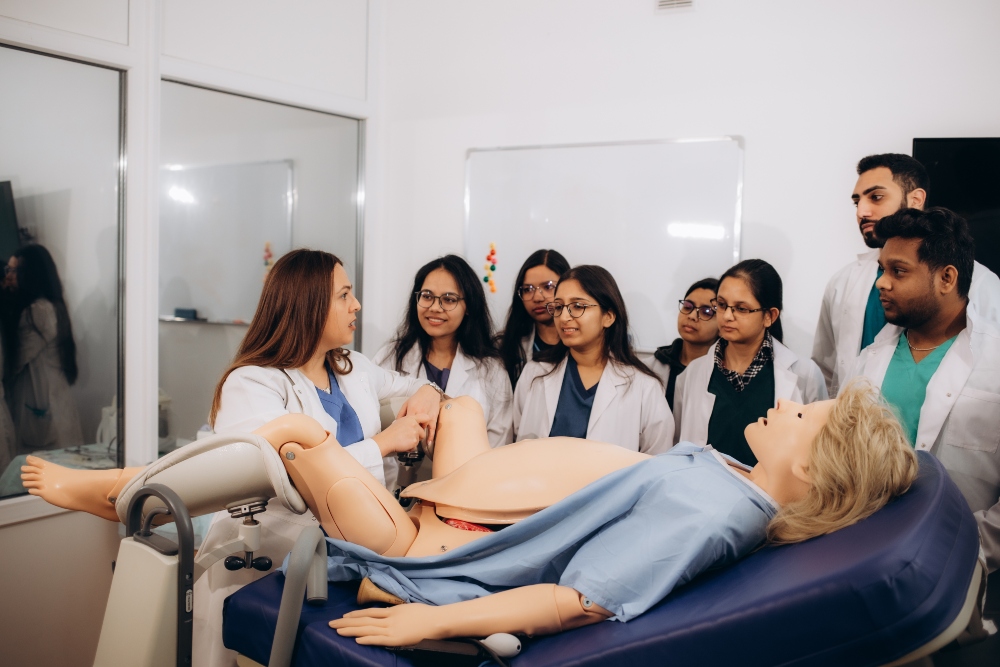
The computerized high-fidelity patient simulators contain hydraulics and compressors and have external monitors which display various physiological functions. Many manikins are articulated and reproduce the reactions, interactions and responses of the learners’ interaction. Many manikins have the ability to change color, exhibit seizures, speak and cry. Other high-fidelity simulators are very specialized such as trauma manikins with severely damaged or missing limbs, birthing manikins that mimic a woman in labor and delivery, newborn or premature babies and smaller pediatric manikins.
View the HealthySimulation.com Webinar Increasing Clinical Realism with Wearable to learn more!
High-fidelity manikins that are used for immersive simulation scenarios require specially trained simulation operations professionals, also called simulation technicians or simulation specialists. These professionals use a separate control room to drive the high-fidelity manikin for a clinical simulation scenario. The operator, in collaboration with the simulation educator or content expert, will observe and adjust the manikin based on the learner’s interactions, called on-the-fly operations. Other times, the simulation technician will pre-program the high-fidelity manikin to progress through the simulation scenario or interact as the patient’s voice, answering questions. Typically, the healthcare simulation educator will also be present in the control room to direct the educational component of the scenario.
A high level of activity and realism requires learners to respond to changes in the high-fidelity manikin, not to instructor cues, in an immersive simulation. High-fidelity simulators create more realistic clinical scenarios and thus aid the learner. Several companies manufacture high-fidelity manikins. For example, Laerdal produces the SimMan series, Elevate Healthcare the LucinaAR birthing simulator with augmented reality capabilities and Gaumard sells Victoria a high-fidelity birthing manikin.
High-fidelity simulation scenarios are also deployed with the use of standardized persons or standardized patients. Standardized patients are real people, usually actors or those who have been trained to perform as a real patient for health professionals in healthcare simulation scenarios. Standardized persons can also wear a wearable simulator to increase fidelity and realism further. An example of this is the Avkin wearable birthing simulator. Healthcare simulation programs may use a variety of high-fidelity options including manikins only, standardized persons only, or a combination of both high-fidelity patient simulators and standardized patients.
In order to address healthcare performance gaps or learning needs, educators create clinical simulation scenarios based on identified learning objectives and learner needs. For example, emergency room responses to newly admitted chest pain patients were not found to meet nationally accepted standards. By participation in healthcare simulation, emergency room staff are provided an opportunity to practice and improve their knowledge and clinical skills related to care of chest pain patients. High-fidelity manikins can be used to mimic this clinical situation. Every detail of a healthcare simulation scenario is carefully planned and tested to ensure the learners’ needs are met.
Typically, simulators are either set up in a healthcare simulation lab or a human patient simulator is brought to the clinical space for in situ healthcare simulation scenarios. Healthcare professionals or students assume various roles and respond to the patient situation which is assigned in the pre-brief. After the healthcare simulation scenario, a debrief session is held where participants reflect and identify practice/knowledge gaps and propose changes to their future responses in a similar situation.
View the new HealthySimulation.com Community Scenario Design Group to discuss this topic with your Global Healthcare Simulation peers!
Scenarios have been created for a wide variety of clinical situations such as: rare clinical events, ongoing residency training and undergraduate education in medicine, nursing and other allied health professions. In addition, high-fidelity simulation provides an opportunity for healthcare teams to improve team communication, team dynamics and other soft skills. High fidelity simulation is as close to real-life events as possible and teams will completely immerse and care for the high fidelity manikin as if they were a real patient.
The key advantage of high-fidelity simulation allows learners of all levels the opportunity to immerse themselves in a simulated clinical scenario that looks and feels real. The higher the fidelity, the more likely the learner will suspend disbelief and engage in the learning activity. Ultimately, the more knowledgeable the healthcare practitioner is, the safer the patient will be.
Examples of High Fidelity Patient Simulators
Laerdal has released MamaAnne, a maternal birth simulator, in 2024. MamaAnne aims to provide quality healthcare education to address the increasing maternal mortality rates. MamaAnne offers healthcare professional learners the opportunity to practice obstetric events to improve maternal outcomes. MamaAnne is a solution for clinical educators and learners to practice focused and efficient clinical simulation education to reduce occurrence of adverse obstetric events.
Gaumard Hal is a new ultra-high fidelity anatomy and physiology high fidelity manikin. Hal supports advanced trauma care algorithms and essential surgical interventions with the ability to use real clinical tools and techniques. Skin, bony landmarks, and internal tissue provide realistic tactile feedback to maximize the development of transferable clinical skills through high fidelity simulation. Internal sensors provide real-time feedback on provider interventions which record event data automatically for debrief.
Elevate Healthcare’s Aria, is a high-fidelity pediatric manikin. Aria addresses the challenges of pediatric patient clinical care. Aria assists to refresh learners’ reflexes and enhance their response times with a high-fidelity manikin designed to develop critical decision-making skills and support life-saving pediatric care interventions. The use of Aria can reduce medical errors, improve performance and enhance care delivery. As a high fidelity manikin of a 7-year-old child, Aria offers interchangeable gender, 60 vocal expressions and sounds, an advanced airway and neurological features as well as many other features to enhance the high fidelity simulation.
High fidelity simulation is the closest to real life that is possible through either high-fidelity patient simulators and/or the use of simulated persons with or without a wearable patient simulator. High fidelity is incredibly important to be able to increase immersion of the healthcare simulation participant into the clinical simulation scenario. High fidelity simulation enables learners to have as close to real-life clinical experiences as possible to be able to hone their clinical skills and practice for worst case scenarios before they occur.
Click Here to Connect to Leading High Fidelity Healthcare Simulation Vendors