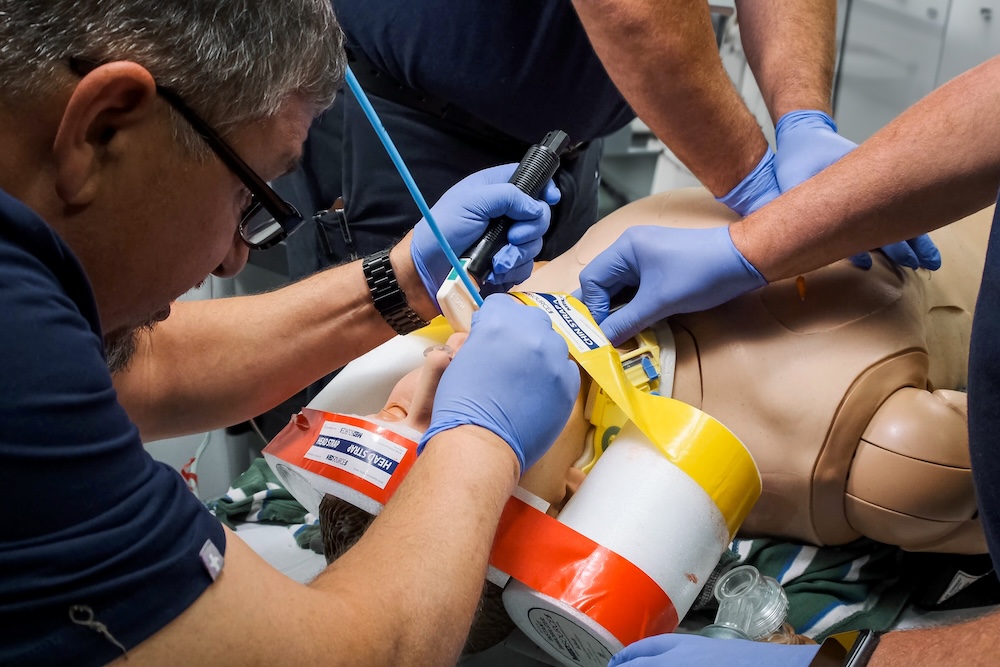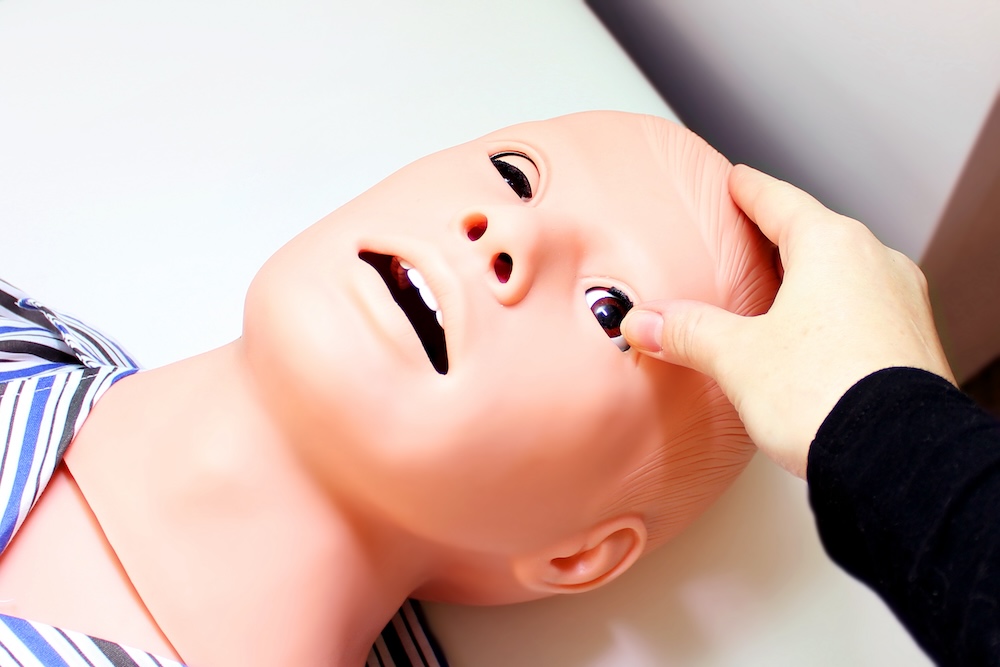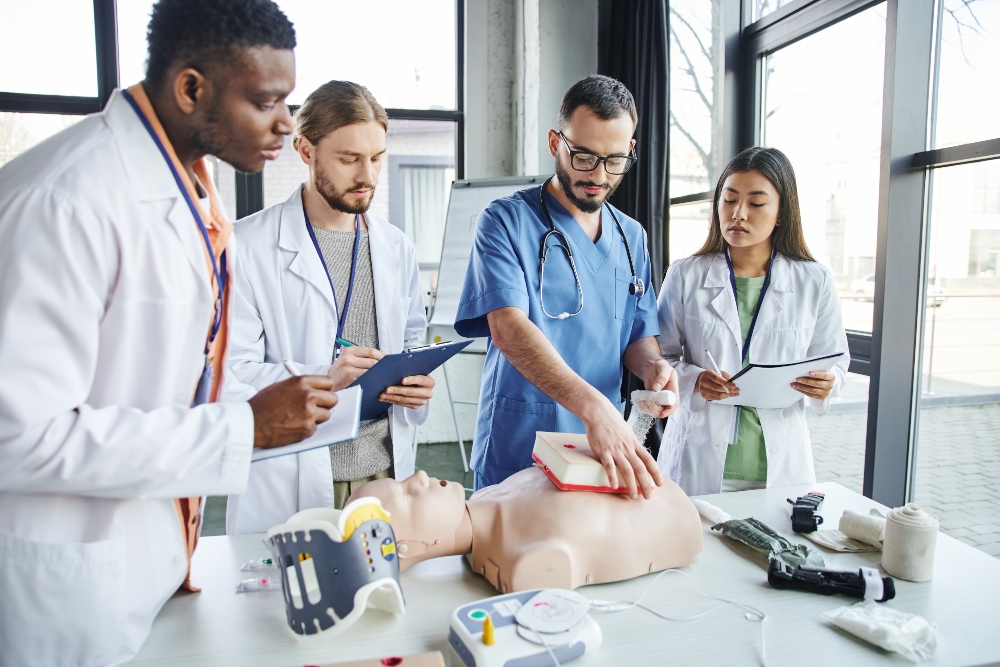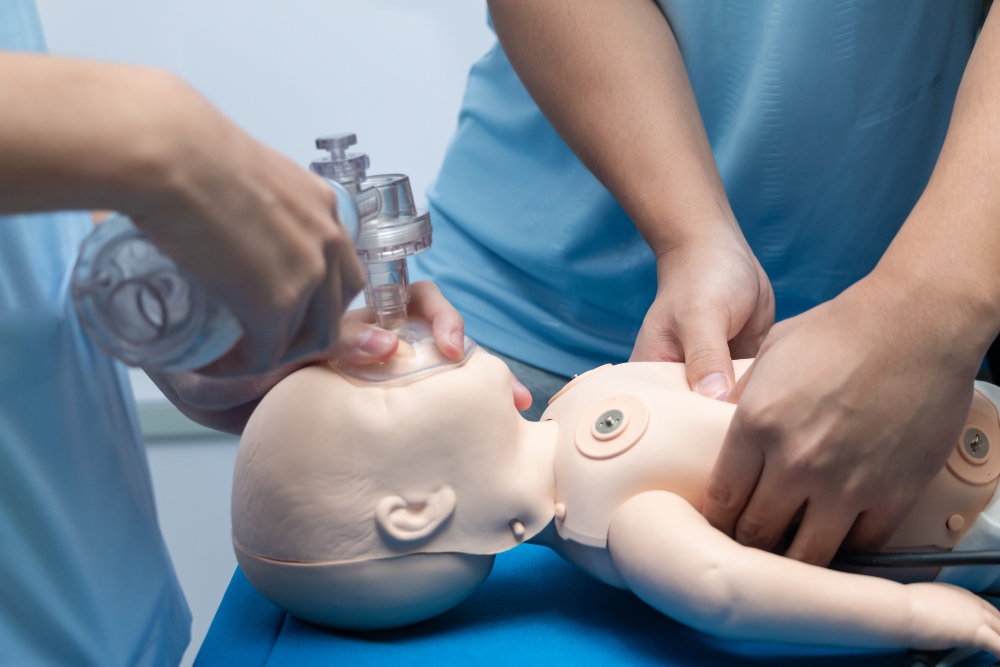

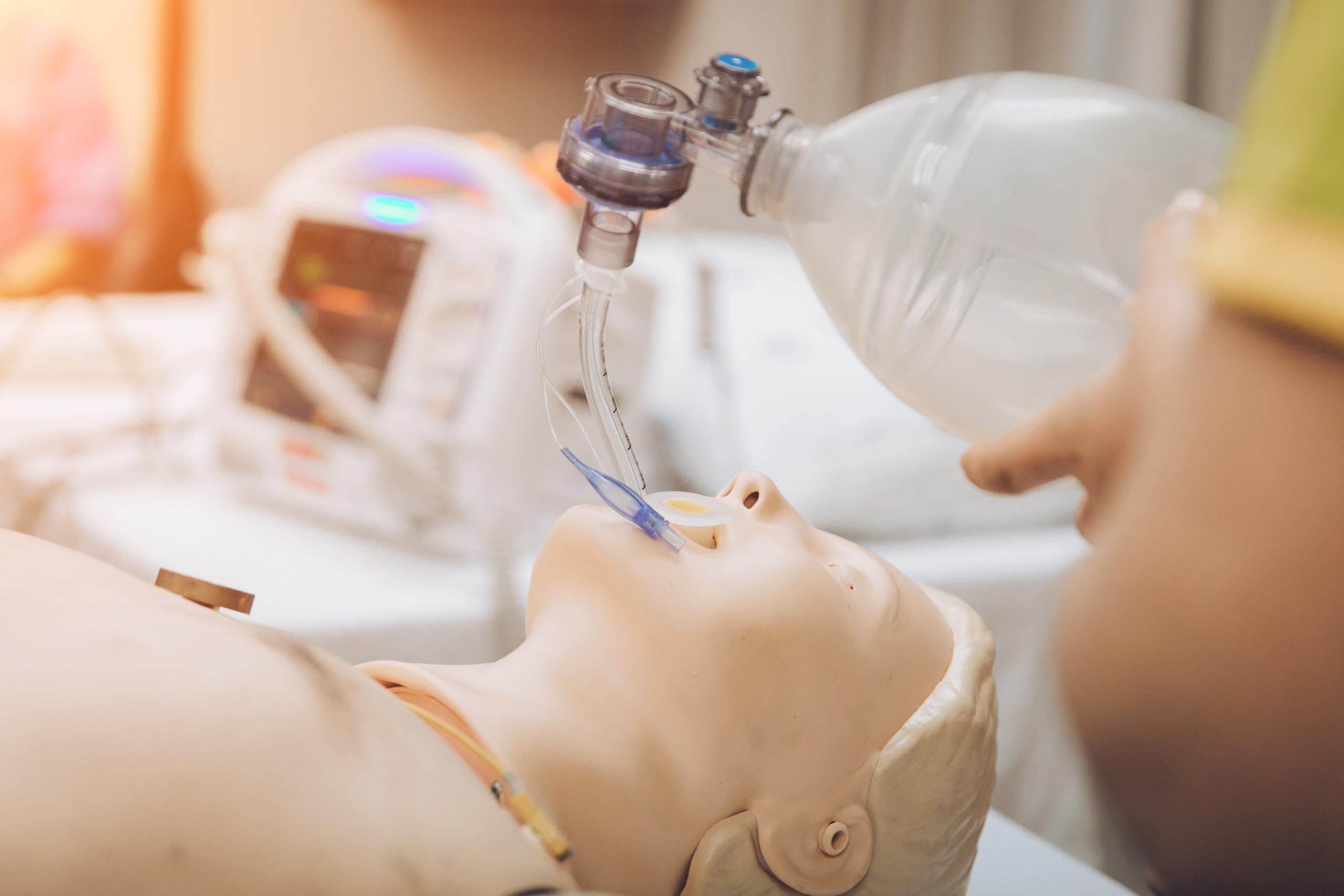
An evidence-based teaching modality in health education is the use of human patient simulators (HPS) for healthcare simulation. A Human Patient Simulator is a lifelike manikin designed to respond physiologically, as if it were a real patient. This is possible because ever-advancing technology has enabled the production of software that can be integrated into the manikins. Other names for these devices include high fidelity patient simulators, patient simulators, mannequins, medical simulators, nursing simulators, OB simulators, surgical simulators, pediatric simulators, and more. Human Patient Simulators assist learners in their development of critical thinking and clinical judgment. This HealthySimulation.com article will explore the function and purpose of human patient simulators. Looking for patient simulators? Visit our vendor directory to get started now!
What is a Human Patient Simulator?
The computer software used in healthcare simulation allows Human Patient Simulators to replicate normal and abnormal bodily responses for educational and training purposes. Often, these responses are initiated by a number of physical events, such as an asthma attack. Therapeutic interventions can also be replicated under certain circumstances, which include the response of a side effect of a medication.
The replicated organs of these lifelike medical simulators include their heart, blood vessels, lungs, and gastrointestinal tract, and can be made to respond to a variety of human interventions during clinical simulation engagements. Another way in which Human Patient Simulators are able to represent the human body is in the case of a dysrhythmia that requires defibrillation. In these cases, the Human Patient Simulators allow learners to deliver a live shock to the simulator, which replicates the appropriate intervention they would perform on a human patient.
Moulage and Human Patient Simulators
Moulage can also be added to the Human Patient Simulator to best present the patient’s vital signs and symptoms to learners. This includes, but is not limited to:
- Wounds
- Trauma
- Low oxygen saturation
- Diaphoresis
- Rashes and abrasions
Intravenous needles can be used to penetrate the simulator’s skin, which has been proven effective in IV insertion training skill performance. Simulated blood can additionally be pumped into the simulator’s veins through an IV tube. Together, all of these applications are able to provide first-hand instruction, without the risk associated with practice on actual patients, which drives improved learning opportunities, especially in nursing simulation.
In short, Human Patient Simulators are the next best thing to a human patient, without a real person’s vulnerability. Their accessibility and ease in use have provided learners with educational opportunities that increase both their skills and confidence.
View the HealthySimulation.com Webinar Enable Healthcare Simulation Manikins to Speak for Themselves with AI to learn more!
High-Fidelity Manikin-Based Human Patient Simulators
One type of Human Patient Simulators are the high-fidelity and manikin-based ones. According to multiple research studies, these medical simulators are said to look and behave more like humans than any other medical simulation equipment. These are available from many vendors such as those listed below but also include TacMed Solutions, Laerdal, Elevate Healthcare, Gaumard, Medical-X, MedVision, Nasco Healthcare, 3B Scientific, and more.
According to the Society for Simulation in Healthcare, the Healthcare Simulation Dictionary defines a simulator as, “Any object or representation used during training or assessment that behaves or operates like a given system and responds to the user’s actions (Society for Simulation in Healthcare). Multiple vendors offer Human Patient Simulators. Here are several companies, with examples of their products. This is not an exclusive list.
Laerdal Human Patient Simulators
One of these educational and research tools, the SimMan 3G, is a high-fidelity manikin product that registers most of the vital signs used in emergency medicine. Created by Laerdal Medical, each full-body SimMan 3G comes with a patient monitor that displays X-rays and 12-lead echocardiograms. During a scenario the manikin’s anatomy can be modified (from the control room) to show changes in the patient’s condition or responses to an intervention. This is shown so that learners can reach a diagnosis from observation, rather than from instructor cues.
Then, representing the body of an infant, the Laerdal SimBaby manikin allows learners to practice and demonstrate their ability to treat an infant or toddler. SimBaby responds physiologically through computer software to the care being given. A realistic airway allows for SimBaby training in all aspects of infant airway management. The manikin’s anatomy can be dramatically changed to represent adverse conditions, such as tongue edema, pharyngeal swelling or laryngospasm. SimBaby also comes with an IV arm and IV/IO legs for practicing peripheral intravenous and intraosseous therapy.
As newborn care can differ from general infant care, Laerdal further created the SimNewB. This is an interactive simulator created in collaboration with the American Academy of Pediatrics to meet the training requirements of the Neonatal Resuscitation Program (NRP). SimNewB accurately represents a full-term, 50th percentile newborn female measuring 21 inches and weighing 7 pounds. A wide variety of patient conditions can be simulated, ranging from cyanotic newborn with no vital signs to a moving, crying, vigorous newborn.
Elevate Human Patient Simulators
Elevate Healthcare, formerly CAE Healthcare, delivers comprehensive human patient simulators and clinical education solutions that support a wide range of healthcare disciplines including nursing, emergency medicine, allied health, pediatrics, obstetrics/gynecology, pre-hospital care, and critical care, as well as interprofessional team training and procedural skills development across the care continuum. Their patient simulator manikin portfolio includes high-fidelity adult manikins such as Apollo (configured for pre-hospital and nursing scenarios), Evo (modular adult high-fidelity), Ares (advanced life support), Juno (mid-fidelity clinical skills simulator), and Aria and Luna for pediatric and neonatal care, all of which integrate physiology-based responses and wireless control for realistic clinical practice.
In the obstetrics and women’s health domain, Elevate Healthcare’s Lucina Obstetrics & Women’s Health Simulator provides high-fidelity training in prenatal assessment, labor and delivery, complication management (e.g., shoulder dystocia, postpartum hemorrhage), and postpartum care with articulated fetal positioning and dynamic maternal physiology modeled for immersive learning. Beyond manikins, Elevate Healthcare’s ecosystem encompasses ultrasound simulation (including OB/GYN imaging capabilities), task trainers, and digital platforms such as Maestro and LearningSpace for scenario management and debriefing, enabling robust simulation-based education across clinical specialties.
Gaumard Human Patient Simulators
Gaumard’s human patient simulators support training across a broad spectrum of clinical disciplines, including nursing, allied health, emergency medical services, medicine, pediatrics, critical care, obstetrics, and gynecology, with products scaled for basic life support, advanced clinical care, interdisciplinary scenarios, and specialist procedural practice. Their flagship full-body simulators such as multidisciplinary HAL models and SUSIE comprehensive patient care manikins are used for general assessment, airway and resuscitation training, IV/IO access, and scenario-based clinical education spanning pre-hospital, ED, ICU, med-surg, and pediatric care.
In obstetrics, Gaumard’s portfolio features dedicated maternal and delivery training solutions including the advanced childbirth skills torsos like Gaumard Advanced OB Susie S500.200 and larger birthing simulators such as Gaumard NOELLE Maternal Birthing Simulator, Medium Skin and variants of the NOELLE maternal-neonatal systems, as well as mixed-reality-enhanced options like the VICTORIA Obstetric MR system. These obstetric products enable practice of labor and delivery management, complication recognition, neonatal resuscitation, and associated maternal care skills, helping educators prepare learners for real-world maternal-child clinical situations.
View the new HealthySimulation.com Community OB Birthing Simulation Group to discuss this topic with your Global Healthcare Simulation peers!
Speciality Mid-Level Fidelity Human Patient Simulators
Clinical specialty simulators complement full-body patient manikins by targeting specific clinical competencies and high-risk skill sets: trauma simulators from TacMed Solutions focus on hemorrhage control, airway management, and life-saving interventions for EMS, military medicine, and emergency response; auscultation simulators such as the Harvey cardiopulmonary patient from the Gordon Center replicate a wide range of cardiac and pulmonary pathologies to strengthen diagnostic listening and assessment skills. Other examples include surgical task trainers like TraumaMan for invasive emergency procedures, ultrasound simulators that allow learners to practice image acquisition and interpretation across OB, cardiac, and procedural applications, and laparoscopic and endovascular simulators that use haptics and virtual environments to build procedural proficiency without patient risk.
Mid-level fidelity simulators are designed to perform many of the same functions as their high-fidelity counterparts, but are simpler and therefore require less training to operate. Being less complex, these manikins often come at a lesser price. Many of these manikins are used in clinical simulation. One of the major changes can be the lack of chest rise and fall with respirations or the inability to palpate a pulse. However, monitor displays can be used for the learner to be able to detect vital signs. These manikins can be used to practice CPR and provide the learner with feedback on their chest compression quality, the rate of compressions, and the volume delivered for respirations.
As mentioned above, another valuable mid-level auscultation Human Patient Simulator is Harvey. Created at the Gordon Center for Research in Medical Education at the University of Miami for even more in-depth auscultation practice for learners, the life-size Harvey cardio-pulmonary simulator will exhibit all the physical signs of cardiac disease. This manikin is additionally programmed with 30 cardiac conditions and more than 200 different bedside findings. Harvey is fixed to a table and lacks lower extremities, which does not realistically represent a human patient.
Overall, research reveals that these devices have and continue to expand their use across educational and training platforms, while becoming more widely adopted by universities, colleges and secondary education facilities across the world.
Learn More About Human Patient Simulators from Our Vendor Directory!