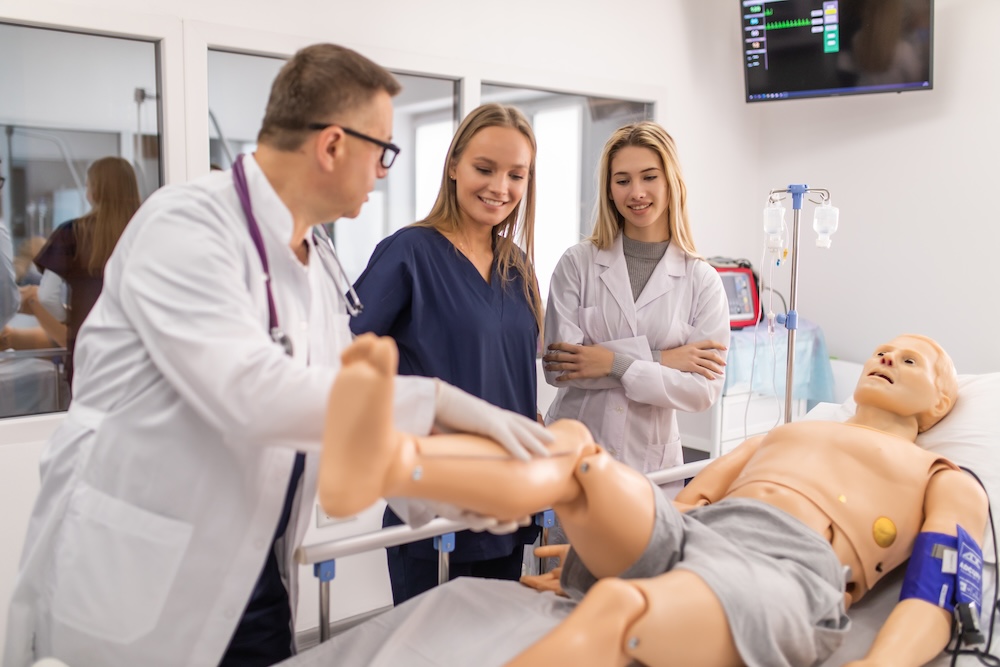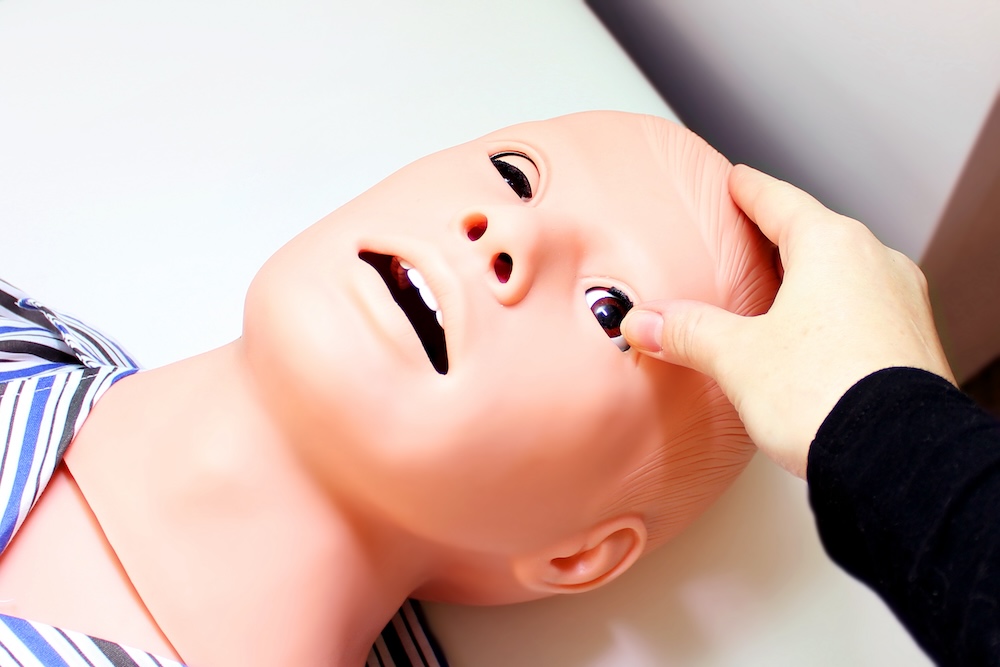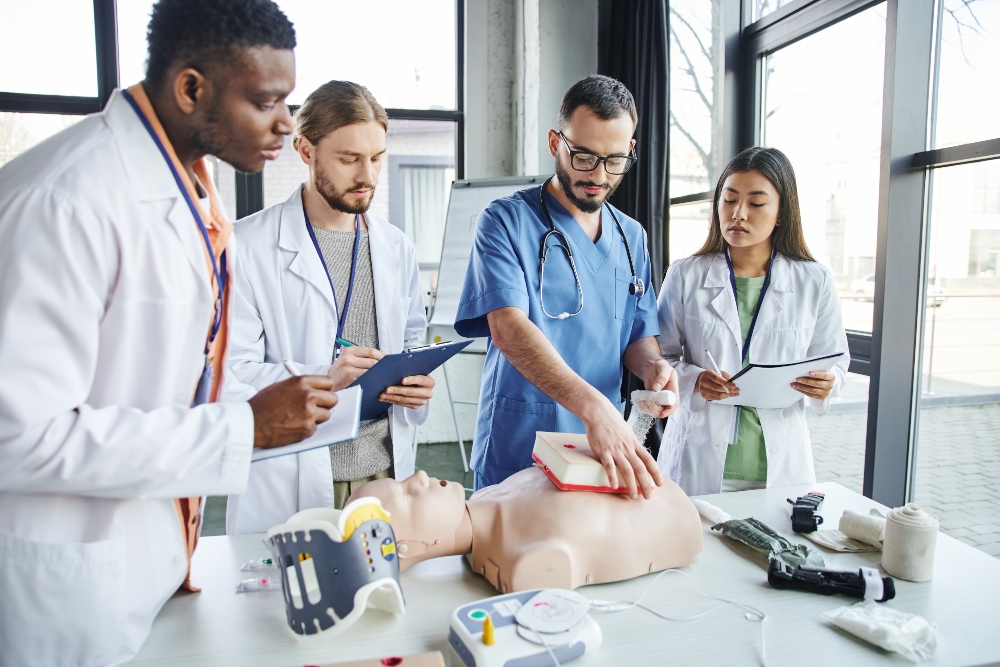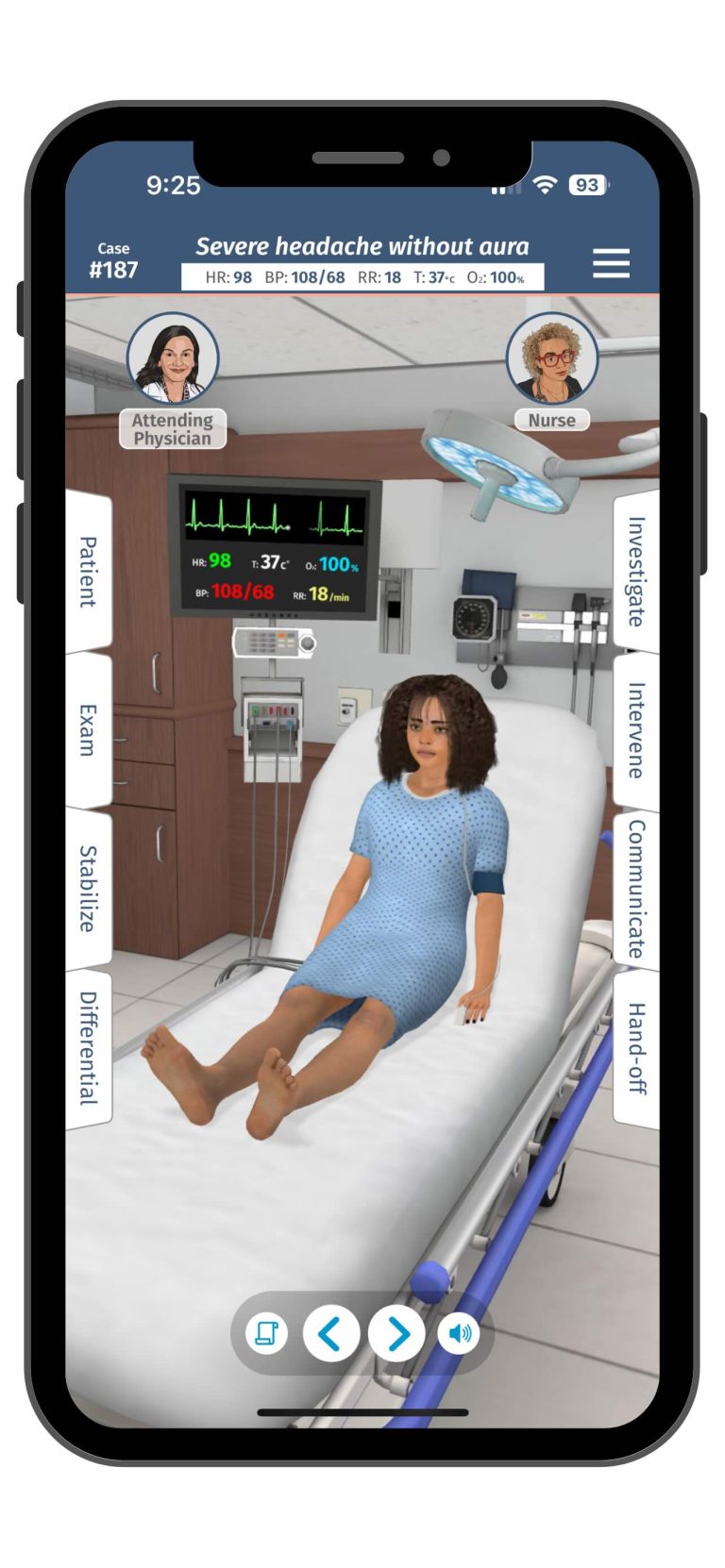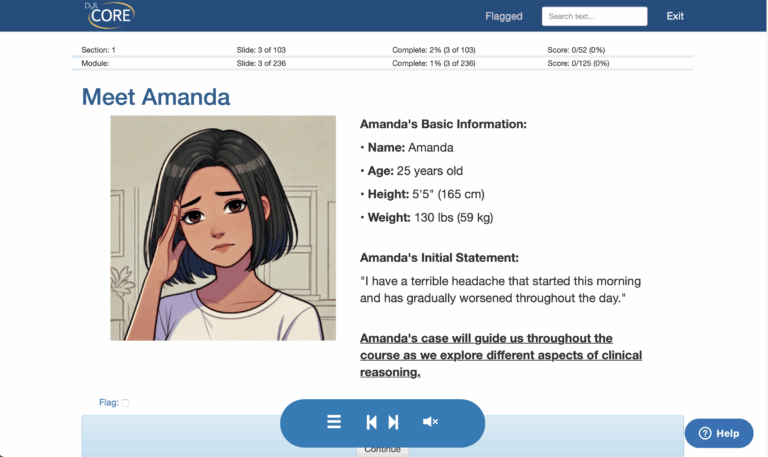

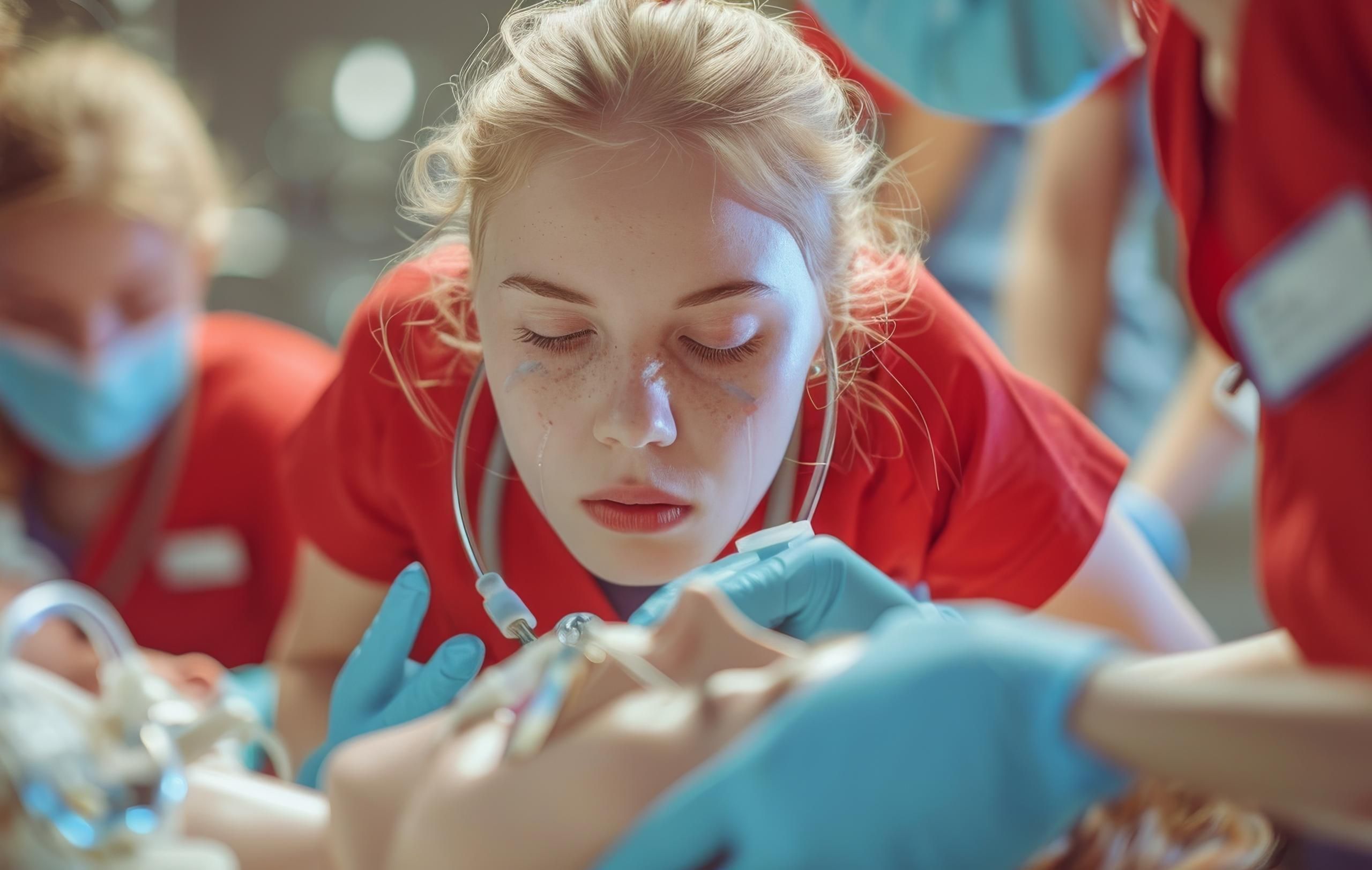
A Nursing Simulation Scenario is a clinical simulation event that replicates a nursing practice or situation. A nursing simulation scenario incorporates high-fidelity or mid-fidelity manikins, standardized participants (SPs), role-playing, skills stations, and critical thinking skills. The purpose of these scenarios in nursing education is to provide skills practice and real-life situations in a safe environment. The benefits of using nursing simulation scenarios in healthcare education are numerous. This HealthySimulation.com article will provide some common simulated nursing scenarios and available resources to support nursing educators and training professionals with the development of a nursing simulation scenario.
Clinical Simulation Training
Clinical simulation training is becoming more common for a variety of reasons. The number of undergraduate nursing programs has increased, leading to more competition for clinical placements. In acute care settings, the number of students has been restricted or the clinical activities student nurses are allowed to perform have been curtailed. However, simulation training transforms nursing education from conceptual to contextual, which is a benefit in the long run.
NCSBN Simulation Study
A 2010 survey done by the National Council of State Boards of Nursing (NCSBN) of prelicensure nursing programs revealed that 87% of those programs were using high-fidelity or medium-fidelity patient manikins. In 2014, a national study, also conducted by the NCSBN, found no statistical difference in clinical competency or comprehensive nursing knowledge in nursing students who had received full clinical training and students whose training was 25% or 50% replaced with simulation training.
As a result of the NCSBN National Simulation Study in 2014, the NCSBN determined that nursing programs could substitute up to 50% of traditional clinical practice with simulation provided other factors were in place. These other factors include faculty members trained in simulation, an adequate number of faculty members to support student learners, subject matter experts, and equipment and supplies to create a realistic simulation environment.
View the HealthySimulation.com Webinar How to Implement the Healthcare Simulation Standards of Best Practice Into Your Program to learn more!
Steps in a Simulation Scenario
In order to create and enact a simulation scenario a program needs to develop several components. Simulation-based experiences are purposefully designed to meet identified objectives and optimize the achievement of expected outcomes. All simulation-based experiences require purposeful and systematic yet flexible and cyclical planning. These components do not vary much from scenario to scenario. The INACSL Healthcare Simulation Standard: Simulation Design. The criteria necessary to meet this standard include:
- Simulation-based experiences (SBE) should be designed in consultation with content experts and simulationists knowledgeable in best practices in simulation education, pedagogy, and practice.
- Perform a needs assessment to provide the foundational evidence of the need for a well-designed simulation-based experience.
- Construct measurable objectives that build upon the learner’s foundational knowledge.
- Build the simulation-based experience to align the modality with the objectives.
- Design a scenario, case, or activity to provide the context for the simulation-based experience.
- Use various types of fidelity to create the required perception of realism.
- Plan a learner-centered facilitative approach driven by the objectives, learners’ knowledge and level of experience, and the expected outcomes.
- Create a prebriefing plan that includes preparation materials and briefing to guide participant success in the simulation-based experience.
- Create a debriefing or feedback session and/or a guided reflection exercise to follow the simulation-based experience.
- Develop a plan for evaluation of the learner and of the simulation-based experience.
- Pilot test simulation-based experiences before full implementation.
Common Nursing Simulation Scenarios
Alzheimer’s Teaching Strategies: The National League of Nursing (NLN) offers professional development programs that they call Advancing Care Excellence (ACE). The ACE.Z teaching strategies are targeted toward improving care for Alzheimer’s patients and caregivers. The nursing simulation scenarios in this competency program offer a range of situations to help students become more proficient in understanding Alzheimer’s dementia as a disease process and the care management implications.
Health Clinic Patient Follow-Up (Diabetic Patient): Student learners are caring for a 63-year-old male who is receiving follow-up care to manage his Type 1 diabetes. The learning objectives are for nursing students to quickly recognize and distinguish between clinical manifestations of hyperglycemia and hypoglycemia, identify the possible causes, initiate assessments and interventions, and provide patient instruction for out-of-the-hospital self care.
Med-Surg Nursing: Sepsis Scenario: In this scenario, the patient is a 32-year-old female who has undergone a laparoscopic hemicolectomy. The objective is for participants to recognize the early signs of sepsis and initiate the steps of a sepsis bundle. Participants should also be prepared to demonstrate BLS skills.
The target participants are medical-surgical nurses and staff. An SP can be used for the early part of the healthcare simulation; if BLS skills need to be demonstrated, students can switch to a high-fidelity manikin to practice CPR. The facilitator of this nursing simulation can provide vital sign information and also compress (speed up) the timeline as needed. Several types of scenarios can be found at MedPro.com; a sepsis scenario is a common clinical situation that nurses need to prepare for. MedPro.com.
View the new HealthySimulation.com Community Nursing Simulation Group to discuss this topic with your Global Healthcare Simulation peers!
The learning objectives include patient-caregiver communication skills as well as taking vitals and assessing a patient’s pain. Recording a healthcare simulation is a good way to assess and debrief the simulation scenario, and these types of recordings can be shared for further training.
Obstetrics Simulation Scenario: Shoulder Dystocia: In this scenario, an OB provider and OB nurses encounter shoulder dystocia when delivering a 39-week-old baby; the mother has been in labor for 12 hours. The purpose of the nursing simulation is to practice effective communication and efficient teamwork.
This simulation scenario encourages participants and facilitators to employ TeamSTEPPS, which is an evidenced-based teamwork system. TeamSTEPPS tools include: brief, situation awareness, cross-monitoring, CUS, and the two-challenge rule. The long-term expected outcome is that the participants can demonstrate improved patient outcomes for any type of obstetrical complication.
Simulation Scenario Management Supports Faster Development
Simulation Scenario Management tools like iRIS can help healthcare simulation educators to collaboratively build simulation scenarios together, which have templates which provide step-by-step instructions tied to best practice standards. Many Healthcare Simulation Center Management Systems in healthcare simulation, such as those available from Elevate Healthcare, Laerdal, or Education Management Solutions, also support collaborative scenario development and scenario hosting.