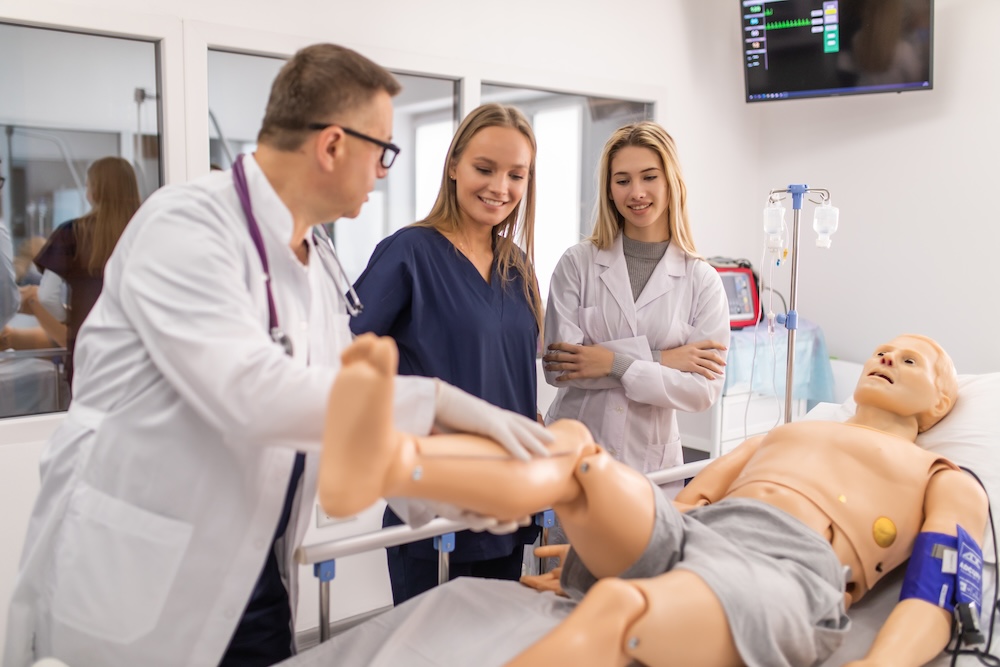

Research in the field of healthcare simulation continues to advance rapidly, transforming healthcare education through groundbreaking findings worldwide. In this monthly HealthySimulation.com article series, Content Manager Teresa Gore, PhD, DNP, APRN, FNP-BC, CHSE-A, FSSH, FAAN, highlights key developments in clinical simulation research as of August 2025. This month’s medical simulation research from the Society for Simulation in Healthcare (SSH) Journal, the International Nursing Association for Clinical Simulation and Nursing (INACSL) Clinical Simulation in Nursing Journal, the Cureus Journal of Medical Science, BMC Nursing, Nurse Education Today. The clinical simulation research topics cover AI, virtual reality, standardized patients, virtual learning, and clinical training / readiness, and more!
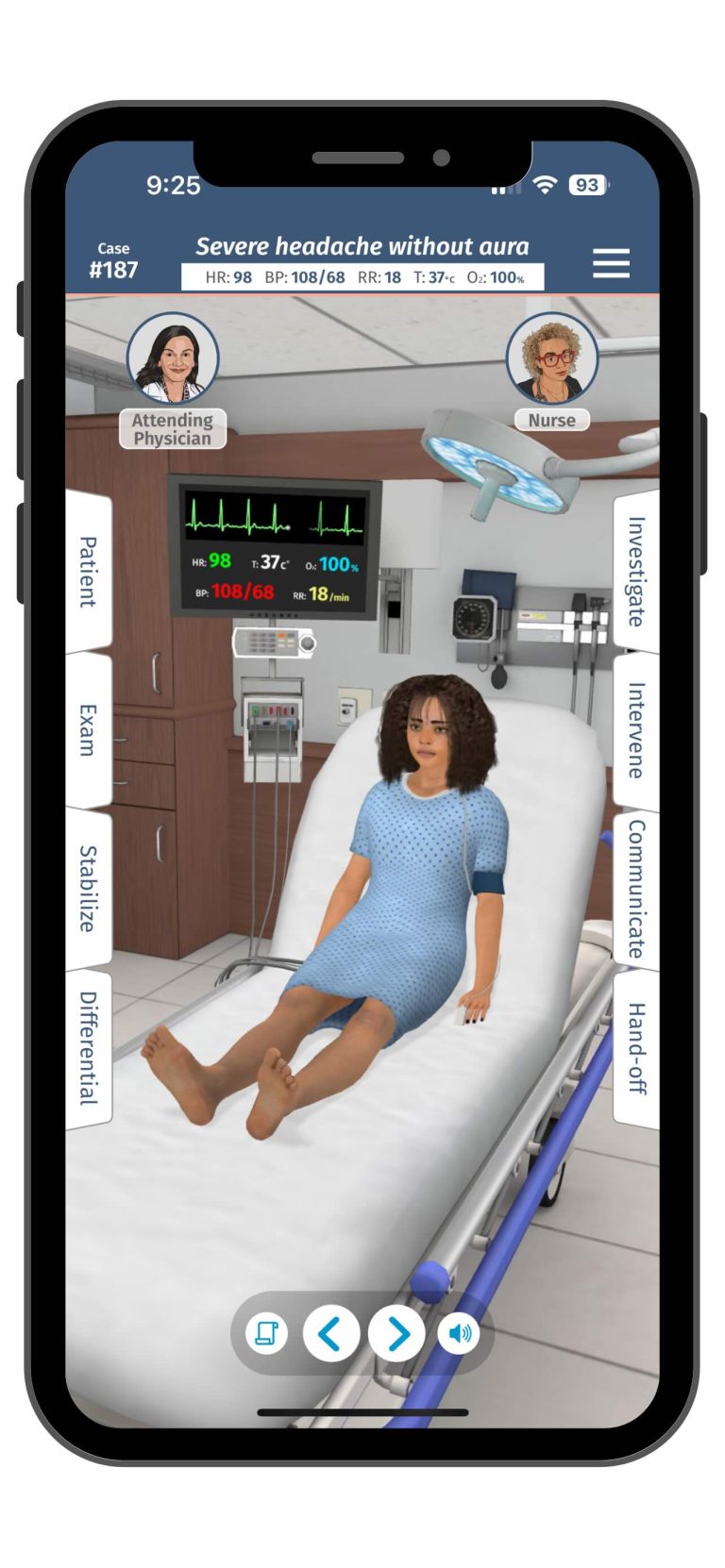
A Comparison Study of Virtual Reality Versus Mannequin-Based Simulations for Educating Trainees in the Pediatric Cardiac Critical Care Unit: While high-fidelity mannequins are effective, they are resource-intensive. Virtual reality (VR) offers a more accessible, immersive alternative. This study compared VR to mannequin-based simulations across four critical pediatric CICU scenarios. Results showed no significant difference in performance: fellows completed similar critical actions and scored an average of 87% on knowledge tests. Participants described VR as more immersive, though some reported mild nausea. This research suggests VR is a promising tool in medical education, offering a realistic and scalable option for pediatric ICU training. Future studies will explore its impact on long-term learning.
Impact of Standardized Patient Programs on Pre-clinical Medical Students’ Clinical Readiness: A Narrative Review of the Last Two Decades: Standardized patient (SP) programs are widely used in medical education to strengthen communication, clinical skills, and professionalism. While traditionally applied to senior medical students and residents, this narrative review highlights the growing role of SP encounters for pre-clinical learners. Evidence shows that even without advanced medical knowledge, early exposure to SPs helps students practice vital skills like empathy, communication, posture, and patient-centered care in a safe, simulated setting. Reported outcomes include stronger confidence, improved readiness for clinical rotations, and positive feedback from both students and educators. The review concludes that integrating SP programs into the pre-clinical curriculum not only enhances early skill development but also lays the foundation for long-term improvements in healthcare quality.
View the HealthySimulation.com Webinar Latest Trends in Virtual Reality Medical Simulation for Anatomy, Therapy and Research to learn more!
Effectiveness of virtual clinical learning in nursing education: a systematic review (2025): This systematic review synthesized studies evaluating virtual clinical learning in nursing education. The authors found that VR improved knowledge acquisition, clinical decision-making, and confidence compared to traditional didactic methods. While VR was comparable to other forms of simulation for cognitive skills, it lacked the tactile realism of manikin-based simulation. The review highlighted VR’s scalability and cost-effectiveness but called for more high-quality RCTs focusing on long-term competence outcomes.
Impacts of VR simulation on nursing students’ competence, confidence, and satisfaction: A systematic review and meta-analysis of randomised controlled trials (2025): Ropponen et al. conducted a meta-analysis examining the effects of VR simulation on nursing students’ competence. They found significant improvements in clinical reasoning, procedural accuracy, and self-efficacy, with pooled results showing equivalence to manikin-based simulation for nursing students. However, most studies had short follow-up periods, limiting conclusions about retention and transfer. The authors advocated hybrid models combining VR with tactile practice.
Barriers to breakthroughs: A scoping review of generative AI in healthcare simulation: Generative artificial intelligence (AI) is rapidly transforming healthcare education with the enhancement of simulation-based training with scalable, cost-effective, and realistic learning experiences. A recent scoping review of 15 studies highlights how generative AI can remove logistical barriers, expand access to diverse clinical scenarios, and foster critical thinking through reflective practice. Key themes include generative AI’s ability to deliver authentic practice opportunities, the distinctive value in supporting adaptive learning, and the necessity of strong ethical safeguards to address risks such as misinformation. While challenges remain, the growing body of research underscores generative AI’s potential to revolutionize healthcare simulation when paired with responsible governance and human oversight.
Exploring extended immersive simulation-based education to prepare undergraduate nursing students for professional practice: A scoping review: Extended immersive simulation (EIS) is emerging as a powerful approach in undergraduate nursing education, offering prolonged, realistic experiences that mirror professional practice and enhance student engagement. A recent scoping review of 684 publications identified 15 relevant studies, highlighting three key themes: student-centred learning approaches, structured EIS design, and improved learning outcomes. Findings suggest that EIS boosts readiness, critical thinking, and confidence in nursing students while providing a safe, controlled environment for practice. Although research is still limited, the evidence supports combining EIS with traditional teaching methods to maximize learning, underscoring the need for further studies on facilitator training, student support, and long-term impact.
“It felt real”: Nursing students’ experiences of mental health simulation utilizing service users as standardized patients: Integrating service users as standardized patients in mental health simulation is proving to be a valuable strategy in nursing education, fostering authentic, recovery-oriented, and person-centered learning experiences. A recent study with 89 fourth-year nursing students explored a schizophrenia simulation where a trained service user portrayed a patient experiencing delusions and auditory hallucinations. Students’ reflections highlighted three key outcomes: enhanced learning through realistic scenarios, challenges with adapting to innovative teaching methods, and the development of deeper empathy and caring attitudes. Findings suggest that involving service users in simulation not only bridges theory and practice but also strengthens nursing students’ commitment to compassionate, patient-centered mental health care.
View the new HealthySimulation.com Community Simulation Research Group to discuss this topic with your Global Healthcare Simulation peers!
Simulation Operations Needs Assessment Tool (SONAT): Following the Simulation Educator Needs Assessment Tool (SENAT), the new Simulation Operations Needs Assessment Tool (SONAT) was developed by Young, Charnetski, Floersch, Wortham, and Leighton (2025) based on the lack of a needs assessment tool for simulation operations specialists (SOS), no matter their title, as part of Leighton et al’s Evaluating Healthcare Simulation Tools hosted by HealthySimulation.com. The SONAT was designed to assess the needs of SOSs to inform professional development of the newly hired, as well as the experienced SOS. The foundation of the instrument was based on best practice, community and peer-reviewed documents, including the Certified Healthcare Simulation Operations Specialist Blueprint, SimGHOSTS Capability Framework, Simulation Educator Needs Assessment Tool, and the Healthcare Simulation Standards of Best Practice.
As part of the Evaluating Healthcare Simulation tools, the Simulation Operations Needs Assessment Tool (SONAT) was developed by Young, Charnetski, Floersch, Wortham, and Leighton (2025) based on a gap analysis for simulation operations specialists (SOS) development. The SONAT was designed to assess the needs of SOSs(of any title) to inform professional development of the newly hired, as well as the experienced operations specialist.
Employing Simulated Participants to Develop Communication Skills in Medical Education
: A recent systematic review and meta-analysis highlights the effectiveness of simulated participants (SPs) in teaching patient-centered communication skills in medical education compared to traditional methods like lectures or peer role play. Out of 8,523 publications screened, 21 studies with over 2,500 participants were included, and 10 qualified for meta-analysis. Findings revealed a medium positive effect size (SMD = 0.74) favoring SP-based teaching, demonstrating its ability to significantly enhance communication skills. While high heterogeneity among studies was noted, the evidence strongly supports the value of SP-based learning as a more impactful and authentic approach to developing essential communication competencies in future healthcare professionals.
Learn More About Evaluating Healthcare Simulation and Evaluation Tools!