
Healthcare simulation has become an integral component of clinical education to improve patient safety and strengthen team performance across health professions. Key considerations are necessary to match the level of manikin fidelity to the healthcare simulation educational experience and outcome. The highest fidelity manikin is not always necessary to ensure the best educational experience in a simulation scenario. In this article, Carrie Gigray, MSHS, CHSE, CHSOS, NRP, examines the factors to consider and offers insights to implement different types of fidelity in manikin-based healthcare simulation experiences to achieve optimal outcomes for healthcare education.
Although simulationists may view fidelity as an easy and basic determination in the simulation design process, Carey & Rossler explain simulation fidelity is a multi-dimensional concept to correspond to the degree of realism created through the selection of simulation equipment, setting, and scenario. Fidelity can be broadly defined as the degree to which the healthcare simulation scenario relates to reality. The goal is not to recreate every real-world detail; the focus should remain to accurately represent the cues and stimuli that influence clinical decisions and actions. Fidelity can be further broken down into two categories of levels and types, which should focus on the patient, the facility, and the scenario.
There is an important distinction between fidelity and modality as these terms are independent of one another. Modality is the type of healthcare simulation tool for the experience. For example, in situ, virtual reality, or simulated clinical immersion. The fidelity types include conceptual, environmental or physical, and psychological. Conceptual fidelity ensures all aspects of the healthcare simulation scenario reflect real-world clinical scenarios. For instance, if the diagnosis is sepsis, the simulated patient’s appearance, vital signs, and medical history align with this diagnosis. Physical or environmental fidelity focuses on how closely the simulation setup matches the real healthcare environment. This covers elements like the type of patient used – manikin or standardized patient, clinical equipment, room design, medical props and tools, and even environmental cues or embedded participants.
Psychological fidelity captures the emotional and contextual authenticity of the clinical situation. Features such as patient dialogue, family interactions, environmental noise or distractions, and time-sensitive decisions with interpersonal dynamics are a few examples. When combined with physical and conceptual simulation design, psychological fidelity encourages learner focus, deeper engagement, and more authentic learning.
View the HealthySimulation.com Webinar Trauma Simulators: What is the Right Manikin Fidelity for US? to learn more!
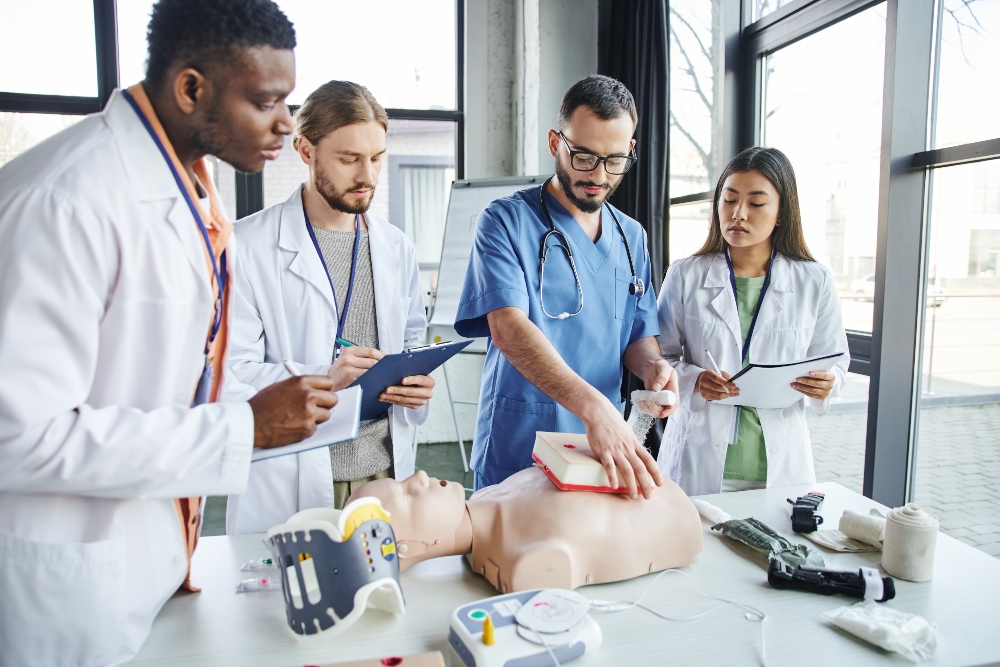
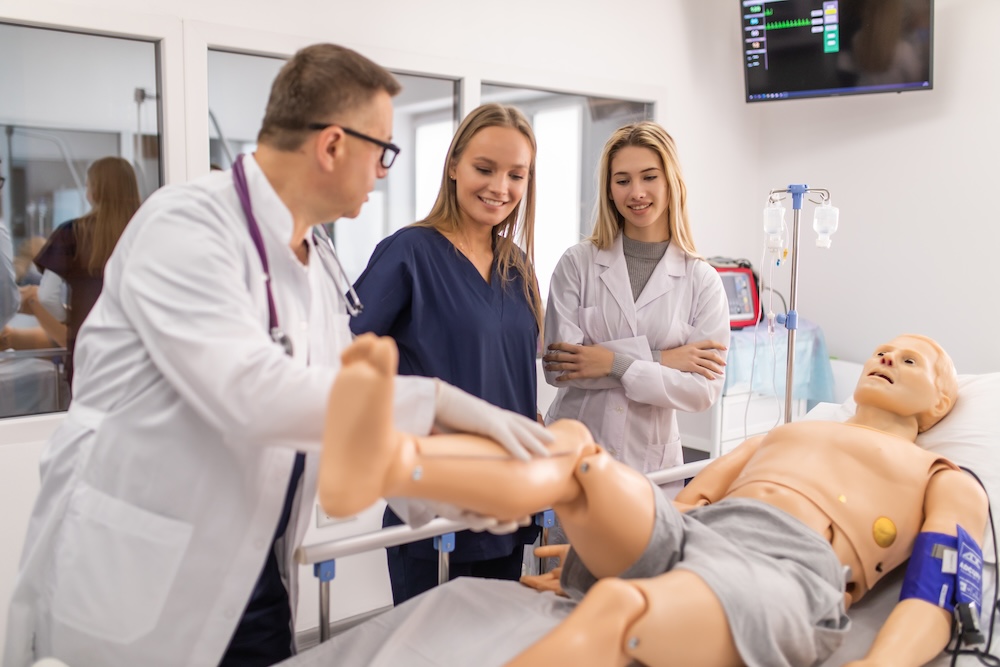
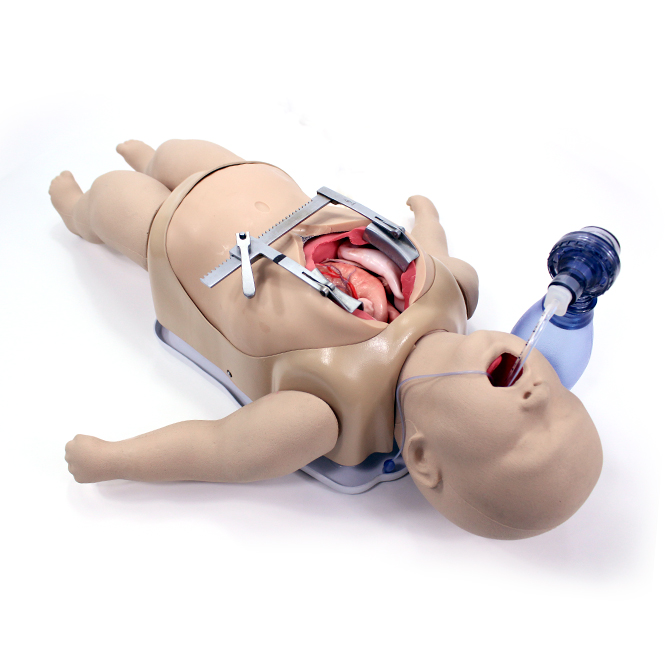
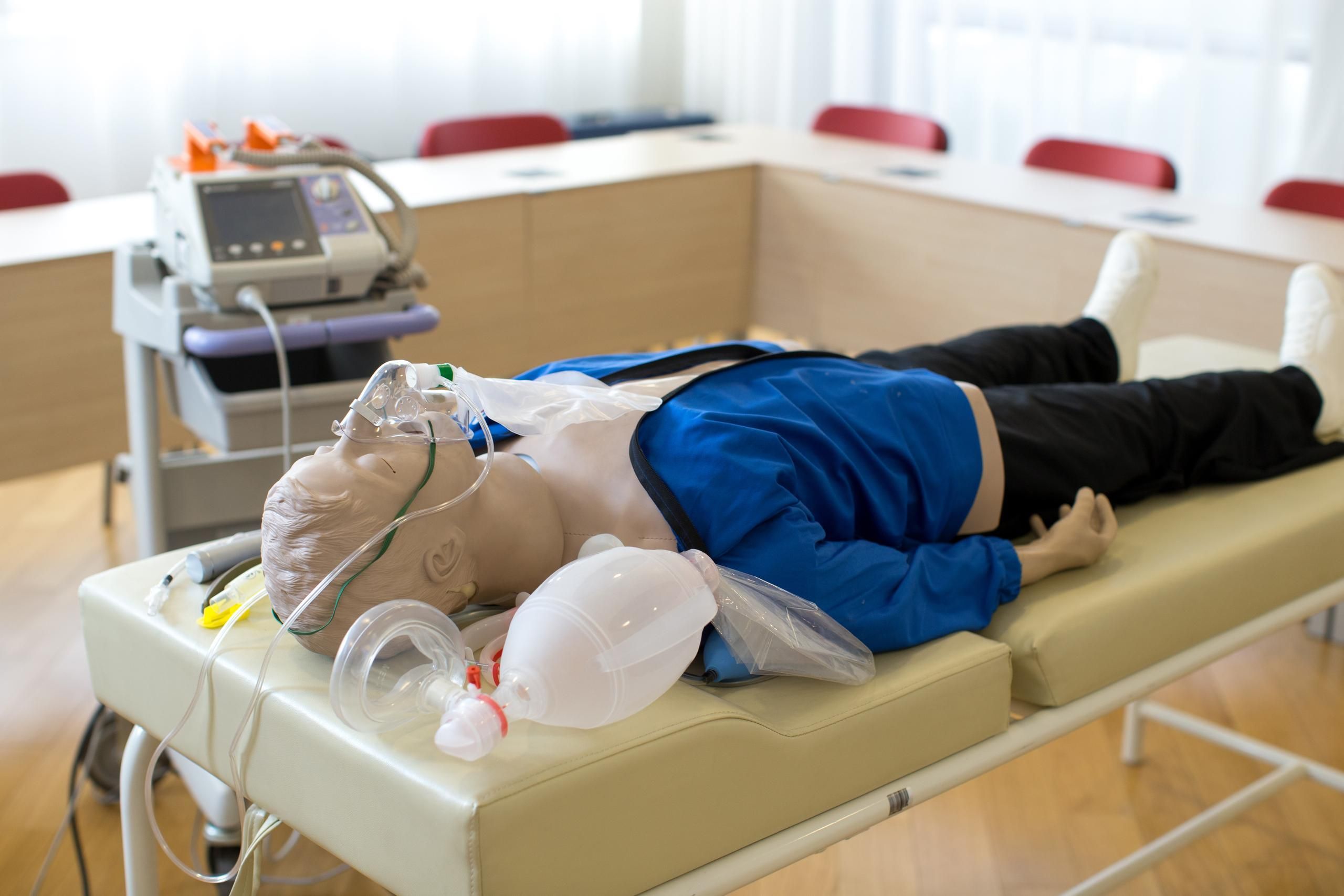
The level of fidelity ranges from low to high. Each level offers unique benefits depending on the learning objectives, learner experience, and available resources. Low-fidelity simulations typically involve task trainers or non-programmable manikins, which enable learners to repetitively practice specific psychomotor skills such as IV insertion, wound management, or catheter placement. Medium-fidelity may involve more interactive manikins or computer-based simulations with some physiological feedback, like an intubation task trainer with anatomically correct airway anatomy to practice intubation. The manikin provides real-time feedback on endotracheal tube placement and bag valve ventilation quality. High-fidelity simulated clinical experiences are incredibly realistic, with a high level of interaction. Typically, a sophisticated manikin equipped with technology that simulates human anatomy and physiological signs enables learners to engage in crisis management, situational awareness, or critical reasoning. Scientific evidence does not support one level as superior to another, but rather shows that appropriate use is the most beneficial for the learner.
The level of fidelity should be guided by the INACSL Healthcare Simulation Standards of Best Practice criteria in simulation design, with the learning objectives of the clinical simulation scenario. Learning objectives are central to the determination of the level of fidelity to be used. Objectives define the purpose, depth, and expected outcomes of the clinical simulation scenario and should inform every aspect of the development to include the modality and fidelity.
For example, when the objectives are to improve muscle memory for skill performance, a low-fidelity task trainer offers a cost-effective and efficient way to achieve repetitive practice. Whereas the goal is to enhance interprofessional collaboration of a code team response, high-fidelity simulation can provide an immersive environment to elicit an authentic learner experience. However, simulationists must understand not every simulation demands the highest fidelity of realism. In fact, overuse of high-fidelity environments where they are not justified can lead to inefficient use of time, space, and budget. The goal should always be to select the level of fidelity that aligns directly with the learning objectives, enhances the learning engagement, and supports measurable outcomes.
Equally important is the learner’s level of experience to help guide fidelity choices. Novice learners often require structured environments with limited variables to reduce extraneous load. Repetitive low-fidelity simulations create a secure environment to acquire essential skills while boosting long-term memory retention. Overexposure to complexity can hinder the early-stage learner while cognitive load increases. Experienced clinicians, on the other hand, require realism and challenge. High-fidelity simulation scenarios offer opportunities to refine advanced responses, multitasking, and clinical reasoning under pressure. Learners can also benefit from gradual increases in fidelity through time. Simulation designers must tailor session fidelity based on the professional development phase of each learner group.
View the new HealthySimulation.com Community Scenario Design Group to discuss this topic with your Global Healthcare Simulation peers!
Financial considerations are necessary in every healthcare simulation center. High-fidelity manikins require a significant initial investment, often accompanied by continued costs related to software, maintenance, technical support, and staff training. These financial demands can limit accessibility, especially for smaller institutions or new programs. In contrast, mid-range fidelity manikins offer a more budget-friendly alternative. Many of these devices support realistic clinical scenarios, provide adequate feedback to meet key learning objectives, and educational experience. Simulation leaders must evaluate whether high-fidelity features directly contribute to desired outcomes or simply enhance realism without measurable ties to learning objectives.
For many programs, strategic use of fidelity based on assessment can help preserve resources. Low-fidelity tools serve well in formative sessions, where the focus centers on skills, repetition, and confidence-building. High fidelity equipment may be better suited for summative assessments such as OSCEs or high-risk low-volume simulations, where performance under pressure and clinical reasoning carry more significant importance. Healthcare simulation leaders must carefully balance costs with intended outcomes to ensure that resource allocation supports long-term success and learner development.
In addition to financial considerations, time and available resources, such as staffing and space, are necessary to consider in the determination of fidelity level for the healthcare simulation scenario. A skilled team of simulation educators, facilitators, and simulation operation professionals is necessary to provide a meaningful learning experience. The physical space required for healthcare simulation can also impact the choice of fidelity. Dedicated environments that mirror real clinical settings may include fully equipped hospital rooms, operating suites, or emergency bays to accommodate multiple participants, which are needed for high-fidelity spaces, where middle and low-fidelity environments allow for more flexible space arrangements.
An element often overlooked in fidelity decisions is the technical expertise required to operate high-fidelity simulation systems. Scenarios frequently require extended setup and breakdown time, detailed programming, and management. Without adequately trained simulation operation professionals, a complex setup can quickly become a logistical challenge, distracting from the educational experience.
In conclusion, there is no one-size-fits-all approach to determine the level of fidelity for a clinical simulation correctly. The decision depends on multiple interrelated factors: educational objectives, learner experience, budget, logistical capabilities, assessment goals, and psychological engagement following the Healthcare Simulation Standards of Best Practice. Healthcare simulation educators and scenario designers must weigh these elements thoughtfully to optimize learning and manage resources. The best strategy is to match the fidelity level with the intended learning outcomes in a way that supports both the learner and realism.
Learn How to Maximize Low-Fidelity Use in Healthcare Simulation
References
- Carey JM, Rossler K. The How When Why of High Fidelity Simulation. [Updated 2023 May 1]. In: StatPearls [Internet]. Treasure Island (FL): StatPearls Publishing; 2025 Jan-. Available from: https://www.ncbi.nlm.nih.gov/books/NBK559313/