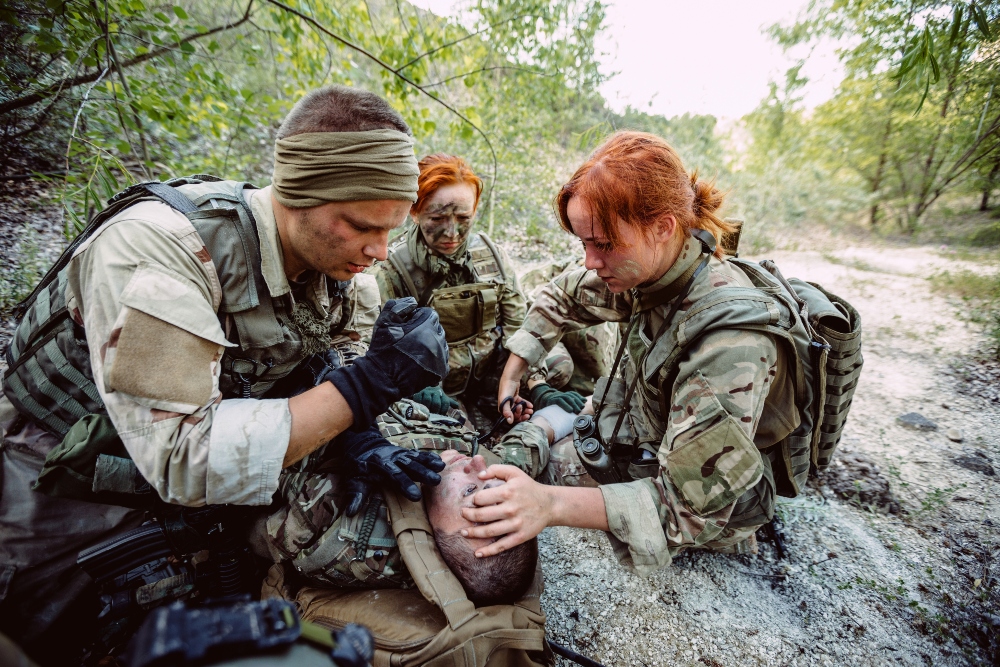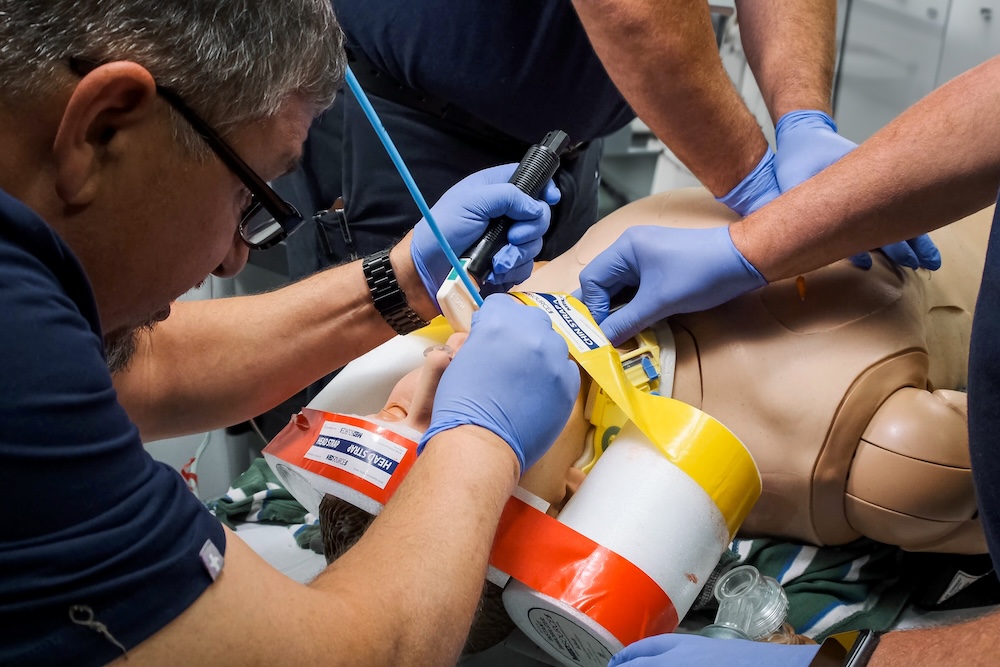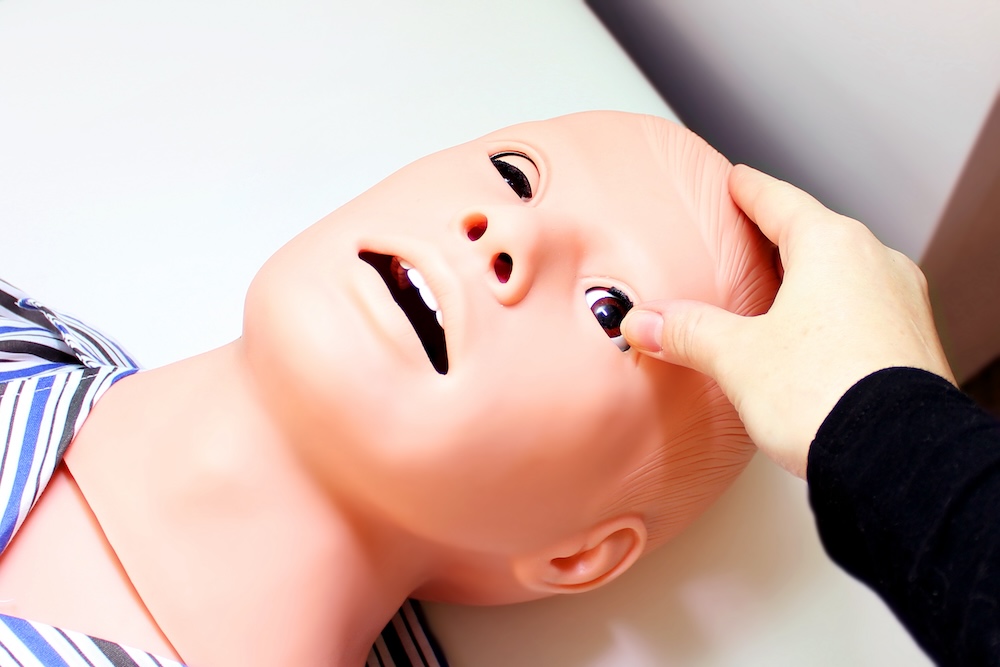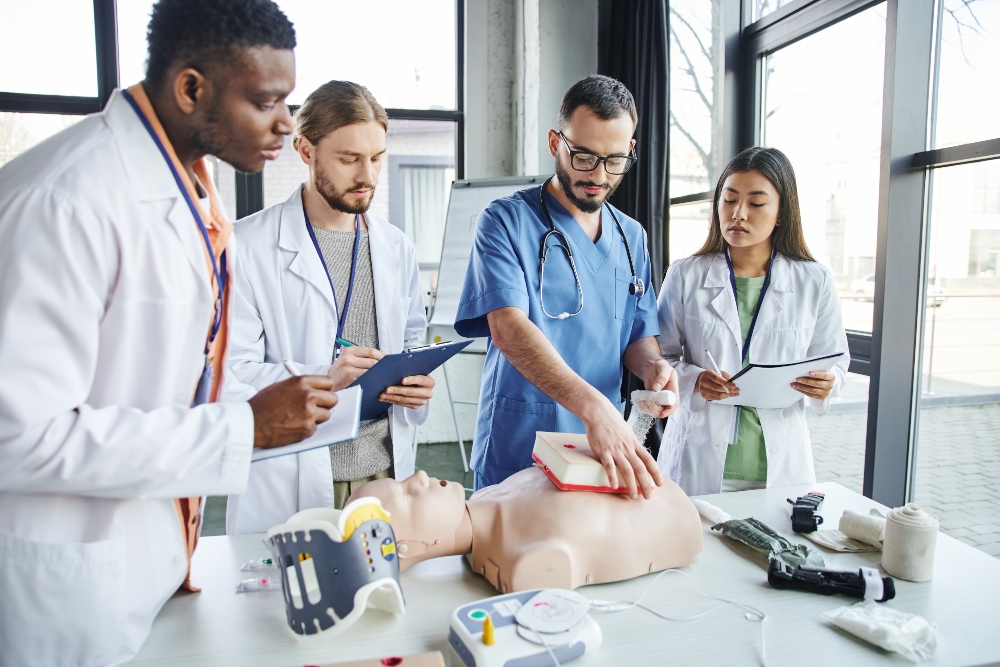

Military healthcare simulation is a type of medical simulation that uses education and training principles to help members of the military and related professionals gain the skills needed in the field. Often, this guidance comes in the form of military combat simulation training, which can be accomplished in a number of ways. From the use of virtual reality simulation headsets to manikins and standardized patients, military simulation is able to create realistic scenarios that military personnel must be ready and prepared for. These clinical simulation scenarios cover a wide range of experiences and focus relating to armed forces-based knowledge.
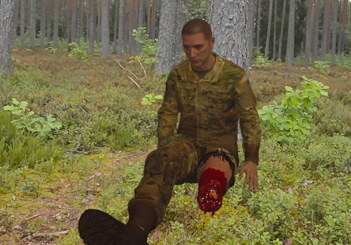
For example, today medics across the military are being instructed using VR simulation training. These medical simulation experiences help provide them with a foundation of knowledge they can later rely on when engaged in real-life situations. By putting on lightweight virtual reality headsets, they are able to transport themselves into high-definition immersive simulation experiences. In these virtual spaces, military medics or learners can partake in a scenario to become better prepared. Further, each scenario can be customized to establish the most impact for the particular method or technique they are being trained on.
Another benefit of enhanced, hands-on healthcare simulation training is that this resource introduces learners not only to performance techniques but can mimic realistic battlefield and overseas conditions. While learning how to effectively treat hemorrhage, airway compromise and tension pneumothorax are important, so is being able to provide aid in high-intensity situations in unfamiliar environments. With virtual reality simulation, this type of training is possible.
Military Medical Simulation Center Example
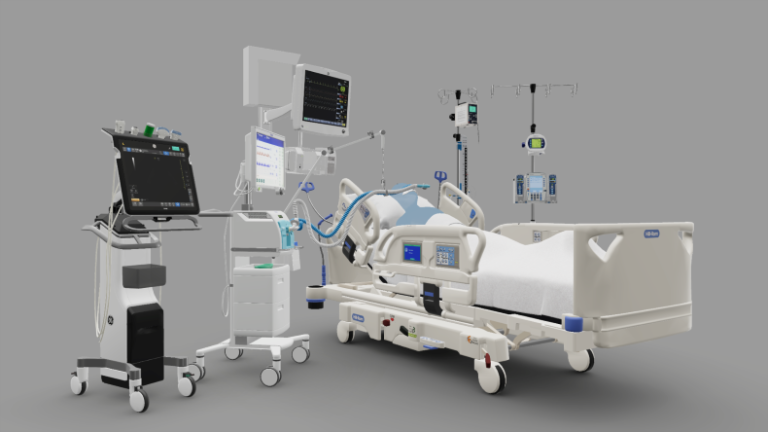
Medical Simulation Training Center: The Medical Simulation Training Center (MSTC) provides realistic medical training to both medical and non-medical Soldiers in the Active, Reserve, and National Guard. MSTCs provide hands-on instruction on the latest battlefield trauma and critical care techniques based on Medical Center of Excellence-approved performance-oriented Programs of Instruction. The Medical Training Command and Control (MT-C2) system is a command and control center that allows for remote training platform management by interfacing with the Instructor Support System and Virtual Patient System.
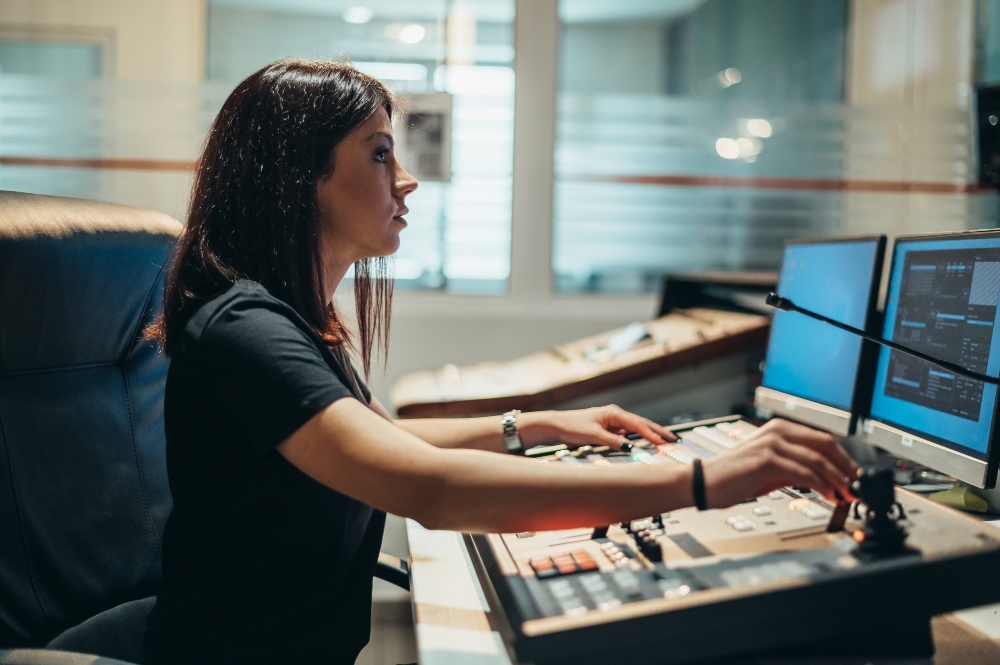
During an MSTC training event, Soldiers perform tasks on training devices within a high-stress, simulated combat environment. The MT-C2 system enables medical scenario integration, manikin control, audio-video surveillance, and recording, as well as providing the capability to manipulate the environments in which scenarios take place in order to maximize the positive impact and training experience.
Military Simulation Training Resources
SimX The VALOR Program: SimX partnered with the US Air Force to create the Virtual Advancement of Learning and Operational Readiness (VALOR) program. This program makes medical simulation more comprehensive, flexible, and accessible. The overall goal is to make simulation training iniquitous in both civilian and military medicine. VALOR’s guiding principle is to enable healthcare workers to train how they fight. Fully immersive training means better retention of skills and better preparation.
TacMed Solutions: Tactical Medical Solutions develops and manufactures customized emergency response technology, advanced healthcare simulation and training aids, and personal protective gear to effectively manage a spectrum of hostile environments and injuries. TacMed’s commitment to this life-saving mission is only matched by the integrity of the company’s team, the durability of products, and renowned customer support services. TacMed Solutions specialize in high-fidelity, ruggedized simulators to deliver the most lifelike experience for trainees while enabling field exercises in any environment and in any weather condition. Their simulators are the solution whether you are in a Clinical setting, Emergency Response, Military or Veterinary Field.
EMS Solutions for Military Medical Simulation and Government Simulation: SIMULATIONiQ CORE is a dynamic simulation management platform with robust audio-video workflows, including simulation scenario scheduling, high-quality video recording, inventory tracking, and immediate debriefing. Additionally, SIMULATIONiQ Portable is a powerful data capture and debrief solution that enables high-fidelity data collection and performance evaluation for on-the-go training environments. It can be used as a standalone unit or networked with SIMULATIONiQ Enterprise. Other clinical simulation solutions suited for military simulation training include SIMULATIONiQ Mobile and SIMULATIONiQ IPE.
Medical-X ADAM-X: ADAM-X provides a highly lifelike, flexible, and student-centered learning experience that reduces skills fade compared to traditional classroom learning. ADAM-X is also wireless and can be used in immersive high-pressure training simulations, while deployed on operations, or even onboard military transport to reinforce life-saving medical and teamwork skills. ADAM-X marks a new standard in terms of realistic form and function. The manikin is a reproduction of the skeletal and anatomical structure of a human. Its distinctive and unique human characteristics and features, including a cardiovascular system, a realistic respiratory tract, auscultation, and the ability to make sounds make all trauma emergency training more realistic.
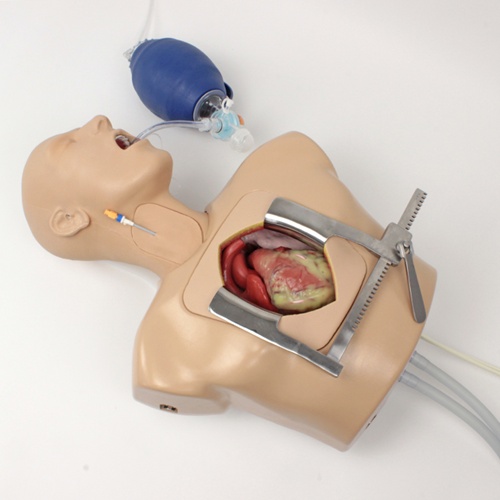
Operative Experience: Operative Experience Inc. makes hands-in-the-body medical simulators for obstetrics, trauma and surgical training. These healthcare simulation manikins are characterized by high anatomic fidelity and life-like tissue that can be incised, sutured and retracted using standard surgical instruments. Operative Experience (OEI) on September 18, 2024, announced that its Prolonged Casualty Care (PCCS Pro) Female simulator for trauma care training recently passed operational testing and has been accredited and authorized for procurement by the U.S. Army. The Army’s operational testing program conducts independent operational tests of new and emerging technologies that will improve a soldier’s capabilities on the modern-day battlefield.
Trauma Sim: TraumaSim is a global leader in healthcare simulation, renowned for delivering unmatched realism, precision, and medical detail in trauma training aids and moulage solutions. TraumaSim serves emergency services, military, healthcare, and other industries, preparing professionals for the physical, clinical, and emotional challenges of trauma and clinical care in a safe and hyper-realistic training environment. Since 2008, TraumaSim has been committed to providing the highest standard in simulation products, setting a benchmark for training excellence. Our team of talented artists and clinical experts craft each wound profile with medical accuracy, creating custom and bespoke solutions that suit any training need, whether clinical, military, or trauma-related.
Virti: Virti is an immersive, enterprise learning solution for healthcare simulation and training. The platform allows for the creation and cross-platform distribution of interactive, immersive (virtual reality in simulation, augmented reality in simulation and mixed reality) educational content. The Virti learning solution also provides analytics that intelligently predict how a learner will perform under pressure before they enter a real environment, increasing patient safety and situational awareness. This prediction is the result of research into cognitive decision-making under pressure and an immersive video platform. These factors are combined with augmented reality in medicine to help learners prepare for real-life and high-pressure scenarios including surgery, sports, emergency response and military training.
View the HealthySimulation.com Webinar Maximizing Efficiency in Medical Simulation Emergency Training to learn more!
Military Simulation Research
Military Medical Simulations—Scoping Review: A total of 43 articles met inclusion criteria. Trauma care was the focus of 65% of the studies; this is attributable to the criticality of trauma care within battlefield medicine and casualty response. Related to study outcomes, participant reactions, such as usability and user acceptance, and immediate learning outcomes were heavily studied.
Retention and behavioral changes were rarely studied and represent a significant research gap. Future research assessing mixed reality technologies would be beneficial to determine whether the technology warrants inclusion in programs of instruction. Finally, studies with outcome measures including long-term knowledge and skills retention, behavioral change, or patient outcomes are strongly recommended for future research.
Survey of Current Simulation Based Training in the US Military Health System: Complete survey responses were obtained from 75 of the 93 (80%) MHS medical simulation training programs. Across all skills included in the survey, those most commonly taught belonged predominantly to the categories of medic skills and nursing skills. Across all sites, the most common category of learner was the medic/corpsman (95% of sites), followed by nurses (87%), physicians (83%), non-medical combat lifesavers (59%), and others (28%) that included on-base first responders, law enforcement, fire fighters, and civilians. The skills training offered by programs included most commonly the tasks associated with medics/corpsmen (97%) followed by nursing (81%), advanced provider (77%), and General Medical Officer (GMO) skills (47%).
The survey demonstrated that the most common skills taught were all related to point of injury combat casualty care and addressed the most common causes of death on the battlefield. The availability of training in medic skills, nursing skills, and advanced provider skills were similar in small, medium, and large programs. Potential gaps in the availability of existing training are identified as over 50% of skills included in the nursing, advanced provider, and GMO skill categories are not covered by at least 80% of sites serving those learners.
View the new HealthySimulation.com Community Military Medical Simulation Group to discuss this topic with your Global Healthcare Simulation peers!
IoT-Enabled Smart Military Training for Virtual Simulation and Real-Time Performance Analysis: This paper presents an Internet of Things (IoT)-based virtual simulation and real-time feedback system suggested to revolutionize military training completely. Armed services personnel benefit from a more dynamic and interactive learning environment made accessible by this technology, increasing their fitness level for conflict. Central to the system are IoT-enabled sensors strategically positioned across the training environment and incorporated into wearable devices carried by the learners. Movement, biometrics, environmental, and geographic data are a few examples of the types of real-time information that these sensors continually collect.
The virtual simulation feature uses simulation equipment specifically designed to simulate military conditions, urban warfare situations, and emergencies. Through the integration of Virtual Reality (VR) and augmented Reality (AR) Interfaces, the system creates more realistic training environments for the learners to practice in. Sensor and wearable technology allow instructors real-time access to trainee performance data. Instructors can easily modify the training activities due to an easy instructor control interface. To protect crucial military training data from threats or breaches, the system’s design strongly emphasizes security and encryption measures. The benefits of training include better situational awareness, practical experience, and preparation for operations in the real world.
Military Psychiatry Operational Simulation Exercise (MPOSE): A Novel Teaching Curriculum: The article discusses the development and implementation of the Military Psychiatry Operational Simulation Exercise (MPOSE) as a novel teaching curriculum for military psychiatrists. The curriculum aims to enhance communication skills, leadership development, and operational readiness for military physicians. Through a 6-step process, the curriculum was designed to address specific military-specific competencies and was found to result in significant improvements in learners’ confidence levels across key competencies. The MPOSE curriculum can be easily adapted for other military residency programs to enhance their Military Unique Curriculum.
Ukrainian Healthcare Professionals’ Experiences During Operation Gunpowder: Implications for Increasing and Enhancing Training Partnerships: Because of the diverse backgrounds of their healthcare professionals, Ukrainian military medicine needs expanded and enhanced military medical training to increase their readiness in the war against Russia. During March 2023, eight Ukrainian healthcare professionals participated in Operation Gunpowder, a high-fidelity prolonged casualty care simulation conducted by the USU as a part of its Military Unique Curriculum. In order to evaluate their experiences, we interviewed each healthcare professional and analyzed the data to determine common themes. The participants described the challenges of operational medicine in Ukraine, benefits of simulation training such as learning how to navigate a resource-limited operational environment, learning prolonged casualty care, and enhancing leadership and teamwork.
Finally, the researchers discussed how they planned to implement training such as Operation Gunpowder in Ukraine in order to increase force readiness. After experiencing the prolonged casualty care simulation training, the Ukrainian participants believed Operation Gunpowder to be a valuable training tool due to its ability to help them overcome the current challenges they are facing in their war against Russia.
Past Present and Future of Simulation in Military Medicine: This research discusses the concept of modeling and simulation (M&S) has long been an integral part of war-fighter military training dating to before World War II when pilots and infantry soldiers would train with simulators and mockups to prepare for battle. The most recent wars involving the United States and coalition partners have created the need for more training and practice in life-saving procedures on the battlefield and in the hospital. Therefore, in the 1960s, simulation was accepted as a successful addition to the preparation of medical personnel. This research touches on the past, present, and future of simulation across military simulation.
Using Simulation to Train Medical Units for Deployment: Recent downsizing and budgeting issues have led to challenges when attempting to train military health care reserve forces. A specific military unit collaborated with a university simulation center in order to provide more meaningful training experiences that mirrored the deployment operational experience. The article discusses the processes used to initiate and build a simulation-based military health care training curriculum. The team consisted of an educator specializing in the use of simulation and military content experts.
Click Here to Connect to Leading Military Healthcare Simulation in the Vendor Directory