
Research in the field of healthcare simulation continues to advance rapidly, transforming healthcare education through groundbreaking findings worldwide. In this monthly HealthySimulation.com article series, Content Manager Teresa Gore, PhD, DNP, APRN, FNP-BC, CHSE-A, FSSH, FAAN, highlights key developments in clinical simulation research as of May 2025. This month’s medical simulation research focus includes team training, nursing academic research, surgical simulation, the development of the SQUIRE-SIM reporting guidelines, AI prompt-writing frameworks, biometrics, and clinical simulation facilitation in low-resource settings.
A Systematic Review on Conditions Before and After Training of Teamwork Competencies and the Effect on Transfer of Skills to the Clinical Workplace: The research team conducted a systematic review to assess if any condition before- or after simulation-based training of teamwork competencies for healthcare professionals affects learning or transfer of skills to the clinical environment. We screened 13,149 abstracts and 335 full texts, of which 5 studies were included. We assessed risk of bias using the ROBINS-I tool before narrative synthesis. All studies were observational and reported heterogeneous conditions such as posters, coaching, and leadership support initiatives. Very low certainty evidence suggested that implementing conditions in the clinical environment such as coaching, wider communication of learning objectives, or leadership initiatives could be considered to facilitate the transfer of skill to the clinical environment.
View the HealthySimulation.com Webinar Assessing Team Performance in Simulated Neonatal Resuscitation Programs to learn more!
The effect of scenario-based high reality simulation method on midwifery students’ problem solving skills and anxiety levels: A randomized controlled trial: The highlights of this study are the findings show that scenario-based high-reality clinical simulation application reduces the state anxiety levels of undergraduate midwifery students and that simulation application can have a positive impact on students’ problem-solving skills. Simulation is an effective teaching method for improving patient care, especially in high-risk scenarios where urgent and rapid interventions are required. Research highlights the importance of using simulation from the student period to enhance midwives’ skills in managing obstetric emergencies and improving their competencies. The findings of this study indicate that a single simulation experience is not more effective than the traditional educational approach in reducing post application anxiety, enhancing training satisfaction, and developing problem-solving abilities.
The impact of high-fidelity simulation training on first-year nursing students’ attitudes toward communication skills learning: A quasi-experimental study: Communication skills are essential for fostering nurse-patient relationships and ensuring quality nursing care, making them a critical competency in nursing education. Attitudes constitute powerful behavioral indicators and influence the learning process of nursing students. This study evaluated the effects of high-fidelity simulation training on first-year nursing students’ attitudes toward learning communication skills. The standardized patient performed different behaviors during each simulated nursing consultation: assertive, passive/noncompliant, depressed, aggressive, and agitated. High-fidelity simulation training using standardized patients allows first-year nursing students to improve their attitudes toward learning communication skills. This improvement can provide benefits directly related to nurse-patient relationships and high-quality nursing care.
View the new HealthySimulation.com Community Simulation Research Group to discuss this topic with your Global Healthcare Simulation peers!
From prompt to platform: an agentic AI workflow for healthcare simulation scenario design: Healthcare simulation scenario design remains a resource-intensive process, demanding significant time and expertise from educators. This article presents an innovative AI-driven agentic workflow for healthcare simulation scenario development, bridging technical capability with pedagogical effectiveness. The system evolved from an initial ChatGPT-based prototype to a sophisticated platform implementation utilizing multiple specialized AI agents. Each agent addresses specific sub-tasks, including objective formulation, patient narrative generation, diagnostic data creation, and debriefing point development. The workflow employs advanced AI methodologies including decomposition, prompt chaining, parallelization, retrieval-augmented generation, and iterative refinement, all orchestrated through a user-friendly conversational interface.
Critical to implementation was the demonstration that healthcare professionals with modest technical skills could develop these complex workflows without specialized AI expertise. The system ensures consistent adherence to established simulation guidelines, including INACSL Standards of Best Practice and ASPiH Standards Framework, while significantly reducing scenario development time by approximately 70–80%. Designed for broad applicability across diverse clinical settings and learner levels, the workflow incorporates multilingual capabilities for global application. Potential pitfalls include the necessity for rigorous review of AI-generated content and awareness of bias in model outputs. Key lessons learned emphasize interdisciplinary collaboration, systematic prompt refinement, essential human oversight, and the democratization of AI tools in healthcare education. This innovation demonstrates how sophisticated agentic AI implementations can transform healthcare simulation through enhanced efficiency, consistency, and accessibility without sacrificing pedagogical integrity.
SQUIRE-SIM (Standards for Quality Improvement Reporting Excellence for SIMulation)
: With increased incorporation of simulation-based methodologies into quality improvement activities, standards for reporting on simulation-specific elements in healthcare improvement research are needed. The team followed established consensus process methodology to iteratively create simulation-based extensions for SQUIRE 2.0 reporting guidelines. Recommendations from the expert panel were brought to a consensus meeting where existing guidelines were reviewed and recommendations made. Steering Committee members reviewed all recommendations, reconciled differences, and made final recommendations, which were piloted by experienced simulation and quality improvement researchers.
Fifteen Steering Committee members, 59 experts in simulation and quality improvement research, and 86 consensus meeting attendees reviewed SQUIRE 2.0 reporting guidelines and ultimately recommended simulation-based reporting guidelines for 22 of the 41 (54%) SQUIRE 2.0 guidelines. The team created simulation-based extensions to SQUIRE 2.0 reporting guidelines to improve the quality and standardization of reporting on simulation-specific elements of healthcare improvement research.
Biometric-Driven Adaptation in Healthcare Simulation: A potential way to bridge learner and environment: Extended Reality (XR) encompasses Virtual Reality (VR), Augmented Reality (AR), and Mixed Reality (MR), blending the physical and digital worlds to create immersive experiences. Healthcare simulation has evolved significantly with XR technologies, yet a critical gap exists between technical skill development and emotional resilience training. This overview of literature synthesizes current implementation on biometric-driven adaptation in healthcare simulation, highlighting opportunities for innovation through the integration of physiological monitoring with adaptive learning environments.
Assessing healthcare simulation facilitation using a competency-based tool derived from practice in low-resource settings: The worldwide expansion in healthcare simulation training includes accelerated uptake in low-resource settings. Until recently, no framework has specifically delineated the competencies underpinning effective facilitation practice in low-resource settings. We describe the development of the Facilitation Behavioural Assessment Tool for simulation facilitation training and report reliability in scoring facilitation performance. This tool was informed by healthcare simulation facilitation practice in low-resource settings. Our study shows that suitable reliability and internal consistency can be achieved when using the Facilitation Behavioural Assessment Tool. We recommend using the tool to support learning conversations for simulation faculty development in low-resource settings.
Standardized patient simulation in nursing education: A bibliometric analysis and visualization from 2002 to 2024: This study employed a bibliometric analysis to examine the existing literature on the use of standardised patient simulation in nursing education. SP simulation offers students the opportunity to directly interact with a range of nursing interventions and practices. It demonstrates that SP simulation can be used as an active learning methodology in nursing education. A total of 198 publications were published in 2002–2024. The publications had 3042 citations. The number of studies examining the efficacy of using standard patient simulators in nursing education has seen a notable increase in recent years. The findings of this study may offer researchers and nursing faculties new insights into the value of incorporating standardised patient simulation into nursing education, as well as potential applications of such an approach.
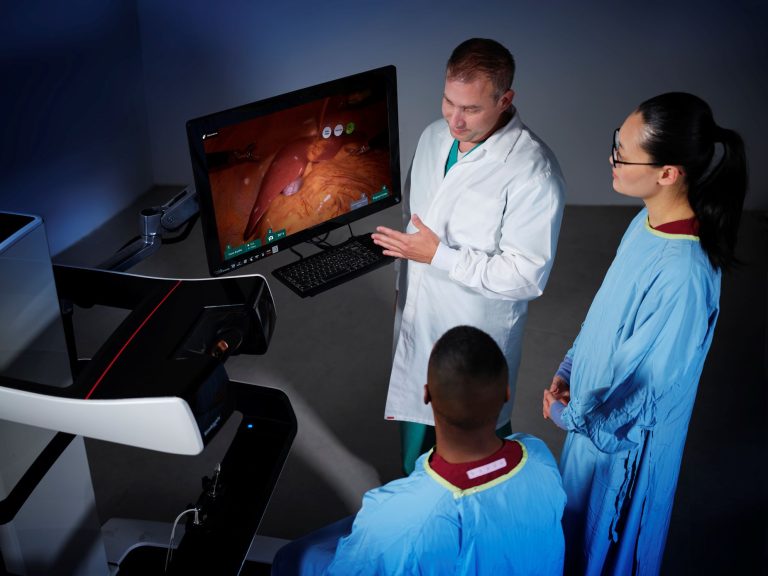
Surgical simulation educational research: Surgical simulation is increasingly embedded in training programs. Diverse simulation modalities offer opportunities to support learning in wide-ranging competencies. The article outlines these classifications and offers simulation examples. The surgical simulation community have published research priorities with most articles reflecting strong positivist notions of research. We believe this is a limited view and argue for research that seeks to deepen understanding of how simulation supports learning and can prepare trainees for the complexity of surgical practice. We acknowledge the role of professional communities in advancing simulation research and look to a future of interdisciplinary research. We propose emphasis on synthesizing the current body of knowledge, consulting with real patients for educational focus, fostering interprofessional simulation, clarifying terms used in simulation practice and ensuring high-quality simulation practice aligned with published frameworks.