
A simulation lab in healthcare is designed to provide immersive learning experiences for healthcare practitioners and students. A clinical simulation center, which consists of a realistic clinical sim lab rooms, manikins, and equipment that allows learners to practice and develop clinical expertise without any risk of patient harm. Also called a Sim Lab, learners utilize these spaces to apply their theoretical knowledge in carefully created hands-on scenarios that mimic various clinical situations. These scenarios range in complexity and/or skill level. For example, healthcare simulation may be used for undergraduate medical and nursing schools, internships, residencies, and training programs for qualified practitioners. Some examples of healthcare simulation scenarios include asthma attacks in pediatric patients, GI bleed, labor and delivery complications, cardiac arrest, and newborn hypoxia. In addition, medical simulation provides a unique opportunity for hospital staff and students to practice team communication, interdisciplinary care, and patient safety. This HealthySimulation.com article by Founder/CEO Lance Baily will highlight the purpose and spaces of a healthcare simulation lab.
Clinical Simulation Lab spaces may be divided into three main areas:
- Prebriefing Space: Information is provided to learners about a patient situation that serves as the foundation for the simulated clinical experience. A review of expectations, equipment to be used, and objectives may be included. INACSL has written a Healthcare Simulation Standard of Best Practice on Prebriefing.
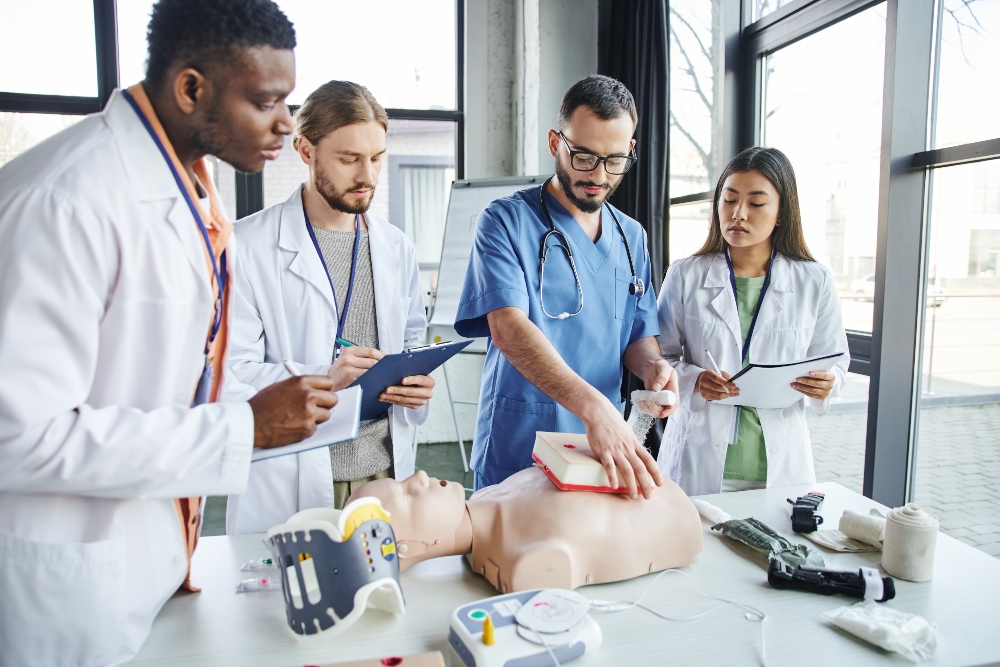
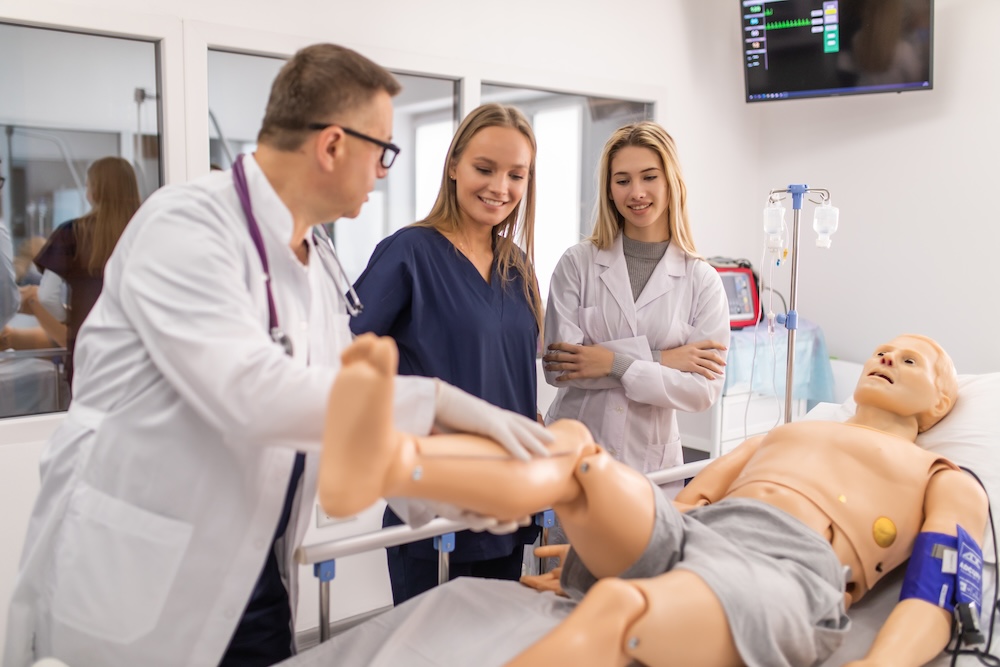
- Clinical Simulation Lab Space: Where a scenario case study with specific learning outcomes can be reproduced with a high-fidelity patient simulator, other medical simulators, or Standardized / Simulated Patients. Learners, who assume a variety of healthcare roles, must respond to the scenario as if they were with a real patient. Additional learners may watch and listen either through a one-way mirror or remotely via a live video transmission as part of the clinical simulation experience.
- Debriefing Space: Learners review and reflect on their actions in the scenario, identify what went well and what did not (aka practice gaps), and identify ways to improve future performance. Debriefing is a key component of simulation education in which learners reflect on their own behaviors, learn from the experience, change future behaviors, and become better healthcare practitioners.
The greater the realism or fidelity of the clinical simulation scenario and environment in the healthcare simulation lab to real life, the more likely learners are to suspend disbelief and immerse themselves as if they were in a real-life clinical case.
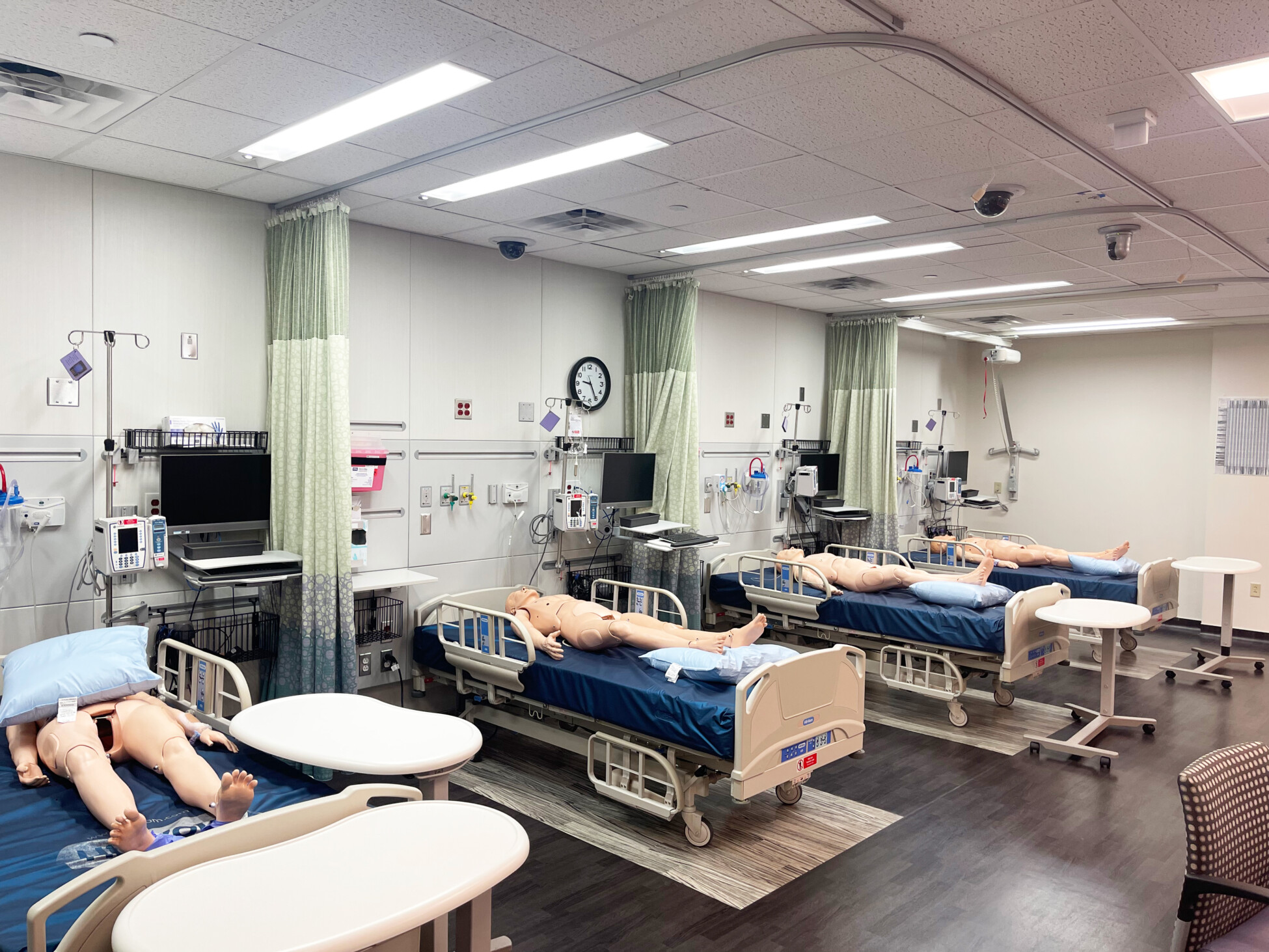
Clinical simulation labs are built to mimic various hospital locations such as emergency rooms, operating theaters, critical care units, labor and delivery rooms, general medical-surgical floors (wards), and pediatric intensive care units. Some simulation programs have pre- and post-acute care environments to provide learners with clinical experiences outside the traditional hospital walls. Some academic healthcare institutions and hospitals have a single simulation lab with or without separate debriefing and control rooms. Healthcare simulation programs use a simulation lab environment, so there is a protected learning space and the ability to change clinical equipment around to match the desired learning outcomes.
View the HealthySimulation.com Webinar Avoiding Costly Sim Center Design Mistakes! Lessons from Clinical Simulation Consultants to learn more!
Large simulation centers have a cluster of medical sim labs or nursing sim labs, along with clinical simulation debriefing rooms, control rooms, preparation rooms, and storage rooms. In addition, there may be patient examination rooms, separate labs for task trainers and surgical simulators, as well as classrooms and computer rooms for computer-assisted learning and virtual reality. This environment allows a variety of healthcare simulation modalities to be delivered, as well as a range of fidelity levels.
Healthcare simulation labs contain a variety of specialized patient manikins (models), electronics, and audio-video equipment. The quantity and type of equipment depends on the learning needs of the participants, the available space, and the budget to operate, build, maintain, and staff each laboratory.
Simulation Lab Equipment Examples
- Human Patient Simulators or manikins: Simulate symptoms and diseases.
- Examples: SimMan from Laerdal, Noelle from Gaumard, HPS from Elevate Healthcare
- Fidelity – the degree of realism to which the manikin mimics physiological functions
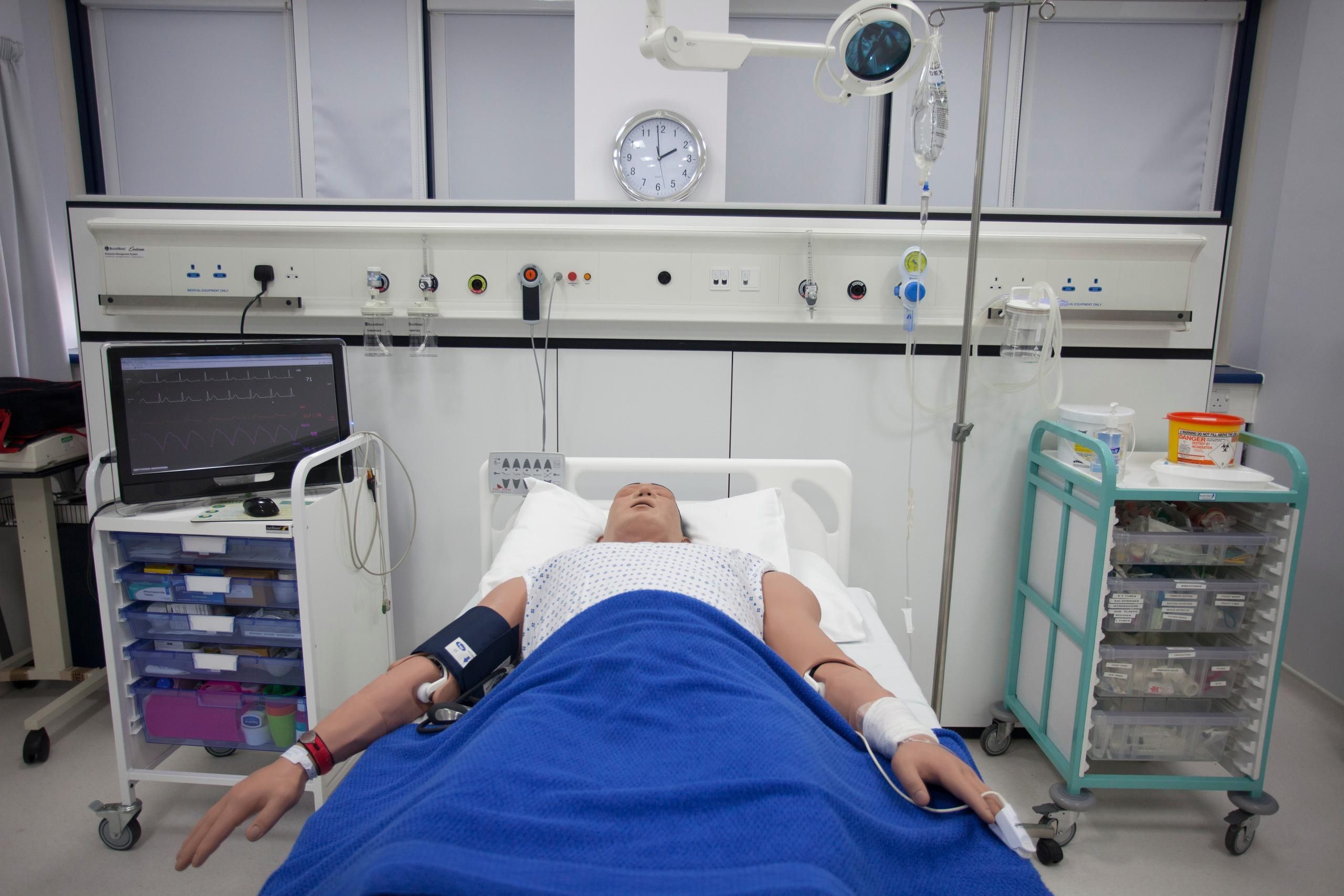
- High Fidelity Simulators – Patient manikins that mimic many complex biological systems such as cardiac and respiratory functions, measurable blood pressure, palpable pulses, EKG displays, pulse oximeter, arterial waveforms, pulmonary artery waveforms and anesthetic gasses.
- Possible interventions e.g. bag-mask ventilation, intubation, defibrillation, chest tube placement, cricothyrotomy and others.Manikins are computerized, contain hydraulics and compressors and have external monitors which display various physiological waveforms.Specialized manikins such as trauma manikins, birthing manikins, newborn, premature babies and pediatric manikins.
- Mid-fidelity manikins– Limited number of physiological characteristics such as cardiac and respiratory indicators.
- Low-fidelity manikins – appear very much like real people, but have no other physiological functionality. These manikins are used for skills or task trainers, basic care tasks, and safe patient handling.
- Audio-video equipment such as cameras, microphones, and speakers. This equipment is used in the scenario to provide information to the learners involved in the scenario, to relay sound and video to learners who watch in other rooms, and to record and playback the scenario for debrief at the completion of the scenario.
- Bedside computers for access to simulated electronic health records and lab results.
- Medication administration devices such as refurbished or simulated IV pumps, PCA pumps, and oral medication dispensing systems.
- Headwalls – typically mimic those found in hospitals – may contain oxygen and air outlets, suction, lights, diagnostic equipment such as blood pressure cuffs and sphygmomanometers. Some healthcare simulation labs have compressed while others have oxygen and suction in the headwalls.
- Additional Medical Room Equipment:
- Crash cartsEKG machines and other diagnostic equipmentAnesthesia equipmentSurgical instrumentsVentilatorsDefibrillatorsTelephoneFurniture such as hospital bed, over-the-bed table, bedside cabinet, crib, bassinet, baby-warmer etc.
- Equipment and medical supplies to be used in the scenario e.g. blood pressure machines, catheterization supplies, wound care supplies, CVL site care, and chest tubes.
- Examples: SimMan from Laerdal, Noelle from Gaumard, HPS from Elevate Healthcare
Considerations To Build a Simulation Lab
The design and construction of a clinical simulation lab require extensive planning and preparation. All stakeholders, such as facilities, IT, and architecture, should be consulted and involved in the initial phases. Learning outcomes and learner levels should be identified, along with the budget and available space. Faculty development is key to ensure that healthcare simulation programs are successful. High-fidelity patient simulators will go unused if faculty do not understand healthcare simulation pedagogy, such as clinical simulation scenario development and debriefing.
A budget is required for healthcare simulation technologists to operate, maintain, repair, and replace equipment as the equipment becomes obsolete. Annual maintenance contracts are helpful, but costly. Healthcare simulation program managers and administrative staff should also be included in the process. There is always the risk with the purchase of expensive, high-fidelity manikins, and they are rarely used and sit in a storage room. The purchase of a high-fidelity manikin alone is not enough to make a healthcare simulation program successful. Less expensive mid-fidelity patient manikins may work very effectively for some healthcare simulation programs.
View the new HealthySimulation.com Community Simulation Lab Planning Group to discuss this topic with your Global Healthcare Simulation peers!
Simulation Lab Benefits
The use of nursing simulation labs has increased dramatically over the past 15 to 20 years. The benefits of healthcare simulation to improve healthcare education are well-documented. Clinical expertise comes with practice and experience in the management of an array of clinical situations. Clinical Sim Labs provide the ideal learning space where healthcare professionals at all levels can practice and improve their clinical skills without any potential harm to patients.
A simulation lab provides a protected environment for healthcare simulation to take place. In situ clinical simulation is great because it allows practice in an actual clinical environment. This allows the opportunity to find potential latent safety threats in clinical environments and reduce harm and risk of errors to patients in clinical care. This also allows healthcare staff to be able to practice and hone their clinical care in a real clinical environment. However, there are many challenges to in situ clinical simulation. Clinical simulation, which is delivered in situ, can be canceled due to a lack of bed space availability or clinical staff are pulled back into clinical workload.