
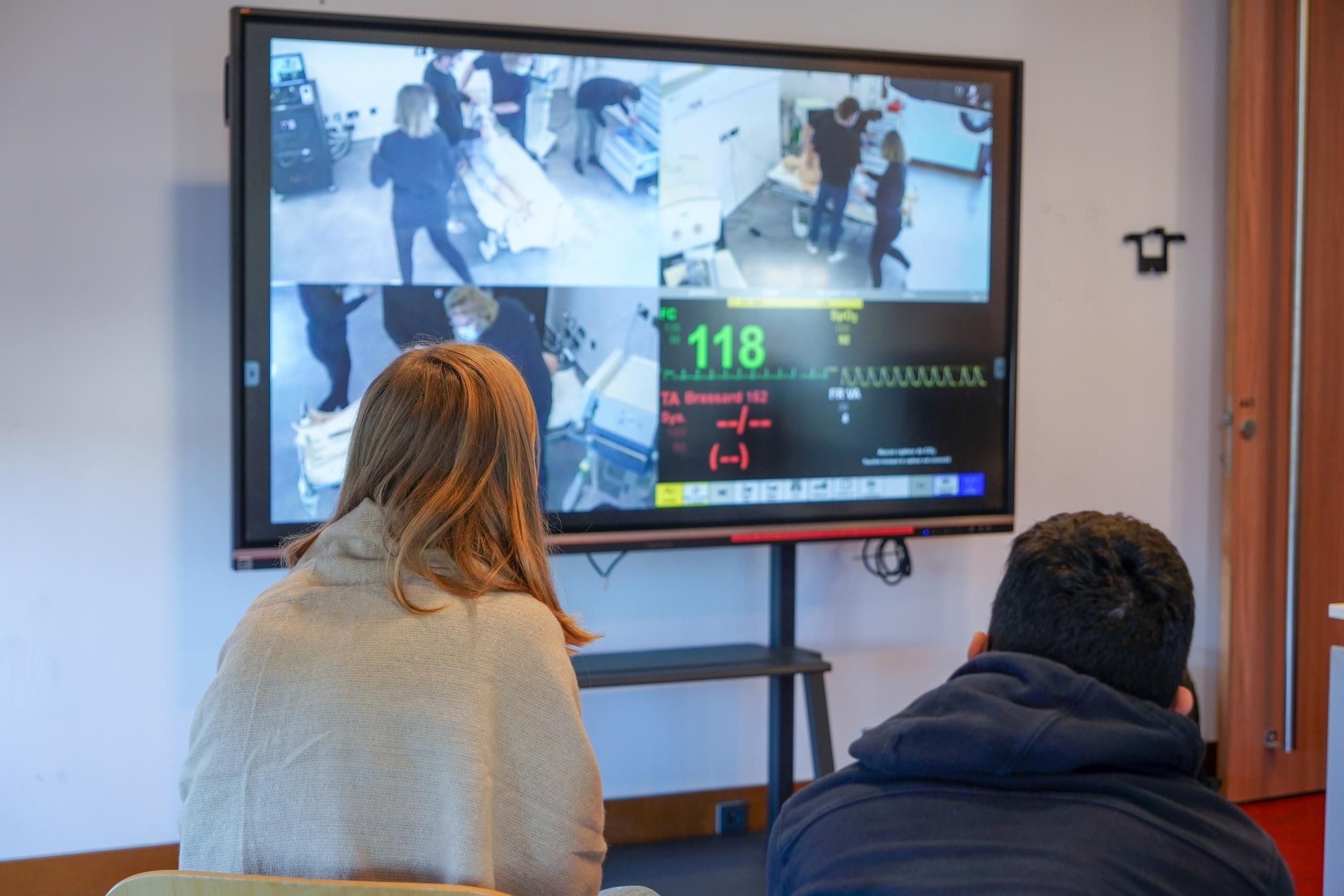
A clinical simulation program is an educational initiative that allows learners to hone in on and practice new healthcare skills to improve patient safety outcomes to ultimately reduce medical errors. The primary purpose of clinical simulation is to deliver high-quality, realistic simulated clinical learning experiences in both discipline-specific and interprofessional environments to prepare for an evolving healthcare system. Another goal of healthcare simulation programs is to improve the competence and performance of specific simulation-based practices. This is achieved through the development of critical thinking and the application of effective teamwork and communication strategies. This HealthySimulation.com article will highlight the purpose and development of a healthcare simulation program.
What is a Clinical Simulation Program?
Clinical simulation programs often exist across university degree programs and within medical facilities to assist in the training of healthcare learners and professionals. While simulation programs may encompass different focuses/disciplines and utilize individualized solutions and technology, there are several components that tend to remain consistent. Most medical simulation programs rely on:
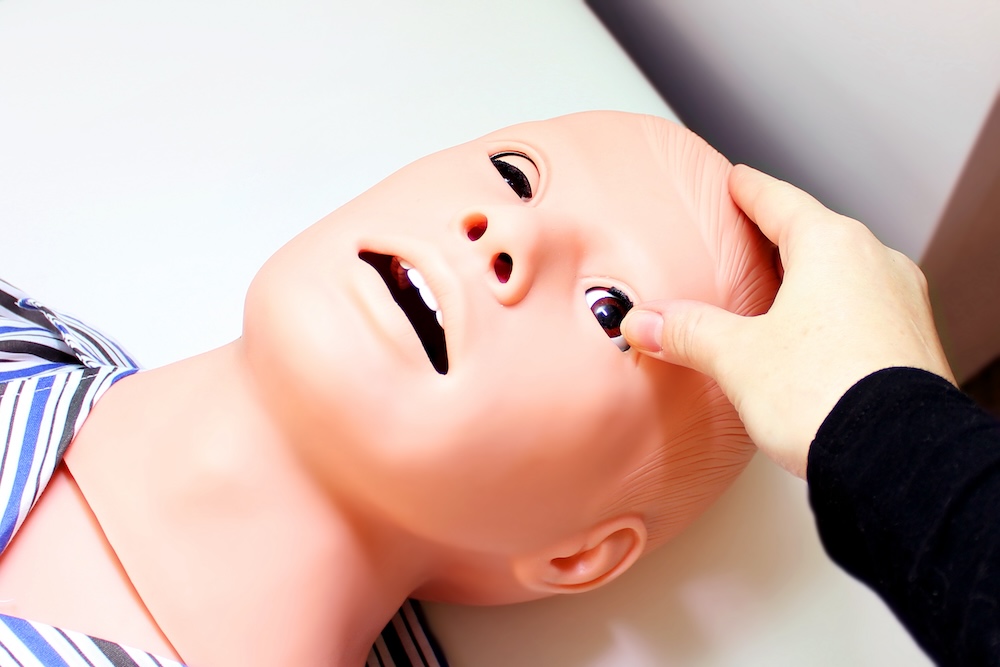
- Manikins: high- to low-fidelity
- Moulage
- Virtual Reality
- Standardized Patients/Participants (SPs)
- Task Trainers
- Role Playing
- Deliberate Practice of hard and soft skills
- Exposure to medical equipment
- Planned Debriefing
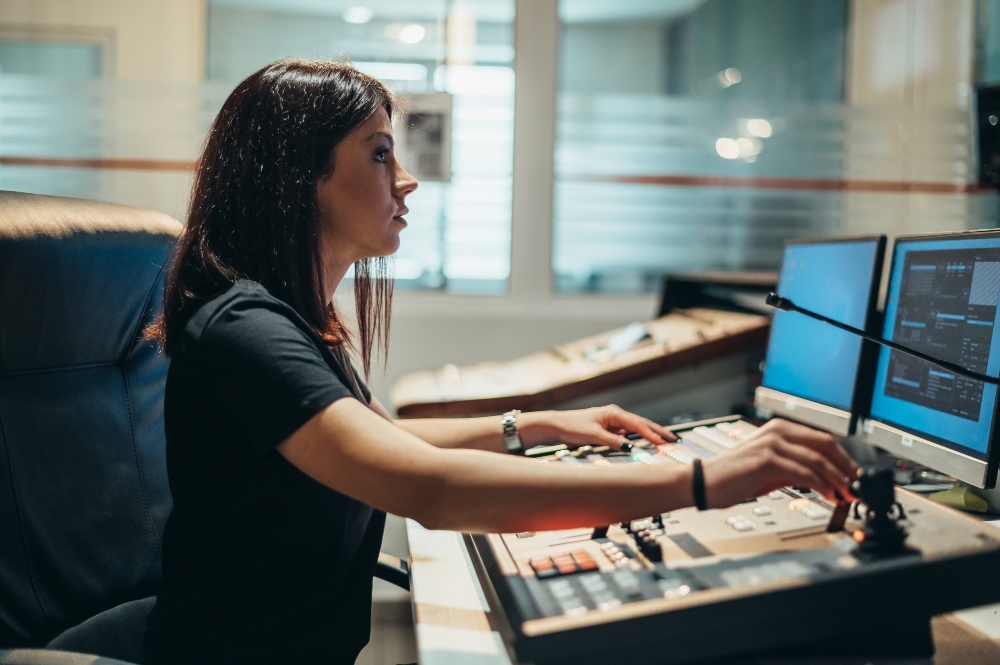
- Audiovisual capture system
Team Development Simulation
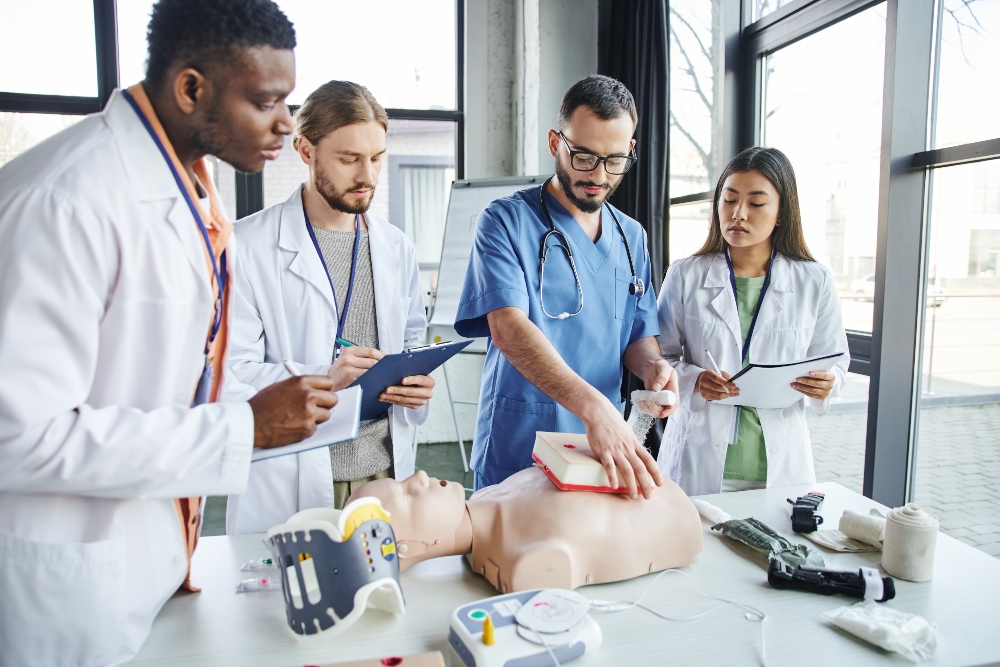
An example of a simulation program component application is a high-fidelity team simulation. This core competency learning can include the creation of realistic scenarios that allow learners to improve their team dynamics and communication skills in high-risk, low-frequency, and life-threatening situations. High fidelity and effective communication strategies reinforcement during standardized Pediatric and Adult Advanced Life Support scenarios to the most complex and unique scenarios.
Technical Skills Application
Other disciplines can include technical skills development training, SP encounters, healthcare simulation faculty development, in-situ systems evaluation, mock codes, and more. Other topics that can be covered within a simulation program can be audio-visual recording, remote simulation, moulage, virtual reality training, and new department training, as well as others.
Size and Types of Clinical Simulation Programs
The size of a healthcare simulation program largely depends on the university or the facility through which it is offered. Some clinical simulation programs accept small numbers of learners, ranging from just a few to upwards of 10 or 15, while others have much greater enrollment capacities (over 200). Similarly, the type of simulation program offered at a particular institution or facility is dependent on a number of factors. For example, if a healthcare simulation center is affiliated with a particular university, clinic, or hospital – and what that facility feels professionals need to enter the practice field.
The types of clinical simulation modalities and scenarios offered depend on the learning objectives and outcomes to be accomplished. For soft skills like effective, therapeutic communication, the modality could be standardized patients/participants, role playing, or virtual reality. If the objectives are to recognize a deteriorating patient condition and respond appropriately to improve patient outcomes, the modality could be scaffolded from skills lab to start a peripheral IV, then virtual reality to identify when the IV needs to be inserted, to high-fidelity for a patient with cardiac decompensation that requires an IV insertion with medication administration.
View the HealthySimulation.com Webinar Considerations for Developing, Improving, and Advancing Clinical Simulation Programs to learn more!
Clinical Simulation Delivery
Further, simulation programs today may be completed both in-person and virtually. This is because many healthcare simulation centers now offer their simulation experiences online and in-person to make them more accessible to a greater number of learners and professionals. COVID-19 taught the healthcare simulation community that simulation program courses could be delivered virtually and remain effective.
Standardized Patients/Participants
At these institutions and facilities, healthcare simulation programs are typically run by clinical simulation educators who work to ensure that all curriculum goals are met. Standardized patients can be employed to assist with the healthcare simulation scenarios and experiences to increase realism, and a simulation center director may oversee the simulation program’s entirety.
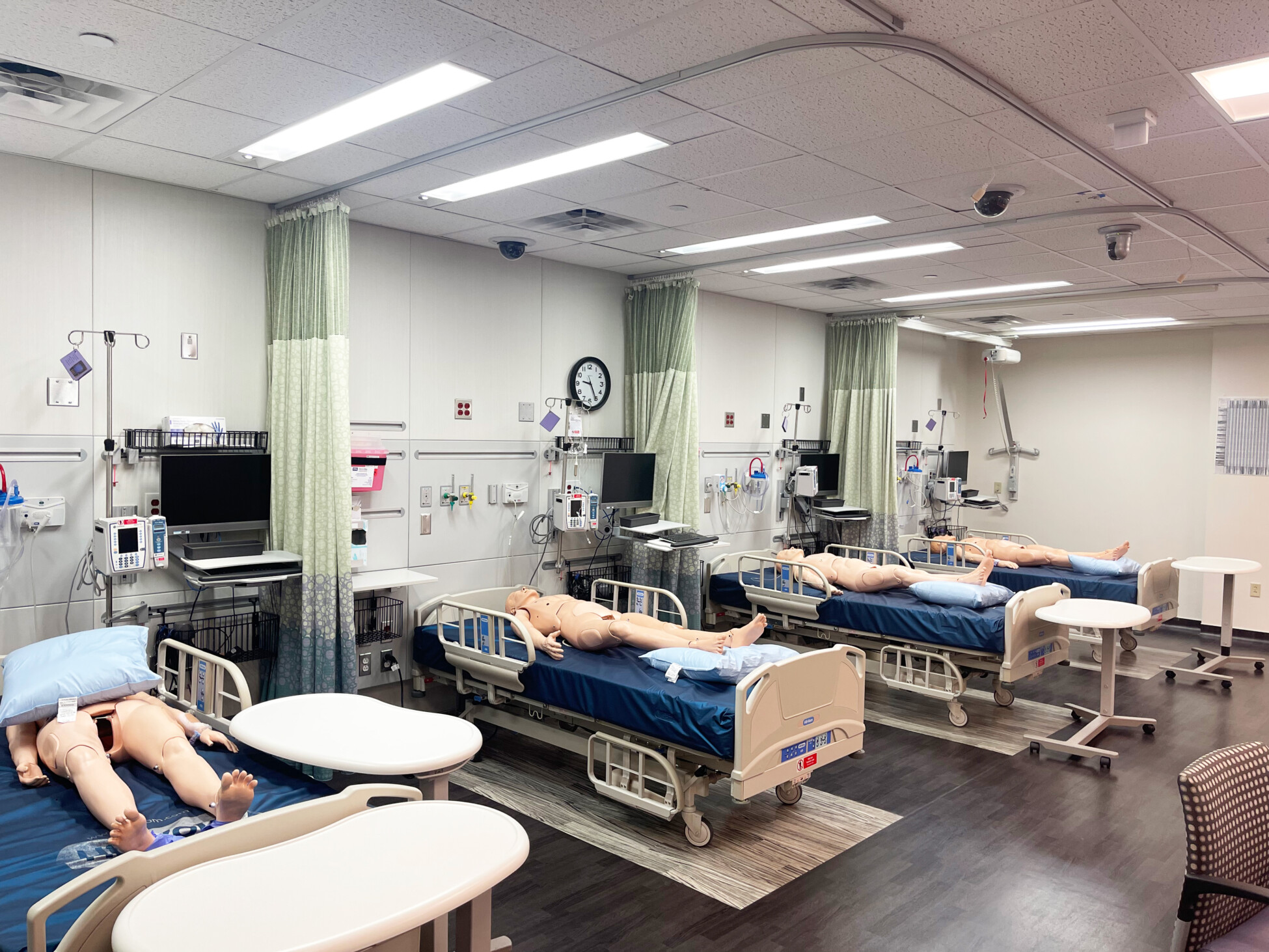
Remember, a simulation program differs from a simulation center in that a simulation center is the facility in which a clinical simulation program and the included clinical skills activities can take place. Additionally, a simulation program is different from a simulation lab, because the lab is the physical space where simulation lessons and learning activities can be performed. A clinical simulation lab is often where medical simulation equipment and technology are housed for use and security.
View the new HealthySimulation.com Community Simulation Lab Planning Group to discuss this topic with your Global Healthcare Simulation peers!
Ongoing Simulation Professional Development
To deliver effective, high-quality healthcare simulation programs, the clinical simulation administrators, educators, and operations specialists need to be trained in the pedagogy of healthcare simulation. Clinical simulation is not just technology, so individuals require training to develop clinical simulation scenarios, maintain the simulation program environment and equipment, and deliver evidence-based facilitation and debriefing. To accomplish this, healthcare simulation programs must offer professional development opportunities both within their own institutions and through external organizations. This can be accomplished through non-profit and for-profit organizations.
Simulation Program Examples
Winter Institute for Simulation Education and Research (WISER): WISER is a world-class multidisciplinary healthcare simulation training and research facility out of UPMC. The institute offers several simulation programs, including the fellowship program that is designed for individuals that would like to participate in a one to two-year curriculum that includes the WISER Foundation, electives, workshops, course observations, and a scholarly project. Another program, the preceptorship program, is designed for individuals that would like to participate in a structured one to 11-month curriculum that includes the WISER Foundation, electives, workshops, and course observations. Additionally, the professional development program was developed for individuals that would like to participate in a structured curriculum that includes the WISER Foundation, electives, and course observations.
Clinical Simulation Center of Las Vegas (CSCLV): The CSCLV is a 31,000-square-foot facility located at UNLV’s Shadow Lane Campus. Surgical skills are a priority to the general surgery residency program for the University of Nevada School of Medicine and have been for years. This healthcare simulation program utilizes three state-of-the-art Simman 3G’s from Laerdal, as well as the Noelle Birthing manikin and pediatric models from Gaumard. The audio and video utilized throughout the program feed from the labs and debriefing rooms are digitally captured and recorded for playback by nine B-Line Simcapture servers and managed by Simbridge. All in all the realistic environment and lifelike manikins provided by CSCLV help learners better engage in clinical simulation and learn how to respond to the patient’s specific needs in real life.
Cedars Sinai Women’s Guild Simulation Center for Advanced Clinical Skills: The Women’s Guild Simulation Center for Advanced Clinical Skills is an immersive environment equipped with the latest in patient simulators and medical devices, and replicates the reality of professionals working together. The Center has a variety of programs, such as the Clinical Scholars Program, which helps fulfill Cedars-Sinai‘s fundamental mission of service to the community by educating and training healthcare professionals and medical research personnel. Then, the healthcare immersion program for high school students allows for real hands-on experiences, including being able to:
- Experience managing a sick patient’s airway
- Visit a fully working operating room and experience a surgical simulation
- Understand how to gain vascular access by passing a needle into a bone
- Use virtual surgical simulators to practice hands-on surgery
- Practice and develop your resuscitation skills
Cedars-Sinai also provides a one-year clinical laboratory scientist hands-on clinical experience in conjunction with California State University, Dominguez Hills (CSUDH), and California State University, Los Angeles (CSULA). The program includes 32 hours per week of laboratory rotations at Cedars-Sinai, as well as six to eight hours of classroom instruction provided by the school each week. Learn more about simulation programs by reading the articles below.
Looking to better understand the needs of developing a successful healthcare simulation program? Check out the INACSL Healthcare Simulation Standards of Best Practice for a comprehensive list of must-know terms, needs, and resources.
Click Here to Learn More About Non-Profit Healthcare Simulation Organizations!