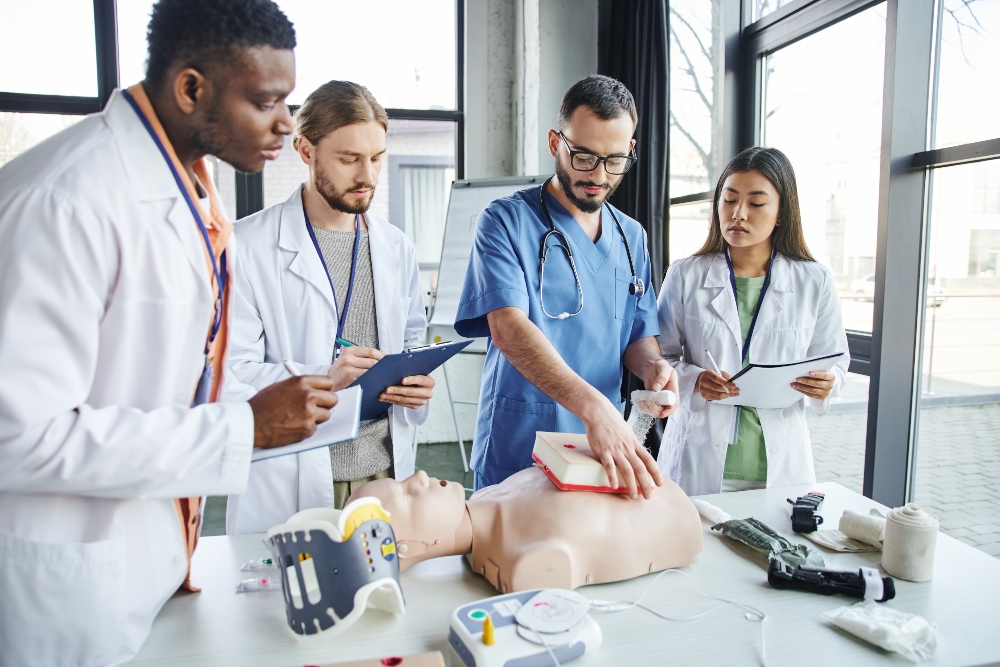


Healthcare simulation educators frequently encounter learners whose response to clinical simulation scenarios involves excessive laughter, apparent discomfort with the seriousness of the situation, or behaviors that suggest they are not fully engaged with learning objectives. While some degree of nervous laughter or lightheartedness can be normal in simulation environments, persistent disruptive behavior can undermine the educational experience for the entire group and compromise learning outcomes. This article, by Rémy Roe, PhD, CHSE, CHSOS, explores evidence-based strategies for the comprehension and management of learners who appear to treat simulation scenarios as entertainment rather than serious educational opportunities.
The phenomenon of inappropriate laughter or apparent lack of seriousness in simulation represents a complex challenge that requires careful analysis and thoughtful intervention. Simulation educators must distinguish between nervous responses to high-stress environments and genuine disrespect for the educational process. Awareness of the unseen causes of these behaviors enables educators to respond appropriately and maintain the psychological safety essential for effective simulation-based education.
The Psychology Behind Disruptive Laughter
Excessive laughter in simulation environments often stems from psychological defense mechanisms rather than genuine disrespect for the learning process. Learners may use humor as a coping strategy when faced with unfamiliar situations, high-stakes scenarios, or fear of judgment from peers and instructors. The artificial nature of simulation can create cognitive dissonance for some learners, which leads to nervous laughter as they struggle to suspend disbelief and engage authentically with manikins or standardized patients.
Anxiety manifests differently across individuals, and what appears as a lack of seriousness may actually represent a learner’s attempt to manage stress. New learners may feel inadequate when confronted with complex clinical scenarios and resort to humor as a means to deflect attention from their perceived incompetence. This defensive response can become habitual if not addressed early in the learning process.
Cultural factors also influence how learners respond to simulation scenarios. Some cultural backgrounds discourage direct confrontation with authority figures or open admission of uncertainty, which results in learners who use humor as a socially acceptable way to navigate uncomfortable situations. Awareness of these cultural nuances helps educators respond with sensitivity and still maintain educational standards. The social dynamics within groups can also amplify inappropriate behaviors. When one learner begins to treat scenarios lightly, others may follow suit to maintain group cohesion or avoid the perception that they are overly serious compared to their peers. This social contagion effect can quickly transform a focused learning environment into an unproductive social event.
View the HealthySimulation.com Webinar Healthcare Simulation Debriefing Strategies & Courses from Top Experts at The Debriefing Academy to learn more!
Immediate Intervention Strategies
When confronted with disruptive laughter or apparent lack of seriousness, simulation educators must act swiftly but thoughtfully to redirect behavior without alienation of the learner or a compromise in psychological safety. The initial response sets the tone for the remainder of the session and influences how other learners perceive the educational environment. A direct but private conversation represents the most effective first-line approach. Rather than a confrontation with the disruptive learner in front of the group, educators should pause the scenario and speak privately with the individual. This conversation should focus on comprehension of the cause of the behavior rather than a simple demand of compliance. Questions such as “I notice you seem uncomfortable with this scenario, can you help me understand what’s happening?” demonstrate concern for the learner and address the problematic behavior.
A reframe of the scenario’s relevance can also help learners connect with the educational objectives. When learners understand how the simulation relates to real patient care they will provide, they often naturally adjust their behavior. Educators might say, “This scenario represents a situation you will likely face within the next six months. How do you want your future patients to experience your care?” This approach connects the artificial simulation environment to genuine professional responsibilities.
The establishment of clear behavioral expectations at the start of each session prevents many problems before they occur. Educators should establish ground rules that emphasize respect for the clinical simulation environment, the scenarios, and fellow learners. These expectations should be presented as professional standards rather than arbitrary rules, which helps learners understand the connection between simulation behavior and future clinical practice.
View the new HealthySimulation.com Community Debriefing Group to discuss this topic with your Global Healthcare Simulation peers!
Address Anxiety and Discomfort
Many learners experience significant anxiety about their performance or competence, but appear unserious. Simulation environments can feel psychologically unsafe for learners who fear judgment, ridicule, or failure. To address this requires the creation of supportive environments where learners feel comfortable with the acknowledgement of their limitations and requests for help. Moreover, to normalize uncertainty and mistakes helps reduce the anxiety that drives defensive humor. Educators should openly discuss how simulation provides safe spaces for learning through trial and error and emphasize that mistakes are expected and valuable. Shared stories of experienced clinicians who made similar errors help learners understand that uncertainty is part of professional development rather than personal inadequacy.
Structure and clear expectations reduce anxiety for learners who feel overwhelmed by open-ended scenarios. When clinical simulations break complex scenarios into smaller, manageable components, it allows anxious learners to focus on specific skills rather than the entire situation. This scaffolded approach builds confidence gradually while reducing the defensive behaviors that stem from feeling unprepared.
Pre-scenario briefs that include psychological preparation help learners manage their emotional responses. Educators can acknowledge that simulation feels artificial and that some discomfort is normal. The provision of specific strategies for engagement with manikins or standardized patients helps learners overcome the cognitive barriers that lead to inappropriate laughter.
Redirect Energy Toward Learning Objectives
Learners who use humor excessively often possess high energy levels that can be channeled productively if properly directed. Rather than suppress this energy entirely, skilled educators can harness it to enhance outcomes for the entire group. Assign specific roles and responsibilities to give energetic learners constructive outlets for their enthusiasm. Make the disruptive learner responsible for specific aspects of patient care or team coordination to require them to focus on the scenario and utilize their natural energy. Note that these assignments should match the learner’s skill level and still challenge them to engage seriously with the content.
Create Supportive Learning Environments
The physical and psychological environment significantly influences learner behavior in healthcare simulation settings. Thoughtful attention to environmental factors can prevent many behavioral problems and support positive educational outcomes. For example, the physical space design affects how learners perceive and respond to simulation scenarios. Environments that closely resemble actual clinical settings help learners suspend disbelief and engage more authentically with scenarios. Conversely, spaces that feel artificial or classroom-like may inadvertently encourage inappropriate behavior by reinforcing the perception that simulation is “not real.” When educators treat scenarios, manikins, and standardized patients with respect and seriousness, learners typically follow suit. Conversely, faculty who joke inappropriately about simulation or dismiss its value implicitly give learners permission to behave similarly.
The management of learners who use excessive humor or appear unserious in simulation environments requires patience and strategic intervention. This article, by Rémy Roe, PhD, CHSE, CHSOS, explores the complex psychological factors that drive these behaviors and provides evidence-based strategies to redirect disruptive patterns toward productive educational outcomes. Effective management of these challenges creates better environments for all participants and helps individual learners develop the professional behaviors essential for clinical practice. The key to success lies in the recognition that apparent lack of seriousness often masks anxiety, uncertainty, or discomfort with the simulation environment rather than genuine disrespect. If they address unseen causes and maintain clear behavioral expectations, healthcare simulation educators can transform disruptive learners into engaged participants who contribute positively to group experiences.
Learn More About How to Manage Difficult Healthcare Simulations!