

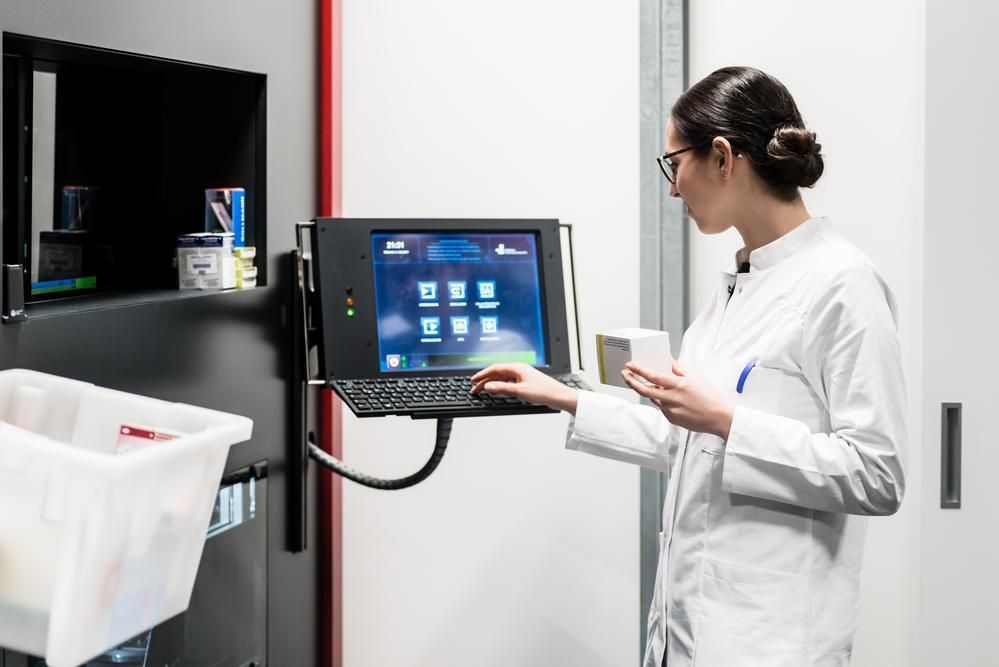
In the world of healthcare simulation, effective inventory management is a very important element of successful operations. As simulation centers continue to evolve and expand their capabilities, the need for efficient, adaptable, and user-friendly inventory systems will become more and more relevant. This HealthySimulation.com article by Alfred Toledo ThD, CHSE, CHSOS, introduces an innovative approach to inventory management that prioritizes supply availability over traditional count methods. The goal is to provide simulation center operators with insights and tools to streamline their inventory processes, reduce administrative burden, and ensure consistent readiness for training scenarios.
How to Identify A Simulation Center’s Storage Needs
Simulation centers are dynamic hubs for medical training, with a diverse array of supplies and equipment essential to create realistic healthcare scenarios. Organization skills are required to accommodate the unique needs and storage of medical simulation tools. Whenever healthcare simulation equipment is required for a simulation program, the center will need to store the supplies specifically for the equipment.
An example of simulation-specific trauma supplies are fake blood for moulage effects, synthetic bones for intraosseous insertion training, makeup, patient gowns, and props, to enhance realism in trauma-related simulated patient encounters. The simulation operations specialists must determine what is available and required to deliver the most realistic simulation to achieve the learning objectives.
Other consumable medical supplies, such as IV tubes, bags, catheters, gloves, masks, gowns, PPE, ET tubes, LMAs, and other airway devices, are stored for respiratory-specific simulations. However, these supplies must be available for various procedures for skills training and high-fidelity simulation scenarios.
Efficient management of these diverse supplies is essential to maintain a functional training center, and a realistic simulation environment. The healthcare simulation team must learn to find a balance to meet the scenario learning objectives without the neglect of the clinical simulation budget constraints.
Inventory Management in Simulation Centers
Inventory management is the technique and process to track, control, and optimization of a simulation center’s inventory of goods and materials. This ensures that the right products are available in the right quantities at the right time and minimizes costs and risks associated with inventory. The main objective is to prepare the clinical simulation environment to meet the measurable learning objectives.
For any clinical simulation center, inventory management is a critical aspect of operations that often goes overlooked. A good inventory system ensures that supplies are readily available to meet demand and ultimately keeps the costs in check. This is particularly important in healthcare simulation settings, where a wide variety of specialized equipment and consumables are required to create realistic scenarios.
To have the right balance is essential. Insufficient supplies may jeopardize the next training session. Too many supplies will constrain the healthcare simulation budget, consume space from our storage area, and demand unnecessary time and effort. Effective inventory management not only prevents disruptions to training sessions due to non-available supplies and can help prevent overstock of supplies, which can lead to waste and unnecessary expenses. Moreover, a well-managed inventory system can provide valuable data on usage patterns, helping administrators make informed decisions about budget allocation and future purchasing.
Inventory Audits Happen Frequently
The healthcare simulation operations specialist is pivotal for inventory management. Healthcare Simulation Operations Specialists have approached inventory management from multiple angles to find the best approaches.
Pull vs. Push Inventory Systems
In all inventory settings, there are typically two primary approaches to inventory management, the push and pull systems. Each method has unique characteristics and applications and influences how supplies are managed and restocked.
Read the HealthySimulation.com article Uses of Inventory Control Systems for Healthcare Simulation to learn more!
In a push inventory system, the most utilized system in simulation centers, usage and restock are driven by forecasts and predictions of future demands. This method involves the storage of supplies in advance based on anticipated demand. Nevertheless, inaccurate forecasts can lead to excess inventory and higher costs. Supply depletion is still a risk, thus the need for frequent inventory audits.
Conversely, a pull inventory system is driven by actual demand. Storage and restocks occur only in response to specific demand, to align inventory closely with real-time needs. The good side is this system minimizes excess inventory, thus storage costs are minimized.
One can also develop a hybrid push/pull system. The effectiveness of such a system depends largely on how these elements are integrated and tailored to the specific needs of the center.
Availability-Based Inventory System – Steps to Take
The question is how to implement a very customized pull inventory system for a clinical simulation center’s supply storage. For maximum effectiveness, the system should be a low-maintenance, efficient inventory management solution that meets the specific needs of the simulation center, focused on supply availability over precise counts without the burden of constant inventory audits.
-
Establish a Dual Inventory Storage System: The Sim Tech should create two inventory categories for the simulation in healthcare supplies. The first category is called Regular Inventory (RI) and this will be fully visible. This is the simulation center’s primary stock that is readily accessible. The second category is called Pull Inventory (PI) which should be almost hidden from the staff’s initial line of sight. This can be accomplished with the placement of specific supplies on a lower shelf or in less frequently used storage areas for example. The PI becomes the backup stock that is required when a new simulation is requested or more learners are required to train on a specific skill as they practice for competency.
-
Implement Visual Cues: The Sim Tech should store these inventories in different colored boxes or containers for easy visual distinction as a visual management tool. In one healthcare simulation center, fully transparent boxes are used for RI and blue-colored boxes for PI. When the regular inventory box is depleted, make the differently colored pull inventory box take the place of the empty RI box. This will not only make the box visible, but will also mark a different color between all of the RI Boxes. This will create a sort of “black sheep effect” that highlights the supplies that came from the backup stock.
-
Set Up an Automated Reminder Process: Next, the healthcare simulation operation specialists can send a ticket to the project management software. This ticket will serve as a reminder to reorder the item. A good practice for effectiveness is to choose a software able to send notifications to both a computer and a smartphone as this will ensure the simulation technician will not forget to restock.
-
Define the Restock Process: When new stock arrives, refill both the regular and pull inventory containers. Return every item to the original colored container and location position. This includes the regular inventory visible and the pull inventory hidden.
The key principle of this system is to maintain supply availability rather than exact inventory counts. This approach reduces the complexity of inventory tracking and eliminates the need for frequent audits to save the healthcare sim tech’s time and effort.
Final Thoughts on Inventory Control
While this system minimizes the need for audits, periodic reviews of the inventory management system’s effectiveness are still required for the clinical simulation center. Sometimes the sim tech may be required to adjust PI and RI quantities if demand patterns change. Regular assessments and scheduled periodical reflection of current practices should be implemented to fine-tune these values, maintain the balance between supply availability, and cost efficiency to ensure that the system remains responsive to the evolving needs of our simulation activities while maximizing resource utilization.
Healthcare sim techs should remember the goal is to focus on supply availability rather than exact counts at all times. This approach allows the clinical simulation center more efficiently to leave more time and resources to our core Healthcare Simulation activities.
View the new HealthySimulation.com Administrator Community Page to discuss this topic with your Global Healthcare Simulation peers!
With the focus on supply availability rather than precise counts, this system offers a practical solution to the common challenges faced in healthcare simulation inventory management. This system provides a framework that can be adapted to suit various operational needs and scales.
The key takeaway highlights the importance of the development of inventory management strategies that align with the unique demands of healthcare simulation environments and the possibility of free valuable time and resources. This allows staff to focus more on what truly matters – the delivery of high-quality, impactful training experiences for healthcare professionals.
Learn More About Inventory Control Benefits Healthcare Simulation Centers!