
One truth applies in every Simulation Center, regardless of whether nursing, medical, surgical, or EMS programs are supported: clinical competence and environmental discipline are equally vital. Much of clinical simulation is focused on debriefing scenarios, problem-based learning, clinical skills mastery, clinical judgment, and clinical reasoning. However, what healthcare simulation learners see in their environment every day, both before and after scenarios, sends a strong nonverbal message. The question is whether the clinical simulation team embraces the idea that “clean and neat is also a teaching moment,” or whether standards are more ‘relaxed’ in between scenarios. This HealthySimulation.com article by contributing author Danny Opperman, MBA, NRP, CHSE, CHSOS, explores the importance of clinical simulation environments.
Why Does the Clinical Simulation Environment Matter
Healthcare simulation is a team-based teaching modality that can be directly related to clinical performance, both in non-emergency and emergency medicine settings. Everything from the condition of a stretcher, to securing straps, to the organization of supply carts, to the preparation of the rooms themselves sends a message that the environment is important. If the clinical simulation center sends the message that clean, organized, and respectful is standard, the learners are more likely to meet that standard when they are in the clinical space. If the simulation center is full of clutter and chaos, they may expect the same in the clinical environment as they do when they walk into a simulated patient’s room. A healthcare simulation setting for a complex delivery, a critical care room, or an EMS ambulance, all prepare the learner before they arrive in the patient environment. Clinical simulation leaders can take pride in their preparation of an environment as much as in the development of clinical scenarios. All of these concepts are connected in high-quality, effective clinical simulations.
Environmental Safety in Healthcare Simulation Centers
Some professionals argued that so long as care is delivered competently, the maintenance of the environment and equipment does not matter. And while the focus on clinical care is of utmost importance, environmental conditions should never be discounted. Cleanliness, organization, and environmental preparation support and model safe and effective patient care. In both the clinical simulation center and on the hospital floor, fall and trip hazards over supplies or cords, the search for equipment in disorganized carts, and general disarray slow down the team and introduce the possibility for error. Clinical simulation should model not only how to take care of patients, but also how to work as healthcare professionals.
View the HealthySimulation.com Webinar Putting It All Together: Enhancing Realism in Clinical Simulation Scenarios to learn more!
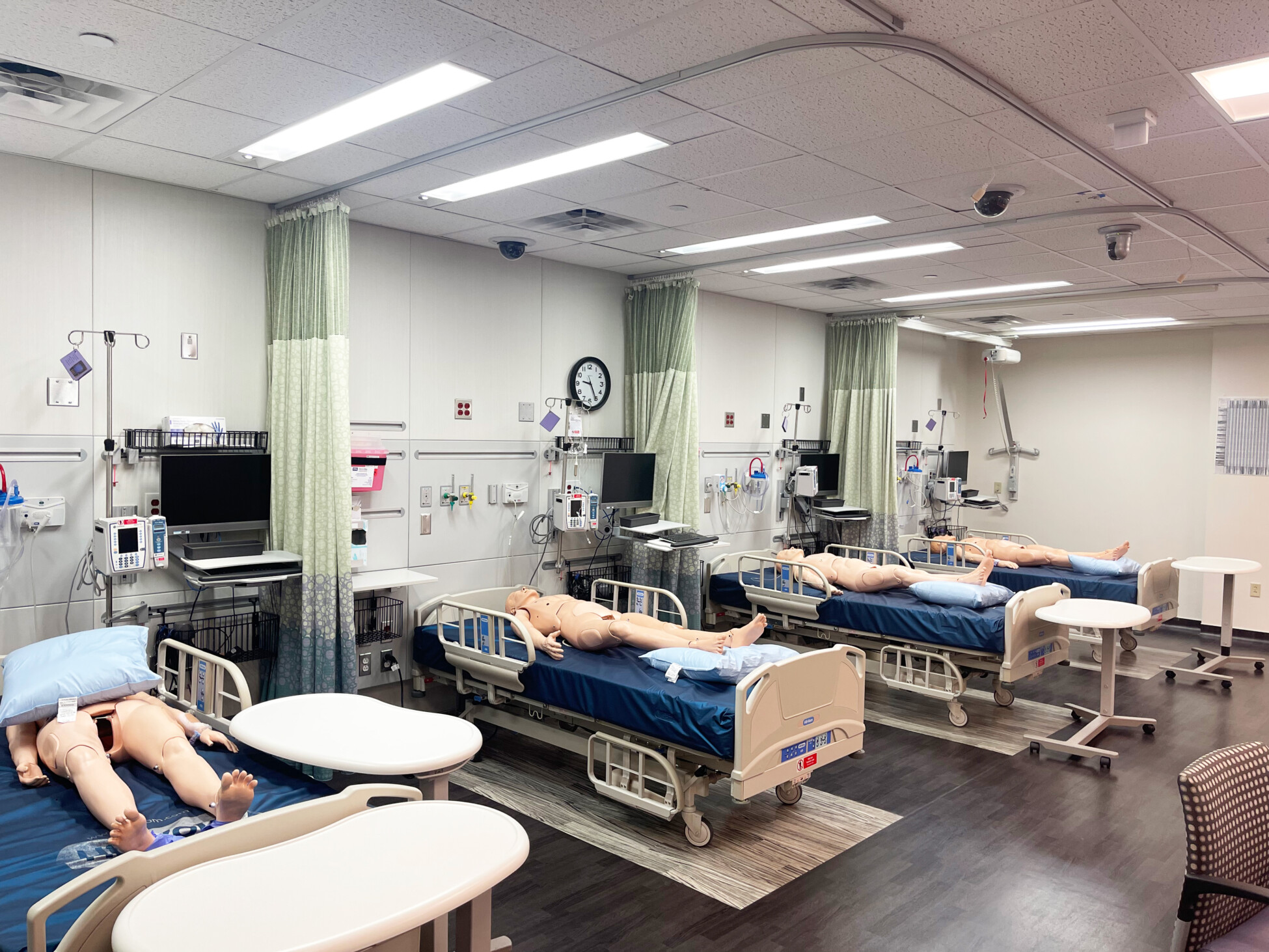
Imagine two healthcare simulation bays that are completely identical: patient simulators, simulated patient care rooms, monitoring equipment, and supplies are all the same. The only difference is how they are reset. The first bay has clean linens, secured equipment and supplies, and is ‘staged’ for the scenario. The second bay has crumpled or wrinkled sheets, equipment with cords hanging, and items that were left behind from the last simulation session still present. The two rooms look different. More importantly, the simulation learners see these rooms before every session. They can form unconscious or subconscious expectations based on the spaces in which they will learn, practice, and train. In this way, every monitor, mannequin, and piece of equipment is an unspoken educator. If the clinical simulation center suggests that ‘clean enough’ is an acceptable standard, the same level of acceptable standards may seep into clinical care.
EMS Simulation Programs and Environmental Safety
This is true especially for EMS programs, where simulation-based education is oriented around mobile environments, high-stress situations, and fast-paced conditions. However, teaching learners to reset their “scene” teaches that even if their environment is always changing or in motion, the readiness of the team still matters. How the team secures equipment, restocks to specifications, cleans, demonstrates discipline, structure, and professionalism. They form an essential component of clinical care and readiness rather than existing as separate elements.
Healthcare Simulation Equipment Storage
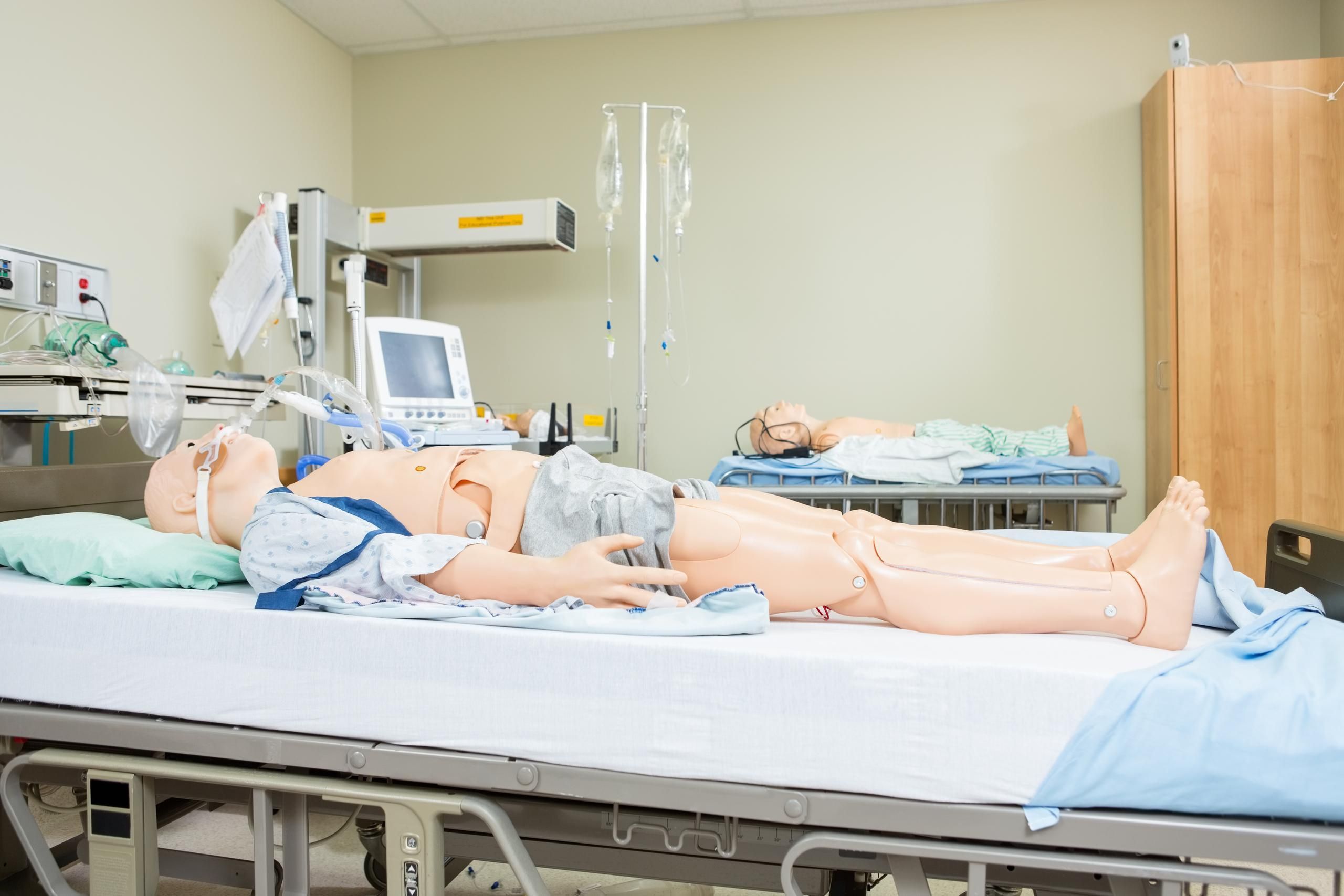
How a healthcare simulation center stores the mannequins can also be an easy indicator of the values of a simulation program. Are the manikins thrown into corners disheveled, limbs contorted and twisted? Or clothed appropriately, neatly lying on a rack with a pillow, stored in a way that takes care and respect into account? One is as easy to do as the other, but they teach very different things about professionalism. Clinical simulation is not just what you do with scenarios, education, and training. Clinical simulation is everything the learners see and experience, from the ground up, or in this case, from the stretcher down to the way the mannequin is stored.
View the new HealthySimulation.com Community Simulation Technology Specialists Group to discuss this topic with your Global Healthcare Simulation peers!
At the core, clinical simulation can be considered a two-pronged teaching methodology. Healthcare simulation is both clinical and operational, with a focus on clinical simulation learning experiences and outcomes. However, the healthcare simulation operational needs are to focus on attention to detail, standardization, and role modeling best practices in clinical care. Simulation-based education requires system orderliness and event resets as fundamental aspects rather than optional tasks to create successful training outcomes.
Clinical simulation programs can support the teaching methodology in several ways. Visual standards like photos of properly staged rooms, cleaning procedures for equipment, and organized supply carts can help set basic expectations of what simulation-ready spaces should look like. These visual expectations are embedded to include checklist processes into orientation, onboarding, and ongoing review for all staff, faculty, and learners to help promote consistency and accountability. By teaching and encouraging learners to comment or correct areas for improvement, healthcare simulation programs can reinforce environmental culture norms.
Practice Professionalism in Healthcare Simulation Centers
Healthcare simulation training is about a lot more than just clinical competence, technical skill, and medical knowledge. The methodology is also about professionalism, respect, safety, and culture. Culture, in any environment, is built from the ground up. In clinical simulation training, that could mean from how the stretcher is stored and prepped, to how the manikin is dressed. By empowering Simulation Technicians with ownership, responsibility, and recognition, simulation programs can further elevate the importance of maintaining clean, ready, and realistic environments.
Read Danny’s Previous Article on 10 Steps to Write a Simulation Program Annual Report