
To help simulation educators, researchers, and developers stay abreast of current evidence in healthcare simulation, research articles should be reviewed to help guide current and future practice. This HealthySimulation.com article by Dr. Teresa Gore provides a brief overview of recent research published in November and December 2025 on psychological safety, technological applications, learning metrics, the reliability of AI, VR, simulation standards of best practice, navigating new technologies, educational methodologies, and critical skill training. Each month HealthySimulation.com reviews the latest clinical simulation research to showcase some of the most need-to-know articles. View research related articles from the recent past and subscribe to our free newsletter to stay informed!
A systematic review of randomized controlled trials on immersive virtual reality for treating anxiety disorders: This systematic review analyzed 23 randomized controlled trials (RCTs) concerning Virtual Reality (VR) therapy for anxiety disorders. The findings revealed that VR treatment, particularly Virtual Reality Exposure Therapy (VRET), demonstrated comparable efficacy to non-VR traditional treatments for specific phobias and social anxiety disorder. While outcomes for generalized anxiety disorder (GAD), agoraphobia, and panic disorder were less definitive, the overall results highlight the potential for nurse-led VR interventions to significantly improve accessibility in mental health care.
Design and implementation of a digital medication optimization simulation (SimMed) using healthcare simulation standards of best practice (HSSOBP): This paper outlines the successful development and implementation of SimMed, an interprofessional digital simulation tool designed to enhance **medicines optimization** and safety among preregistration nursing students. The rigorous development process was guided by the Healthcare Simulation Standards of Best Practice (HSSOBP) and incorporated Agile methodology for iterative design and refinement. This approach ensured the creation of an affordable, user-friendly, and effective educational tool focused on crucial skills like accurate medicine reconciliation and interprofessional teamwork.
Effect of a gamified simulation on nursing students’ communication skills in end-of-life care: A randomized controlled trial: In this randomized controlled trial (RCT) evaluating the SG-EoL gamified simulation for improving communication in end-of-life (EoL) care, researchers found limited overall improvement in student communication skills. The only significant positive change observed in the intervention group was an increase in forward-leaning behavior (a non-verbal cue). The authors suggest that the specific version of the game used, which lacked detailed graphics and real-time feedback on nonverbal communication, may have inhibited its effectiveness in fostering comprehensive communication skills development.
Enhancing simulation facilitator debriefing using a generative artificial intelligence feedback interface and retrieval-augmented generation: A pilot study: This pilot study successfully demonstrated the feasibility and usability of SIM-U, a homegrown Generative AI (GAI) chatbot developed to support and enhance simulation facilitator debriefing skills. SIM-U utilizes Retrieval-Augmented Generation (RAG) to retrieve high-quality, evidence-based data, such as the INACSL Standards of Best Practice, to provide evidence-informed, personalized feedback and mitigate AI hallucination. Facilitators generally reported that the tool was useful and easy to use and appreciated the objective feedback in a psychologically safe environment.
Exploring the impact of simulation-based learning (SBL) on the acquisition of psychomotor skills in teaching urinary catheterization in nursing education: Systematic review: This systematic review of eight studies confirms that Simulation-Based Learning (SBL) effectively enhances nursing students’ psychomotor skills and confidence in performing urinary catheterization. It found that High-Fidelity Simulations (HFS) generally yielded superior psychomotor skill acquisition compared to lower-fidelity models. A major gap identified was the lack of robust longitudinal research, as only one study assessed long-term skills retention (finding retention rates varied based on intervention) and one assessed knowledge acquisition, necessitating more long-term follow-up studies.
Leveraging a generative AI persona prompt for clinical simulation: A novel approach to develop competencies for opioid overdose prevention: This innovative approach used both task trainers and a Generative AI (GenAI) persona prompt to train Family Nurse Practitioner (FNP) students in **opioid overdose prevention and naloxone education. The GenAI persona prompt enabled students to engage in realistic, back-and-forth virtual conversations with a simulated patient presenting with opioid use disorder. Following the simulations, students successfully demonstrated their knowledge (with a mean quiz score of 91%) and felt increased confidence, with 80% reporting preparedness to provide naloxone education. This novel modality efficiently helps students reach the “shows how” level of clinical competence.
Best Practice Guidelines for Preparing Simulated Patients for Telehealth Simulation: The exponential growth of telehealth, accelerated by the COVID-19 pandemic, has necessitated the integration of telehealth competencies into academic curricula. This review addresses the need for specialized training by providing guidance on best practices for preparing Simulated Patients (SPs) for Telehealth Simulation-Based Experiences (SBEs). SPs in a virtual environment must learn to manage technical interfaces, modify their communication styles for virtual interactions, and accurately convey physical ailments without the benefit of in-person contact. The article stresses that SP educators are essential collaborators in the development, implementation, and evaluation of these unique telehealth simulation programs.
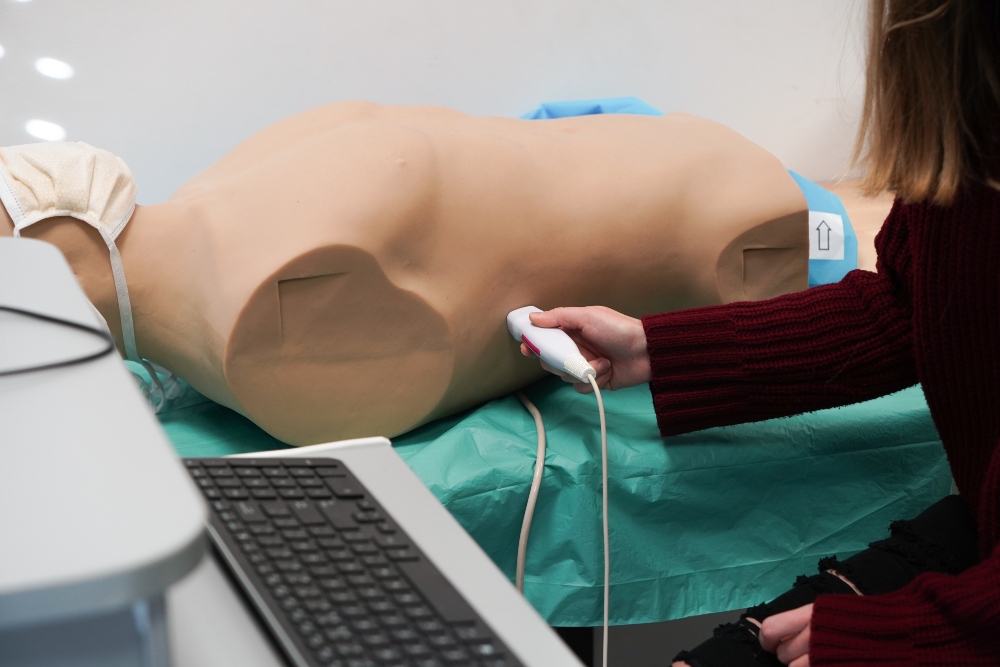
How to Generate a Human Arm–Like Tool for Simulation and Training: The Ghost Experimental Study: This technical report details the development and evaluation of a novel homemade phantom prototype for training in the ultrasound-guided vascular puncture technique. The study successfully created an innovative phantom designed to be low cost, reproducible, modular, and realistic, addressing the high cost of commercial phantoms and the lack of realism in many existing homemade models. The prototype costs less than €100 and utilizes agarose gel, providing an estimated shelf life of more than 3 months when refrigerated. Expert professionals who tested the device provided predominantly positive feedback, noting its superiority over phantoms previously used in their simulation experiences.
Debriefing Is Germane to Simulation-Based Learning: Parsing Cognitive Load Components and the Effect of Debriefing: This prospective observational study investigated how cognitive load (CL) components—Intrinsic Load (IL), Extraneous Load (EL), and Germane Load (GL)—are affected during simulation training for first-year anesthesiology residents. Researchers found that the debriefing process significantly increased participants’ self-reported Germane Load (GL), the component related to active processing and learning. This finding provides validation evidence for the assessment scales used (CLAS-Sim) and demonstrates that debriefing is indeed germane to simulation-based learning, as it enhances the cognitive effort dedicated to reflection and learning following a simulation.
Exploring AI Hallucinations of ChatGPT: Reference Accuracy and Citation Relevance of ChatGPT Models and Training Conditions: This technical study explored the reliability of Large Language Model (LLM) tools, specifically ChatGPT-4 and ChatGPTo1, when generating scholarly articles on health care simulation debriefing. The findings showed that both models were generally unreliable regarding reference accuracy and citation relevance. Across all generated articles, only 60.4% of the references were classified as accurate, and only 22.2% of the citations were classified as highly relevant. Furthermore, implementing specific training prompts aimed at improving referencing accuracy did not lead to a significant difference in results. The authors conclude that authors should not rely on ChatGPT to generate citations and must carefully verify all content to maintain academic integrity.
Enhancing nursing students’ caring behaviors for patients with visual alterations through simulation-based education: A scoping review: This systematic review evaluated the effectiveness of Virtual Reality (VR) therapy compared to non-VR treatments across various anxiety disorders. It followed the PRISMA guidelines and included 23 randomized controlled trials (RCTs) with 1,216 participants. VR treatment demonstrated efficacy comparable to non-VR traditional treatments for specific phobias and social anxiety disorder. Outcomes were less robust for generalized anxiety disorder (GAD), agoraphobia, and panic disorder. Results showed while self-guided interventions showed promise, therapist involvement enhanced efficacy. The findings highlight the potential for nurse-led VR interventions to improve accessibility in mental health care, as the holistic care approach of nurses positions them uniquely to implement VR therapy. The study also reinforces that VR therapy offers a viable alternative to traditional treatments like cognitive behavioral therapy (CBT), in-vivo exposure therapy (IVET), and pharmacotherapy, by generating controlled, cost-effective, and realistic simulated environments for patients to safely confront anxiety-provoking stimuli.
The effect of haptic-interactive virtual reality and computer-based simulation on nursing students’ knowledge, skills, anxiety, and satisfaction in nasogastric tube training: A randomized controlled trial: This randomized controlled trial examined the effects of virtual reality and computer-based simulations with haptic interfaces on nursing students’ knowledge, skill, anxiety, satisfaction, and self-confidence regarding nasogastric tube insertion on 90 nursing students. Participants were randomly assigned into three groups of 30:a control, an Experimental-1(virtual reality simulation supported with a haptic glove) and an Experimental-2 (computer-based simulation supported with a haptic arm). The Experimental-1 group achieved significantly higher posttest knowledge scores,lower state anxiety scores,and higher skill performance scores compared to other groups.This group also reported greater satisfaction and self-confidence. Virtual reality simulation with a haptic interface effectively enhanced students’ knowledge, skills, satisfaction, and self-confidence while reducing anxiety in nasogastric tube instruction.
View the new HealthySimulation.com Community Simulation Research Group to discuss this topic with your Global Healthcare Simulation peers!
How to Generate a Human Arm–Like Tool for Simulation and Training: The Ghost Experimental Study: This study aimed to develop and evaluate a novel homemade phantom prototype for simulation training of the US-guided vascular puncture technique. The prototype had to be low cost, reproducible, modular, realistic, and ecological. The design phase was divided into 2 parts: the first for developing a solid, watertight reusable mold and the second for the internal structure (vessels and internal gel). The prototype costs are less than €100 (€67 one-off cost for the external structure + €28,25 consumables) and could be manufactured by one team member in less than half a day of effort. When stored in a refrigerator, the agarose gel chosen for the project has an estimated shelf life of more than 3 months. The professionals’ responses to the questionnaires revealed predominantly positive feedback after experimentation and the superiority of the prototype over other phantoms used in their previous simulation experiences.
Artificial intelligence meets best practice: A scoping review of AI integration in simulation-based education: This scoping review explored how AI is being integrated into simulation-based education and examined the extent of alignment with the INACSL HSSOBP.
A comprehensive search was conducted across four databases. Studies were included if they described AI integration in simulation involving healthcare learners or educators and demonstrated relevance to one or more INACSL HSSOBP standards. Eighteen studies published between 2021 and 2025 met inclusion criteria. AI applications most frequently aligned with the standards for Simulation Design (n = 12), Evaluation of Learner Outcomes (n = 9), and Facilitation (n = 8). Tools included large language models, virtual patients, natural language processing, and AI-assisted debriefing. Gaps were noted in Professional Development, Sim-IPE, and Operations. This review highlights the promise of AI in supporting simulation best practices and underscores the need for stronger alignment.
Facilitators and barriers to learning through simulation in undergraduate nursing education: An integrative review: An overall view on facilitators and barriers to learning through simulation in undergraduate nursing education is still lacking. This study explored facilitators and barriers to learning through a low, medium, or high-fidelity simulation in undergraduate nursing education. An integrative review was conducted, performing a systematic search on five databases, from 2012 to September 2024. Thirty-two studies revealed 29 key factors, grouped into four themes: Realism and environment; Team working; Nursing education; Nursing learning and students’ abilities. Nineteen of these were identified as facilitators and 10 as barriers. The review results could provide useful hints to guide the development of effective and efficient simulation training programs, especially after the Covid-19 period that had accelerated the use of technologies in educational setting.
AI-guided interview simulation to improve employability and reduce anxiety in final-year nursing and midwifery students: A quasi-experimental study: A quasi-experimental study with final-year students compared an AI-based interview simulation to no intervention. Validated scales measured perceived employability and interview anxiety. Students in the AI-supported simulation reported higher employability perceptions and confidence in skills, knowledge, and networking. Although anxiety did not differ significantly, they found the simulation realistic and useful. AI-powered simulations can enhance self-efficacy, interview preparedness, and career orientation among nursing and midwifery students.
Cultural sensitivity simulation with simulated participants in nursing education: A scoping review: A scoping review was conducted using PRISMA guidelines. Three databases were searched for peer-reviewed studies using SP methodology to teach cultural sensitive care (CSC), cultural competence, or cultural humility. Thirteen studies met the inclusion criteria. Common simulation components included standardized pre-briefing and debriefing, incorporation into course curricula, and employment of diverse SPs. Outcomes showed improved cultural competence, communication skills, and self-efficacy. Gaps included limited research on cultural humility, inconsistent use of standardized tools and terminology, and underrepresentation of practicing nurses. SP methodology is a promising strategy for enhancing CSC in nursing education. Future research should emphasize cultural humility, employ consistent terminology, and utilize validated assessment tools. Expanding SP methodology beyond pre-licensure education may further support equitable nursing care across diverse populations.