
Healthcare simulation has become a cornerstone of medical education across numerous disciplines, but many people remain unaware of the diverse range of healthcare fields that now rely on sophisticated simulation technologies. While most associate clinical simulation with traditional medical schools and nurse educators, the reality reveals a much broader landscape of professional programs that have embraced these innovative tools to enhance patient safety and clinical competence. This article by Rémy Roe, PhD, CHSE, CHSOS, East Florida Regional Director of GME Simulation at HCA Healthcare, explores some unexpected applications of simulation-based education across allied healthcare disciplines that may surprise even seasoned healthcare simulation professionals.
The expansion of simulation-based education beyond conventional medical disciplines reflects a fundamental shift in the philosophy of healthcare education. Professional programs across the healthcare spectrum now recognize that clinical simulation provides safe environments for learners to practice complex procedures, develop critical decision-making skills, and build confidence before encounters with real patients. This approach has proven particularly valuable in fields where hands-on practice poses unique challenges or safety concerns.
Chiropractic Education: Precision Through Healthcare Simulation
Chiropractic education represents one of the most unexpected areas where healthcare simulation has made substantial inroads. Chiropractic colleges now use specialized manikins to teach cervical spine manipulation techniques to address safety concerns and maintain educational effectiveness. Students traditionally learned spinal manipulation through practice on fellow classmates. However, this approach carries inherent risks, particularly for cervical procedures where improper technique could lead to serious injury.
Research has demonstrated the effectiveness of this approach. Previous studies have shown that manikins can teach cervical neck manipulation techniques without affecting the grades for neck manipulation competency of chiropractic students (Owens et al., 2021). The clinical simulation-based approach allows students to practice the complex high-velocity, low-amplitude thrusts that characterize chiropractic manipulation and receive real-time feedback about force application and technique accuracy.
Specialty Manikin Development
The Canadian Memorial Chiropractic College developed sophisticated mannequins equipped with 64 pressure sensors attached to vertebral and skeletal landmarks, which could provide feedback on palpation location and force levels (Owens et al., 2022). These advanced training tools allow students to develop the precise motor skills required for spinal manipulation without the safety risks associated with practice on human subjects.
The development of these specialized mannequins requires careful attention to biomechanical properties. For example, Owens et al. (2022) measured soft tissue compliance across different body types and genders to create realistic models that simulated actual patient variability. This attention to detail ensures that students encounter realistic resistance patterns and develop appropriate force control before transition to clinical practice.
View the HealthySimulation.com Webinar Serve & Protect: K9 Simulation for Police Dogs Injured in the Line of Duty to learn more!
Standardized Patients for Communication Skills
Chiropractic programs also incorporate standardized patients for communication skills and patient assessment training. These programs use standardized patient encounters to teach preventive care counseling, such as scenarios that involve patients with chronic spinal pain and tobacco-use histories. This hybrid approach combines technical skill development with essential communication competencies.
The integration of trained standardized participants as pet owners adds another dimension to veterinary simulation. Students practice client communication scenarios that simulate the emotional and practical challenges they will encounter in veterinary practice. This comprehensive approach addresses both technical competencies and the interpersonal skills essential for successful veterinary practice.
Veterinary Medicine: Advanced Animal Clinical Simulation
Veterinary education has emerged as a leader in clinical simulation innovation, driven by both ethical considerations in regard to animal welfare and the need for standardized educational experiences. Washington State University’s College of Veterinary Medicine operates the nation’s first simulation program accredited by the Society for Simulation in Healthcare with a focus on veterinary medicine (Veterinary Practice News, 2019).
Veterinary Clinical Simulators
Veterinary clinical simulation programs employ remarkably sophisticated technology. “RoboJerry,” a robotic dog developed at Cornell University College of Veterinary Medicine (2025), includes accelerometer chips that detect chest compressions, simulated stethoscopes for heart and lung sounds, computer-controlled breathing systems, and sensors that determine pulse location. Students can perform emergency procedures, such as CPR, in real-time and receive immediate feedback on their technique. Another leading vendor that has canine clinical simulators is Tactical Medical (TacMed).
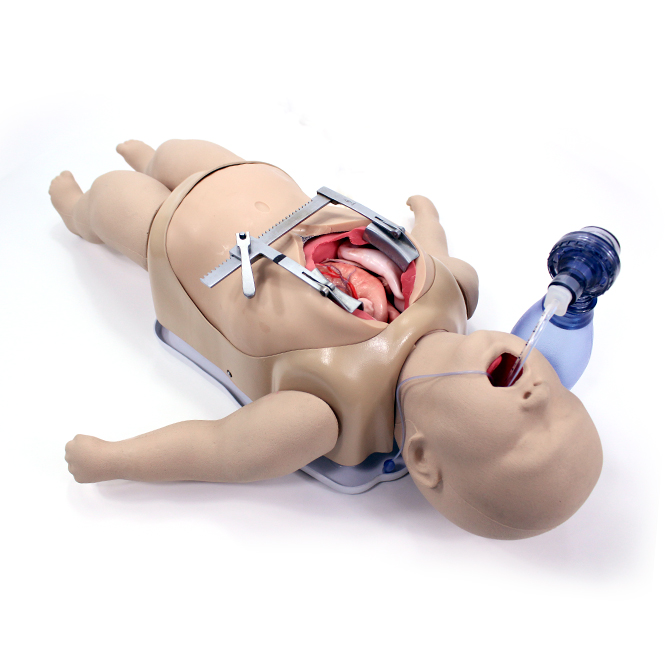
These veterinary programs provide hands-on education experiences that range from basic to complex surgical skills, and use life-sized cow and horse models, dog resuscitation models, and anesthesia training systems. The scale and sophistication of veterinary clinical simulation rival any medical education program, with some innovations that exceed what exists in human medicine. Veterinary programs also utilize synthetic cadavers for surgical training. SynDaver units made from water, fiber, and salt better mimic living tissues compared to traditional preservation methods, allowing students to practice procedures like gastropexies and hemorrhage control. These models provide realistic tactile feedback and eliminate ethical concerns about animal use in education.
View the new HealthySimulation.com Community PT-OT Simulation Group to discuss this topic with your Global Healthcare Simulation peers!
Other Healthcare Fields That Utilize Clinical Simulation
Veterinary chiropractic represents another specialized area where clinical simulation plays a crucial role. This highly specialized field requires practitioners to understand both animal anatomy and manipulation principles, making simulation an ideal training approach.
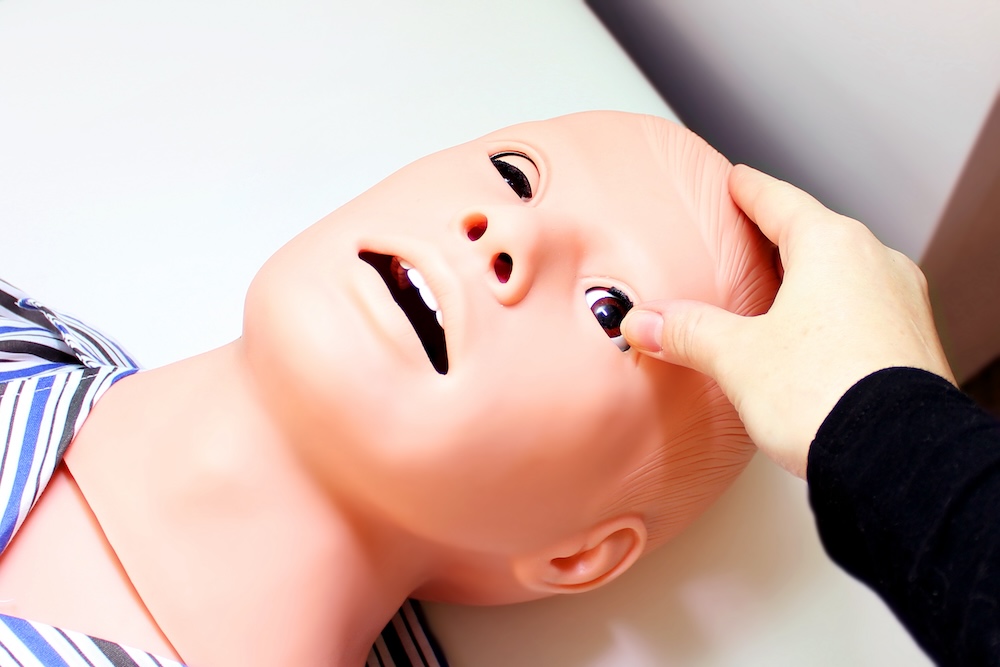
Ophthalmology residency programs have also embraced clinical simulation technologies. Modern educational simulation-based tools are now routinely used among ophthalmology residents for developing surgical skills and diagnostic competencies. The precision required for ophthalmic procedures makes simulation particularly valuable for the development of fine motor control skills necessary for successful practice.
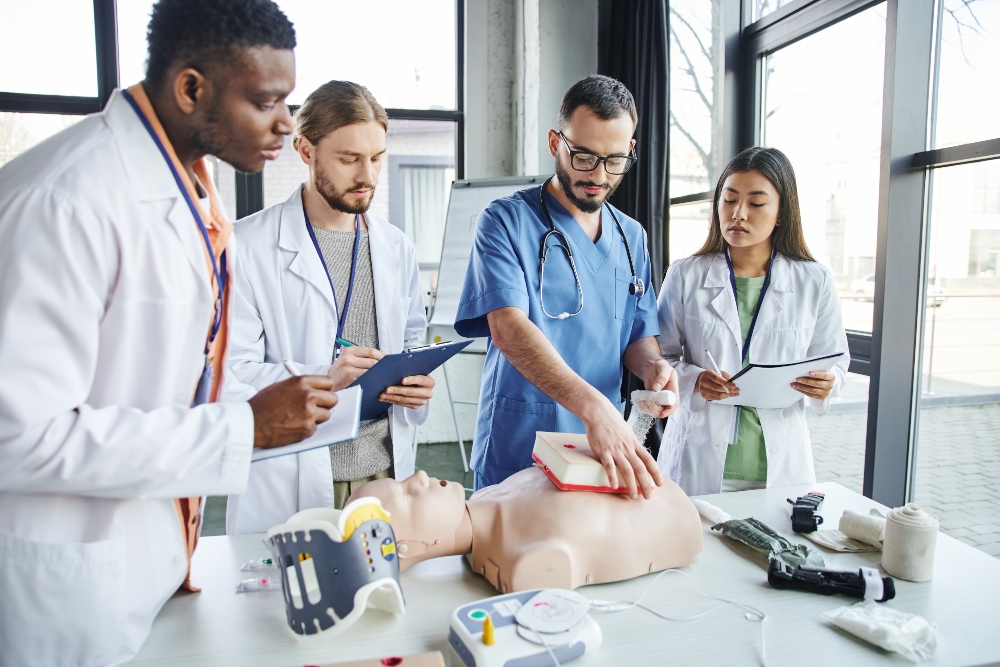
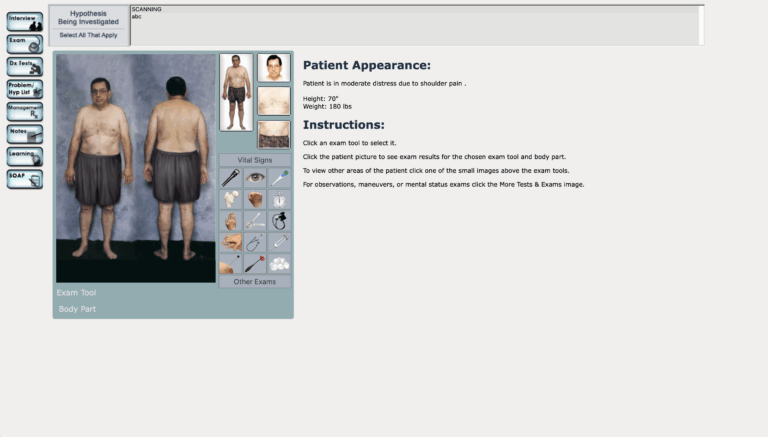
Physical therapy and occupational therapy programs have also incorporated healthcare simulation for procedural skills and patient interaction training. Students practice assessment techniques, therapeutic interventions, and adaptive equipment use in controlled environments before they work with actual patients who may have complex needs or fragile conditions.
Optometry programs now utilize sophisticated clinical simulation technologies for diagnostic and therapeutic procedures. Students practice complex eye examinations, contact lens fittings, and low vision assessments using advanced simulators that replicate various ocular conditions. These systems allow repeated practice of delicate procedures without patient discomfort or safety concerns.
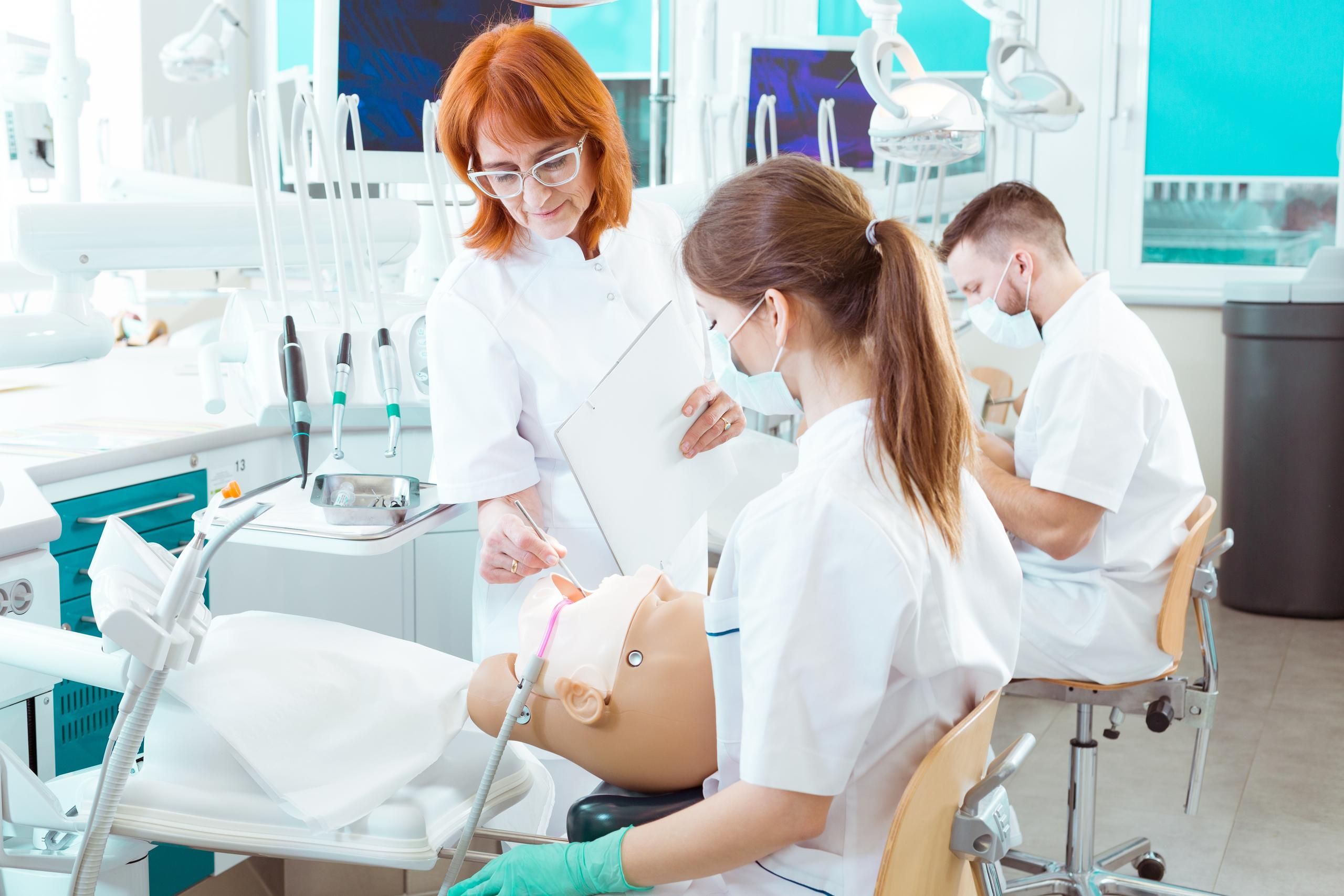
Dental hygiene programs have embraced healthcare simulation through robotic patient simulators that provide realistic oral cavity anatomy. These systems feature articulated jaws, realistic gingival tissues, and pressure-sensitive feedback that allows students to practice scale, polish, and assessment techniques. The simulators can simulate various periodontal conditions and pathologies that students might not encounter during clinical rotations.
Expanding Horizons into the Future
The landscape of healthcare simulation extends far beyond traditional medical and nursing education to encompass a diverse array of professional programs. From chiropractic colleges that use sophisticated manikins to teach spinal manipulation to veterinary schools with robotic animal patients, healthcare simulation has become an integral component of healthcare education across disciplines that demonstrate the versatility and adaptability of simulation technologies.
This article, by Rémy Roe, PhD, CHSE, CHSOS, has explored the expanding application of clinical simulation-based education that highlights how diverse healthcare fields have embraced these technologies to address unique educational challenges and safety concerns. These developments reflect a fundamental recognition that patient safety and educational quality benefit when learners can practice essential skills in controlled environments before encountering real patients.
The innovation and sophistication evident in these programs demonstrate the maturity of healthcare simulation as an educational methodology and its continued expansion into new areas of healthcare practice. The success of healthcare simulation in these diverse fields provides strong evidence for its broader adoption across all healthcare disciplines. As technology continues to advance and costs decrease, healthcare simulation-based education will likely become the standard rather than the exception across the full spectrum of healthcare professional preparation, as new and unexpected applications continue to emerge across previously unconsidered healthcare fields.
Learn More About Use of Clinical Simulation in Veterinary Medicine!
References
- Cornell University College of Veterinary Medicine. (2025). Simulation Training. https://www.vet.cornell.edu/education/doctor-veterinary-medicine/prospective-students/simulation-training.
- Owens, E. F., Dever, L. L., Hosek, R. S., Russell, B. S., & Dc, S. S. (2022). Development of a mannequin lab for clinical training in a chiropractic program. The Journal of Chiropractic Education, 36(2), 147–152. https://doi.org/10.7899/JCE-21-10.
- Owens Jr, E. F., Hosek, R. S., & Russell, B. S. (2021). Mechanical properties of a thoracic spine mannequin with variable stiffness control. Journal of Chiropractic Education, 35(1), 1-7. https://doi.org/10.7899/JCE-19-14.
- Veterinary Practice News. (2019, May 6). WSU receives accreditation for Veterinary Simulation Program. https://www.veterinarypracticenews.com/wsu-receives-accreditation-veterinary-simulation-program/.