
Research in the field of healthcare simulation continues to advance rapidly, transforming healthcare education through groundbreaking findings worldwide. In this monthly HealthySimulation.com article series, Content Manager Teresa Gore, PhD, DNP, APRN, FNP-BC, CHSE-A, FSSH, FAAN, highlights key developments in clinical simulation research as of August 2025. This month’s medical simulation research from the Society for Simulation in Healthcare (SSH) Journal, International Nursing Association for Clinical Simulation and Nursing (INACSL) Clinical Simulation in Nursing Journal, and Society for Simulation in Europe (SESAM) Advances in Simulation Journal. The research topics cover AI, realism, dedicated simulation faculty, SP utilization, tabletop sims, team outcomes, and more!
Artificial intelligence (AI)-facilitated debriefing: A pilot study: Debriefing is central to simulation-based education (SBE), promoting reflection and improved learning outcomes. This study examined the role of artificial intelligence (AI)-facilitated debriefing in a virtual nursing simulation using the EMPOWER Debriefing Framework. Fifty-two nursing students participated in screen-based simulations followed by AI-guided debriefs. Data included simulation scores, time in debrief, number of reflective dimensions met, and qualitative analysis from AI outputs. Results showed no significant correlation between time spent in debrief and performance (r = 0.07, p = .46). However, students achieving more reflective dimensions (3–4) completed debriefs faster than those with fewer dimensions (1–2). Findings suggest AI-facilitated debriefing can provide scalable reflective practice and support nursing education, though it may not fully replace the depth of human-led debriefing. Further research is needed to validate outcomes and optimize AI integration into simulation-based training.
The simulation realism scale for healthcare professionals and students: A development, validity and reliability study: Realism strongly impacts outcomes in simulation-based education, yet no standardized tool existed to measure participant perceptions. This study developed and validated the Simulation Realism Scale (SRS) for use with healthcare professionals and students. Using Morgado et al.’s (2017) three-stage approach, a 21-item scale was created and tested with 372 participants in simulations guided by INACSL standards. Content and language validity were established, while construct validity was confirmed through CFA, revealing a five-factor structure explaining 65% of variance. Reliability was high (Cronbach’s α = 0.91). The SRS provides a valid, reliable measure of simulation realism, supporting improved healthcare education design and evaluation.
View the HealthySimulation.com Webinar Healthcare Simulation Debriefing Strategies & Courses from Top Experts at The Debriefing Academy to learn more!
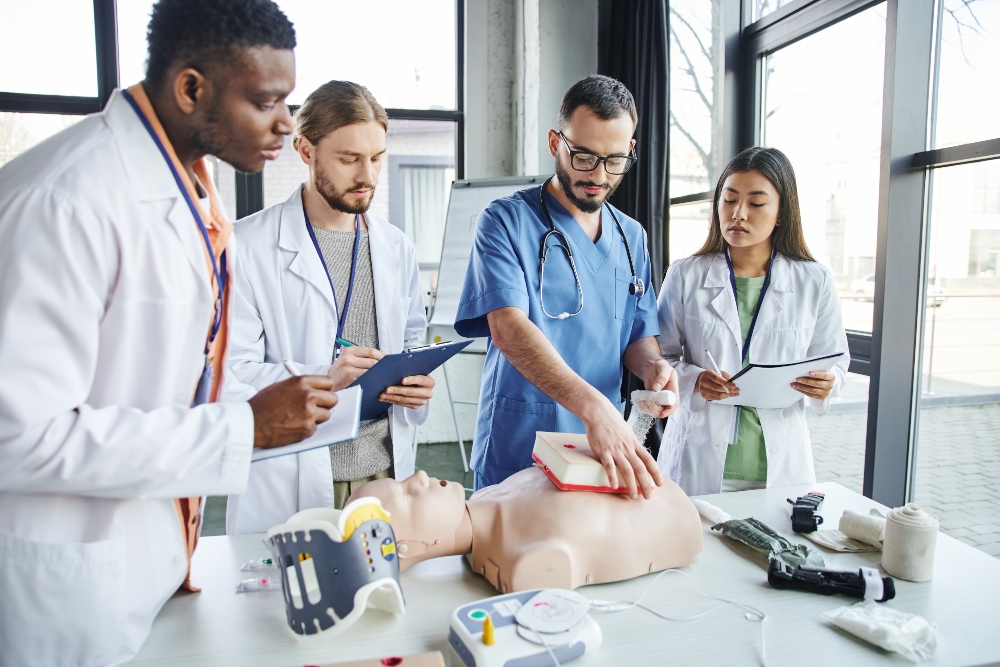
Impact of a dedicated simulation faculty model on student learning outcomes and perceived self-efficacy in baccalaureate-prepared students: This pilot study evaluated the effectiveness of a Dedicated Simulation Facilitator Model (DSFM) on faculty competency, nursing student learning, and clinical self-efficacy. Five faculty members were trained to facilitate five simulations in two Medical-Surgical nursing courses. Student self-efficacy was measured using the Self-Efficacy in Clinical Performance (SECP) survey, learning was assessed by exam scores, and faculty competency was evaluated with the Debriefing Assessment for Simulation in Healthcare (DASH) and Debriefing for Meaningful Learning Evaluation Scale (DMLES). Results showed improvement in six of ten exam scores, with three reaching statistical significance. SECP scores reflected stronger student clinical self-efficacy, while facilitators demonstrated modest growth in debriefing competency. Findings emphasize the value of structured facilitator training and continuous evaluation in enhancing simulation-based education. Implementing a DSFM supports novice facilitators, strengthens student learning outcomes, and improves confidence in clinical performance, reinforcing the role of dedicated simulation educators in nursing education.
View the new HealthySimulation.com Community Simulation Research Group to discuss this topic with your Global Healthcare Simulation peers!
Employing Simulated Participants to Develop Communication Skills in Medical Education: Simulated participants (SPs) are widely used in medical education to teach patient-centered communication skills, but their effectiveness compared with traditional methods has lacked quantitative evidence. This systematic review and meta-analysis, following PRISMA guidelines, analyzed 21 studies involving over 2,500 participants. Ten studies qualified for meta-analysis. Results showed a medium effect size in favor of SP-based teaching over lectures or peer role play (standardized mean difference = 0.74, 95% CI = 0.37–1.11). These findings suggest that SP-based training significantly improves communication skills in medical students. However, study heterogeneity was high, reflecting variation in populations, interventions, and outcome measures. Despite these differences, evidence supports the use of simulated participants as an effective, interactive, and learner-centered approach to teaching patient-centered communication. Further high-quality, standardized research is needed to confirm best practices and optimize integration of SP-based learning into healthcare education.
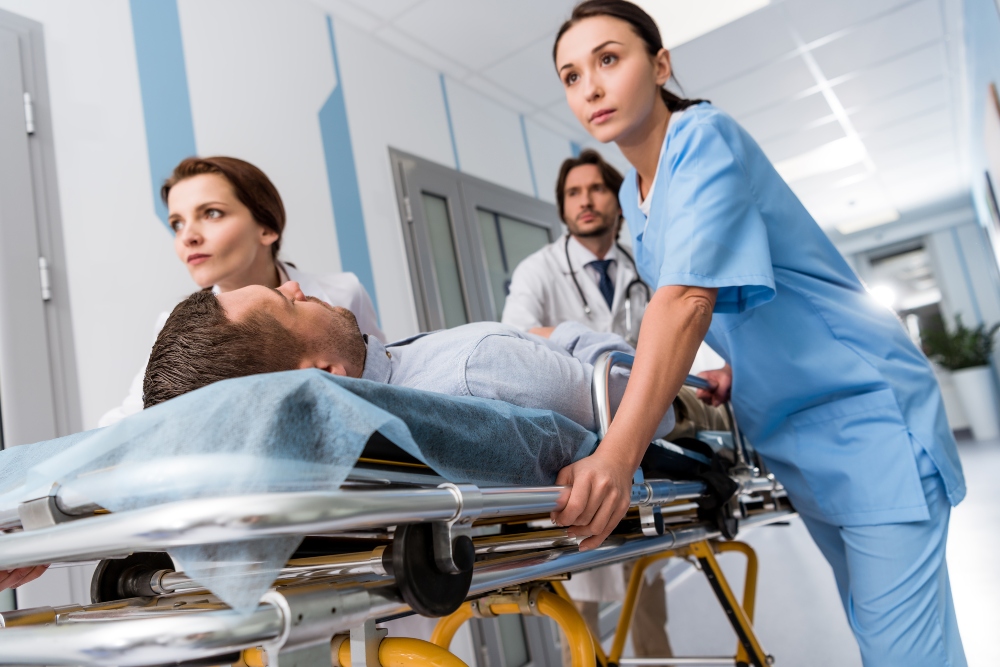
Tabletop Simulations in Medical Emergencies A Scoping Review: Tabletop simulations (TTS) are an emerging educational strategy in healthcare training, particularly for medical emergencies and disaster preparedness. This scoping review analyzed 70 studies, including descriptive (47%), cohort (47%), and randomized controlled trials (3%). Results revealed that TTS are widely applied in disaster scenarios (80%) and frequently involve multiprofessional teams (64%), reflecting their collaborative nature in real-world emergency response. Formats varied, with board games used in 37% of studies to enhance interactivity and engagement. Educational outcomes were overwhelmingly positive: 53% of studies reported improvements in learner reaction, 36% in knowledge acquisition, 10% in behavioral change, and 1% in results-based outcomes. The findings suggest that TTS provide an effective, engaging, and flexible approach to teaching teamwork, crisis management, and emergency decision-making in healthcare education. By integrating TTS into simulation-based training, educators can strengthen emergency preparedness while promoting interprofessional collaboration across healthcare specialties.
In-Person Healthcare Simulation An Umbrella Review of the Literature: This umbrella review, a systematic review of systematic reviews, examined the effectiveness of in-person simulation-based education (SBE) using PRISMA guidelines. The analysis synthesized evidence on modalities, methods, and outcome measures of SBE and identified recurring themes in the literature. Findings confirmed that in-person SBE improves learning outcomes, including technical and nontechnical skills, as well as behavioral and attitudinal changes in healthcare learners. However, the review also highlighted widespread gaps in research quality. Key limitations included small sample sizes, a lack of randomized controlled trials, limited longitudinal studies, and overreliance on redundant methodologies. Emerging themes emphasize the urgent need for higher-quality, rigorous research, the use of mixed-methods approaches, and broader global representation. Additionally, the study underscores the importance of standardizing terminology, increasing research funding, and reducing redundancy to advance the field. Overall, the review affirms that in-person simulation-based training is effective but requires stronger scientific foundations for future growth.
Impact of Team Composition on Learning Outcomes Following Simulation-Based Training of Teamwork Competencies: A Systematic Review: This systematic review examined how team composition influences learning outcomes in simulation-based training of teamwork competencies among healthcare professionals and students. Database searches (Ovid Embase, CINAHL, Ovid Medline, 2011–2023) identified 14,309 abstracts, with 11 studies meeting inclusion criteria. Studies investigated uniprofessional (UP) vs. multiprofessional (MP) teams (n=6), team size (n=3), dynamic vs. stable teams (n=1), and gender composition (n=1). Results showed that team composition may influence team performance, though evidence certainty was very low. Comparisons of UP and MP training revealed no significant differences or slight benefits of multiprofessional team training in skill acquisition, knowledge gain, and self-efficacy. Given the interprofessional nature of healthcare, MP training may better prepare providers to collaborate effectively in clinical practice. However, due to heterogeneity and low-quality evidence, optimal team composition remains uncertain. More high-quality research is needed to establish best practices for simulation-based teamwork training in healthcare education.
Incorporating Augmented Reality Patients Into Online Trauma Training to Support Mental Model Development: An Experimental Study:Medical students often struggle to transfer knowledge from lectures to real-world trauma care. This experimental study investigated whether adding virtual flashcards and augmented reality (AR)-based trauma patient videos to online learning improves diagnostic accuracy and clinical performance. Thirty-five medical students were randomly assigned to control and experimental groups. The control group viewed only an online lecture, while the experimental group received additional video-based virtual flashcards featuring simulated trauma patients, diagnostic questions, and expert physician feedback. Performance was measured through simulation-based assessments, including patient video scenarios, multiple-choice tests, free-text responses, and SOAP note documentation. Results showed significantly higher diagnostic accuracy (P = 0.01) and improved self-reported performance (P < 0.01) in the experimental group. Students described the intervention as engaging, innovative, and valuable. Findings highlight that integrating virtual flashcards, AR videos, and simulation-based training enhances trauma education, bridging the gap between lecture-based learning and clinical decision-making.
Learn More About Evaluating Healthcare Simulation and Evaluation Tools!