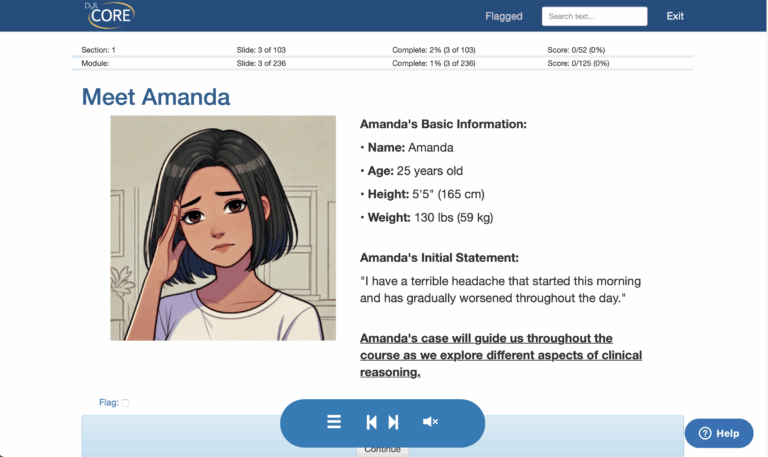

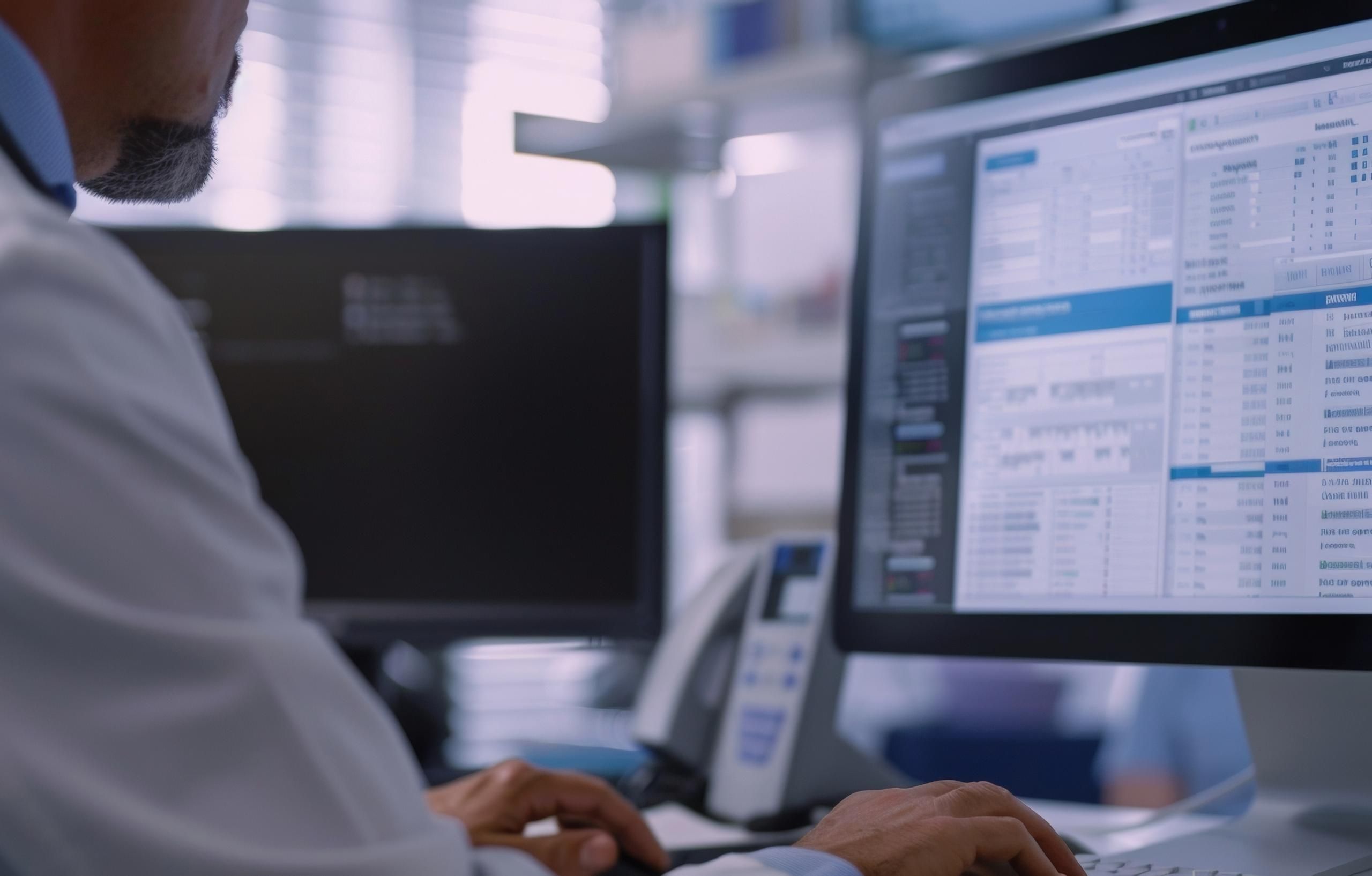
Simulated EHR, aka Simulated Electronic Health Records, is a simulated version of a patient’s digital medical history. Also referred to as Simulated EMR, or Simulated Electronic Medical Records, this electronically stored health information offers real-time patient-centered records that are instantly available, reliable, and secure — and in a simulated way that allows educators to teach and train learners in the best practices for managing patient records. EHR data can be used in any healthcare simulation lab to provide realistic patient cases for healthcare curricula. This HealthySimulation.com article will highlight the benefits for the incorporation of EHR and some leading vendors that offer EHR platforms.
What are Benefits for the Incorporation of EHR Platforms?
Electronic Health Records (EHRs) are fundamental to modern clinical practice, capturing comprehensive patient information, from demographics and diagnoses to medication histories and diagnostic reports, in a digital format that supports real-time decision-making and continuity of care. In healthcare education, simulated EHR systems provide a safe, learner-centered environment where students and professionals can develop EHR competencies without risk to real patients. Simulated EHRs align with best practices in healthcare simulation by fostering data literacy, documentation accuracy, interprofessional collaboration, and patient safety awareness.
Going beyond treatment and diagnostic information, EHR Simulation provides deeper insight into a patient’s overall level of wellness. EMR systems provide a more comprehensive view of a patient’s care that goes beyond the standard clinical data provided by a physician. Instead, EHR systems document all elements of care, such as laboratory results, radiology images, immunizations and dates, allergy testing, and more.
With EMR for education, healthcare professionals and learners can navigate evidence-based tools to make important decisions about a patient’s individualized care. EHRs for education can also help automate and streamline provider workflows, increasing the efficiency and effectiveness of a facility or institution’s patient care and treatment.
A pivotal way in which simulated EHR can help establish a foundation for clinical information across a healthcare system is to allow providers to create and closely manage the digital format. They can collaborate with other providers within their system or share information with providers across other healthcare systems when necessary.
View the HealthySimulation.com Webinar Elsevier Maximizes Nursing Simulation Learning System with SimX Virtual Reality Training to learn more!
In the clinical setting, digitally, external laboratories, imaging centers, pharmacies, emergency clinics, and specialists can almost instantly receive the information necessary to offer insight and provide clinical assistance regarding a patient’s case. Any authorized provider can offer insight and expertise into a patient’s care through EHR education technology. Therefore, this must be taught to healthcare students to learn how to access, use, and apply the data obtained to develop and implement a plan of care for the patient.
Across these disciplines and settings, the use of simulated EHR can help to strengthen the relationship between providers and patients. Further, the timeliness and data availability provided by simulated EHRs can enable providers to make better-informed decisions, leading to increased levels of care and patient safety.
EHR in education can also work to reduce the incidence of medical errors by improving the clarity and accuracy of patient records. Simulated EHR can lead to a reduced number of duplicated tests, fewer delays in treatment and more thorough and readily available data.
Purpose of Simulated EHR Systems
Today, many colleges, universities, vocational schools, and secondary education institutions are teaching EHR education. Simulated EHR systems are designed to replicate the functionality and workflows of commercial EHR platforms in a controlled learning environment. The use of open-source EHR systems, including those built with Adobe Captivate, prior to entering the workforce, gives learners the opportunity to enter information and receive robust feedback and assessments. The primary educational purposes include:
- Familiarization with EHR Interfaces: Allow learners to navigate common EHR features — charting, order entry, documentation review, and results interpretation — before exposure to live clinical systems.
- Clinical Decision-Making Support: Enable practice of critical thinking through patient case documentation, review of clinical data, and care plan formulation grounded in simulated patient records.
- Risk-Free Skills Development: Provide a platform to practice documentation without risking patient harm, improving documentation quality and reducing real-world mistakes.
- Interdisciplinary Collaboration: Promote teamwork across nursing, medicine, pharmacy, and allied health by simulating shared chart access and communication within the digital record.
Applications of Simulated EHR in Healthcare Simulation
Simulated EHR systems are used in multiple educational settings and scenarios:
- Undergraduate and Graduate Curricula: Integrated into classroom and lab activities to teach nursing, medicine, and allied health students data entry, chart review, and history-taking skills.
- Interprofessional Education (IPE): Facilitates collaborative scenarios where learners from different disciplines access a shared record to make care decisions.
- Simulation Scenarios: Embedded within simulation cases (e.g., computerized charting before/after high-fidelity manikin scenarios) to reinforce realism and documentation expectations.
- Assessment & Competency Evaluation: Provides objective measurement of documentation accuracy, clinical reasoning, and EHR navigation skills.
Simulated EHR Healthcare Simulation Platforms
Find these vendors and more in the new HealthySimulation.com Vendor Directory!
EHR Go: One learning application that uses EMR for education is EHR Go, a product of Archetype Innovations. This medical simulation platform was developed for all healthcare disciplines with over 700 customizable, realistic patients and activities to help teach learners to make smart decisions while instilling a human-centered approach to their medical practice. EHR Go can be used across nursing, medicine, and allied health programs to support case-based learning, homework assignments, and simulation lab integration, designed to help learners understand the holistic nature of patient care, perform realistic chart reviews, and navigate documentation workflows.
EHR Go’s patient cases and activities are built around the diverse, realistic human stories healthcare professionals see every day. The application includes cases, from simple to complex, that illustrate every chief complaint, comorbid condition, and clinical scenario possible. The platform’s creators wanted to encourage learners to see the holistic nature of healthcare while becoming proficient in the technology.
SimEMR: Technology solutions provider KbPort has developed SimEMR, an interactive, web-based, simulated electronic medical record solution. This platform enables learners to gain insight into electronic charting in healthcare environments. SimEMR brings clinical documentation to the simulation lab and classroom for present and future nurses, physicians, nurse practitioners, medical assistants, and many other healthcare disciplines.
SimEMR’s step-by-step process mirrors real-life patient care and takes the learner from a patient profile and charting objectives (SimEMR) to medication dispensing. This EHR simulation training solution allows learners to practice inputting information and other important elements of patient health in addition to sharing this information with other key providers. Educators can then, through the use of KbPort ETC FusionHD (not included with SimEMR), debrief their learner in the most complete and efficient way available.
View the new HealthySimulation.com Community New to Healthcare Simulation Group to discuss this topic with your Global Healthcare Simulation peers!
Lippincott DocuCare (Wolters Kluwer): A next-generation academic EHR designed to model industry-leading EHR workflows with realistic documentation fields and patient data. The purpose of Lippincott DocuCare is to support transition-to-practice readiness by exposing students to EHR logic and design that parallels systems seen in clinical employment. Lippincott DocuCare is widely adopted in nursing programs as a classroom and lab tool for documentation practice and simulation integration.
MedAffinity: A fully featured EHR system specifically adapted for educational simulation, that offers realistic clinical workflows, customizable scenarios, and flexible charting tools that mirror real-world practice while being easier for instructors to configure and reset between sessions.
Choice EMR Learning: This product provides hands-on, simulation-based EMR/EHR training with real-world software workflows and curriculum support to help students build job-ready documentation, scheduling, and chart management skills in a non-clinical environment.
EHR Tutor (by Elsevier/ATI): EHR Tutor delivers realistic charting experiences across a wide variety of care settings with pre-built patient charts, barcode scanning, unfolding scenarios, and educator tools for feedback and grading, making it useful throughout classroom, simulation, and clinical instruction.
ChartFlow: This product is an academic EHR designed for healthcare programs and simulation labs that lets students practice documentation and patient record workflows in a simulated environment with pre-built courses and customizable activities to build documentation and prioritization skills.
OpenEMR: Another EHR education platform is OpenEMR, a free, open-source electronic health records and medical practice management solution that has been repurposed in some educational settings for simulated clinical documentation. OpenEMR provides cost-effective access to an operational EHR, enabling students to explore chart navigation, data entry, and clinical documentation. OpenEMR can be useful for programs with limited budgets to offer practical exposure to an EHR environment in simulation labs and classrooms.
EdEHR: Another simulated EHR platform is EdEHR, a simulation-first EHR that mirrors real clinical documentation, barcode medication administration, and team-based tools, but without the complexity of full hospital EHRs. EdEHR enables learners the opportunity to practice realistic documentation and interprofessional workflows while maintaining a simplified, education-focused interface. EdEHR is often integrated in simulation courses where students must document care, track orders, and manage patient data collaboratively.
Call to Action: Train to Improve
Simulated EHR systems have become indispensable in healthcare education, offering experiential learning that bridges theory and practice. The replication of realistic documentation tasks and workflows within a safe environment allows learners to develop critical EHR competencies before entering direct patient care. With continued innovation, simulated EHRs will remain central to curriculum design and competency assessment in healthcare simulation. The healthcare simulation team needs to investigate which simulated EHR system will best meet the program’s needs for improved learning outcomes and readiness to transition to practice.
Learn More About Free EHR Systems for Healthcare Simulation!