
The Association for Simulated Practice in Healthcare (ASPiH) 2025 conference, held in Bournemouth (UK) from 11–13 November, welcomed more than 1,000 attendees from 26 countries across four continents, evidencing the Association’s growing international reach. Among them were 380 first-time attendees, warmly welcomed into the ASPiH community. Throughout the event, many healthcare simulation delegates visited the ASPiH stand to learn more about membership opportunities and the growing range of clinical simulation benefits available. As a proud media sponsor, HealthySimulation.com is excited to share this event recap collaboratively written by members of the ASPiH Executive Board, including Carla Sá Couto, ASPiH Conference Director, Kevin Stirling, ASPiH Secretary & Commercial Partners Lead, Sharon Weldon, ASPiH President, and Lorraine Whatley, ASPiH Membership Lead.
This year, ASPiH continued to strengthen its commitment to equity and access. Through the newly launched Community Funding initiative, 30 members received complimentary registration, alongside delegates from low- and lower-middle-income economies and those affected by conflict or displacement. This support reflected ASPiH’s dedication to ensuring that financial or geopolitical barriers do not hinder professional development.
We saw a demonstration of excellence by future leaders in health and social care in our Student-Sim Stars competition. ASPiH and iRIS supported four shortlisted teams of students from Wrexham University, University of Hong Kong, Swansea University, and Aston University to come to the conference. These four interprofessional teams of students delivered the scenarios they had designed, which had to align with our conference theme of Simulation for Impact, Culture, Co-production, and Creativity. The teams demonstrated well thought out designs that put patients and their families at the core. Congratulations to Swansea University who were the overall winners.
The scientific programme was a major highlight. Over three days, delegates engaged in 120 hours of educational content, earning up to 17 CPD points. The programme was shaped by an impressive 400 abstract submissions—a 15% increase compared with 2024. Selected abstracts were published in the Journal of Healthcare Simulation, ASPiH’s open access journal.
View the HealthySimulation.com Webinar Transformative Healthcare Simulation: 7 Layers of Change to learn more!
In total, 290 presentations were delivered across 10 oral sessions and 20 e-poster sessions. Delegates actively shared insights, challenges, and innovations, making the conference a rich environment for learning and collaboration. Thirty-five hands-on workshops further enhanced the experience, offering practical skills and tools ready to be implemented in workplaces across the globe.
This year’s programme felt distinctly different. The seven international speakers did more than share expertise – they connected threads across disciplines, cultures, and ways of thinking. Their messages wove through workshops, conversations, and reflective moments across the two days, creating a sense of coherence and shared purpose that many delegates commented on.
Keynote Presentations Welcomed Community Together
Marvin Jansen’s powerful opening keynote, Ubuntu, grounded the conference in humanity and connection. “I am because we are” became a quiet refrain throughout ASPiH 2025, as he reminded us of what happens – personally and professionally – when we forget our interdependence.
Lise Brogaard brought an equally resonant message. Her research illuminated how presence, relational awareness, and team sense-making are critical to quality of care, particularly at a time when maternal health is in crisis. She reminded us that simulation and research do not simply mirror practice – they can reshape its trajectory.
In his closing keynote, Peter Dieckmann invited us to slow down before we “fix” anything. He challenged us to look beneath problems and ask who holds power, how environments are shaped, and what dynamics reinforce imbalance. His reflection, echoing ASPiH Past-President Colette Laws-Chapman’s words – “we mean all of you; there is a space for you” – was a powerful reminder that simulation is a social practice as much as a technical one.
View the new HealthySimulation.com Community UK Simulation Network Group to discuss this topic with your Global Healthcare Simulation peers!
The international leaders’ panel added further depth, offering insights into their “secret to impact.” Having voices from across continents and sectors illuminated the breadth and generosity of the global community – and the alignment emerging around shared intentions.
Across the programme, several themes came into sharper focus:
- a growing clarity around the different intentions of SBE and Transformative Simulation
- the energy in rooms where teams shared lived practice and real cultural change
- international voices aligning around common purpose
- affiliates and partners signalling a desire for deeper collaboration
- new professional relationships forming that will shape what comes next
Medical Simulation and XR Vendors Support the Conference
The exhibitors are another vital part of our community. The exhibition hall at this year’s conference was the biggest yet, with ASPiH welcoming over 60 exhibitors to Bournemouth. The Executive committee extends its sincere thanks to all our sponsors and partners for their continued support.
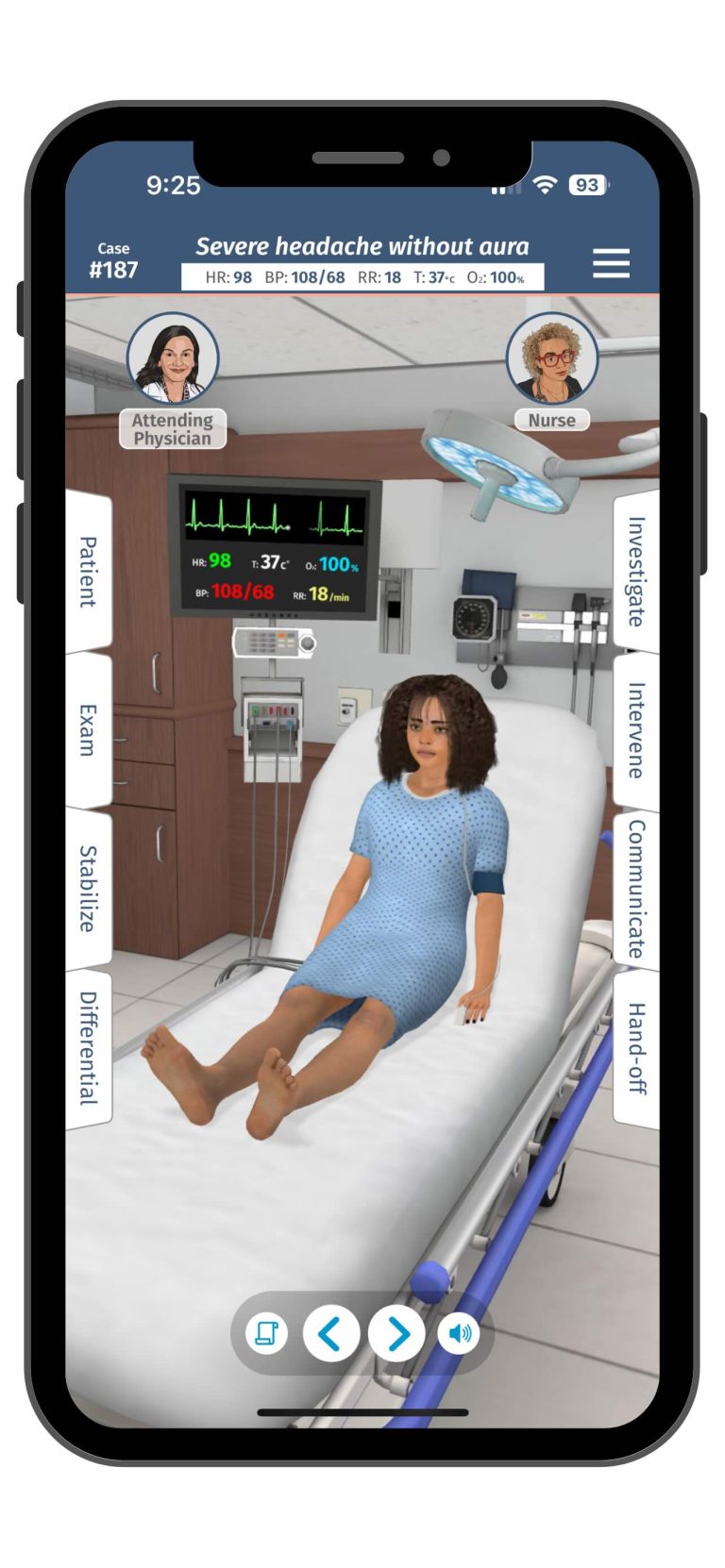
We are especially grateful to Laerdal Medical and Gaumard Scientific, our platinum sponsors, for their long-standing support of ASPiH and its mission over the past 16 years. Our thanks also go to Adam,Rouilly and Surgical Science, our gold sponsors, for creating outstanding exhibition spaces, and to Oxford Medical Simulation, also a gold sponsor, for their enthusiasm in developing the OMS–ASPiH Partnership, which will enable ASPiH members to access free OMS scenarios throughout 2026. We also acknowledge Elevate Healthcare, a valued partner since our earliest days, for their continued commitment as a silver sponsor.
A sincere pleasure, ASPiH welcomed Meta to our conference for the first time, and we thank them for sponsoring our Innovation Space—a central feature of the exhibition hall where delegates and partners came together to share knowledge and expertise. This vibrant space also hosted the celebration of our future leaders in simulation through the Student SimStars competition, generously sponsored by iRIS Health Solutions Ltd.
Our gratitude also goes to SimConverse, our exclusive AI partner, for sharing their vision to support ASPiH over the next three years and for showcasing the SimConverse–ASPiH AI Development Grant during the conference. Finally, we thank The Simulation Collective for being the exclusive sponsor of the conference online library.
ASPiH 2025 closed with a renewed sense of community – but also with momentum. A sense that the field is ready for coherence, ambition, and greater influence at system and national level. This year marked not only a milestone, but a turning point in how we imagine the future of simulation together.
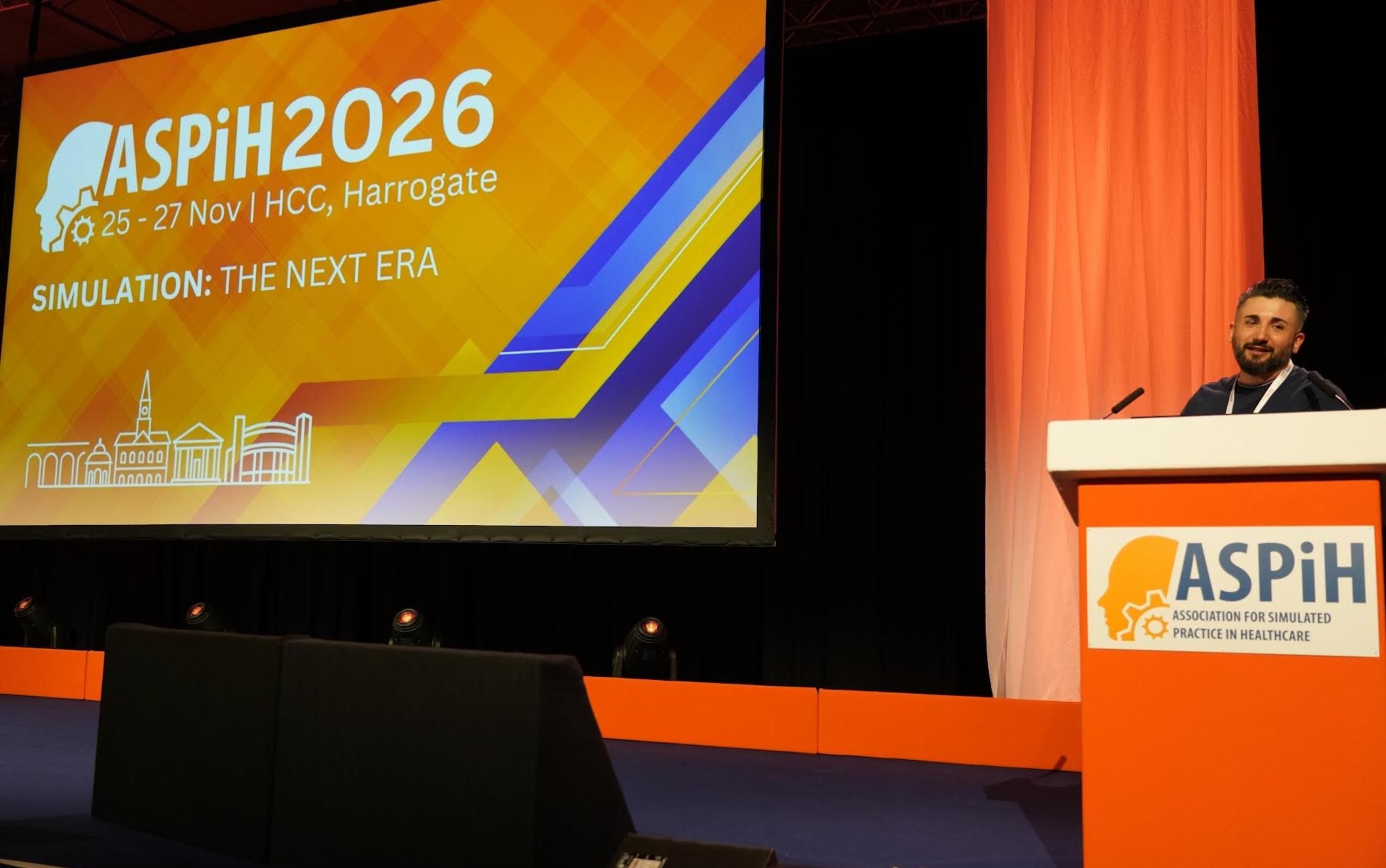
Save the date for ASPiH 2026 Conference which will take place from the 25 – 27 November at the Harrogate Convention Centre near Leeds, UK.