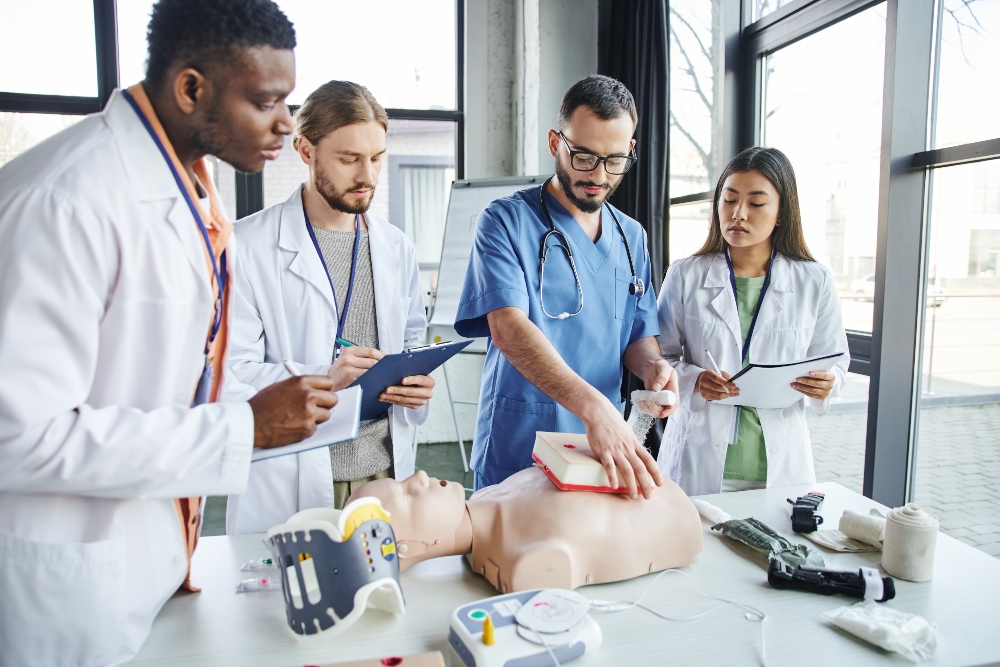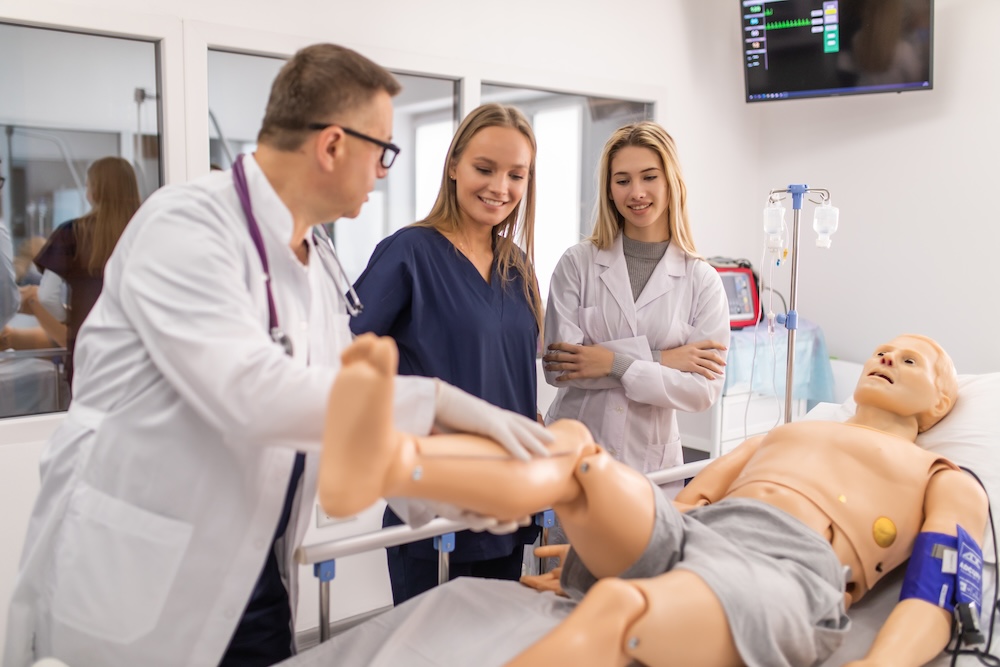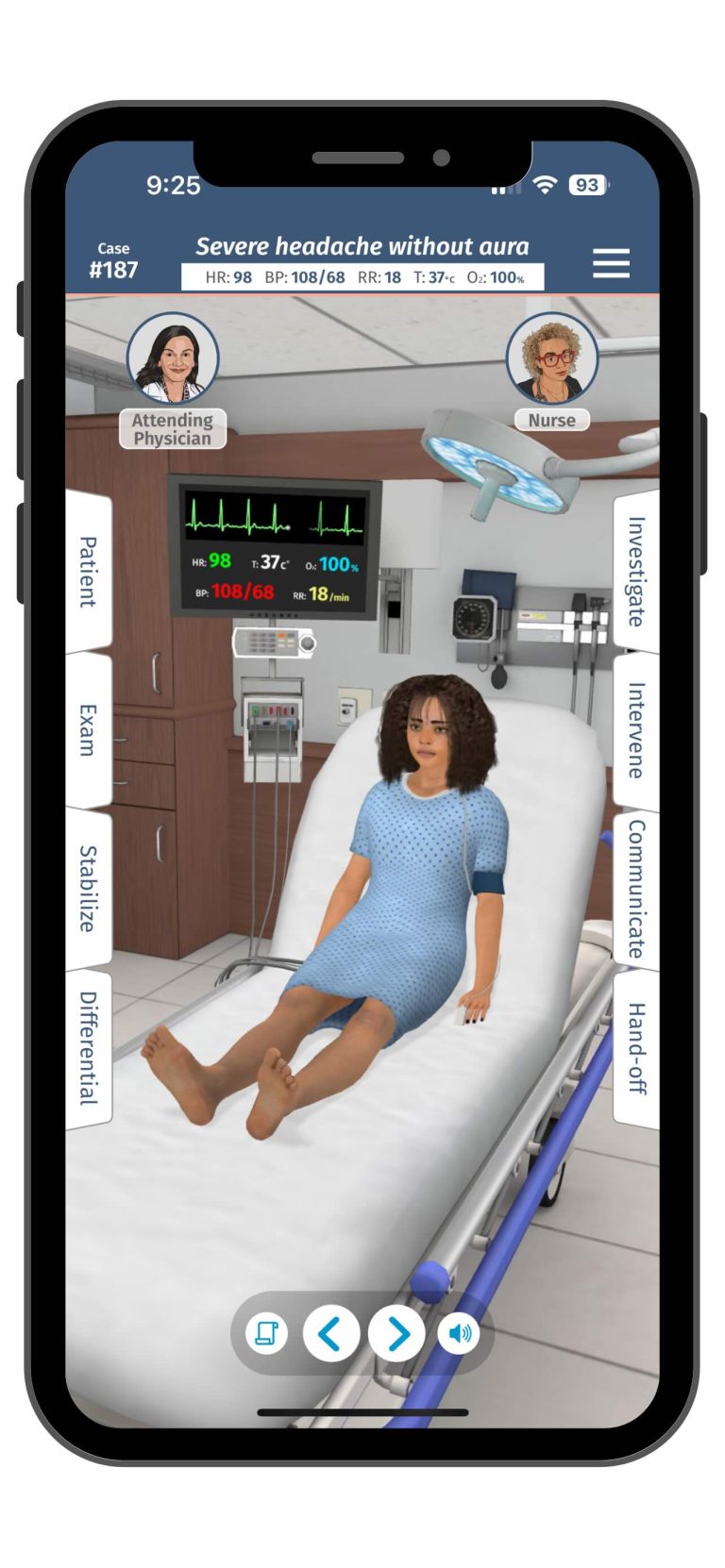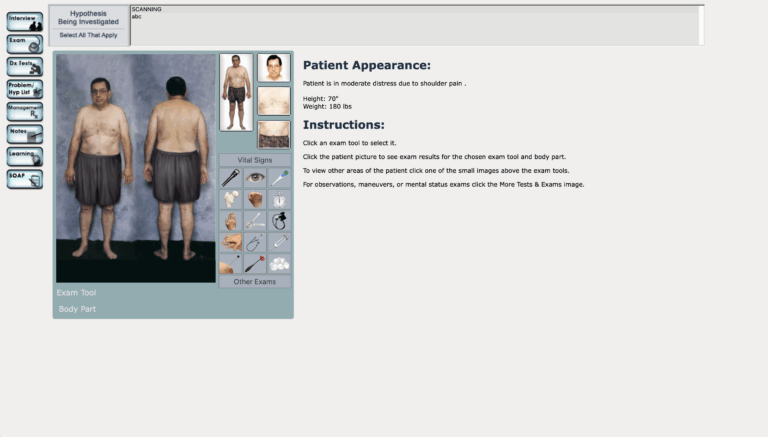

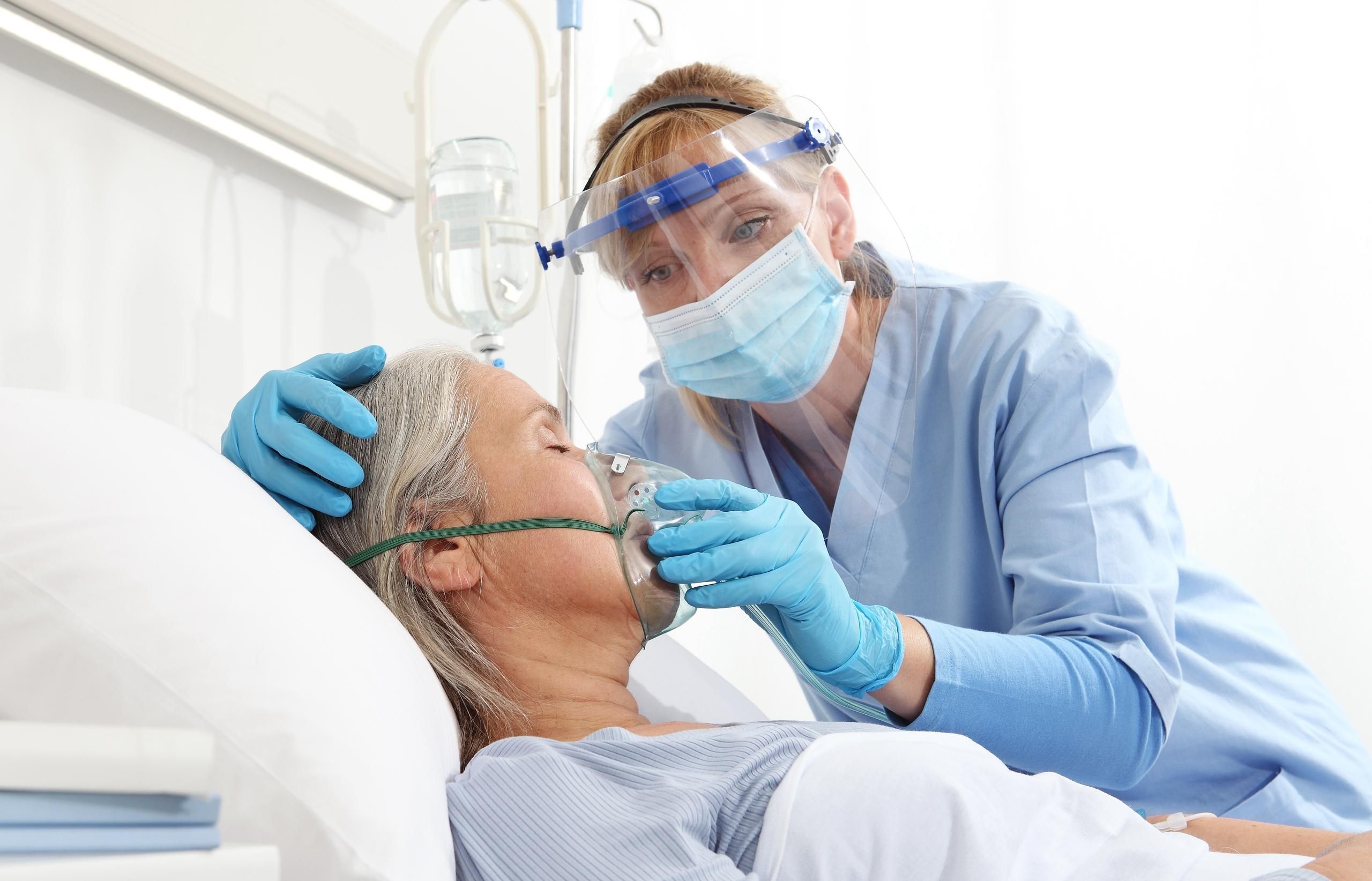
A Standardized Patient (SP) is an individual who has been trained to portray the role of either a patient, family member or others in a consistent, standardized manner for the educational benefit of a healthcare learner or professional. Outside of the United States SPs are commonly referred to as Simulated Patients. Standardized Patients can be thought of as the “actors and actresses” within the realm of healthcare education and medical simulation. This HealthySimulation.com article will explore the concept of standardized patients and best practices for inclusion of standardized patients into a healthcare simulation program. Looking to learn more about running an SP program? View our comprehensive course
Medical schools and other healthcare educational institutions will utilize SPs to teach and assess their learners throughout their coursework. Students are always told they will be working with SPs and are expected to act as though they are examining real patients. For administrators, Standardized Patients offer a lifelike simulated scenario without the risks associated with using actual patients.
The conceptual origin of the Standardized Patient dates back to 1963, when Dr. Howard S. Barrows, MD, a neurologist and medical educator, created the first standardized patient in 1963 for his third-year neurology clerkship while teaching at the University of Southern California. By directly observing the students, Barrows and the physician SP realized that a number of skills were being incorrectly performed because students were unaware of the inaccuracy. Barrows also experienced difficulties when he tried to find patients with specific findings for the Psychiatry and Neurology board examinations and realized that some findings could be simulated. Thus, Barrows was inspired to create his first “simulated patient.” The birth of the simulated patient came out of a need for a more comprehensive method to evaluate the clinical skills of third-year medical students. In the 1960s, Barrows’ innovative teaching and assessment methodologies were not widely accepted amongst his peers, but eventually they would become the standard for educating and training specialties within healthcare!
What Does a Standardized Patient Do?
In many cases, the programs that employ Standardized Patients train them to best represent another person’s actual patient case to base their simulated experience upon. The Simulated Patient may then be interviewed or examined by the learners as though they were that person in the doctor’s office or other healthcare setting. This means that SPs should be able to provide a full patient history and simulate their physical signs (such as pain or difficulty walking).
While Standardized Patients are not permitted to take any blood or other samples, they are able to perform a number of other, more general tasks. Common exercises that learners may perform during an examination include:
- Listening to the heart and lungs with a stethoscope
- Pressing on the abdomen, looking for tenderness or swellings
- Looking into the eyes, ears, and throat
- Taking blood pressure
- Assessing muscle strength
- Checking reflexes
- Checking pulses
Some SPs are comfortable with more invasive medical exams like pelvic exams or chest exams, and are compensated at higher rates for allowing medical professionals to train on these delicate procedures.
View the HealthySimulation.com Webinar Enhancing New Graduate Nurse Performance in Rapid Response Teams with Nursing Simulation to learn more!
These roles are essential within academia and training so that learners have the opportunity to practice their healthcare skills, communication skills, and history and record-keeping skills on a physical patient prior to treating actual patients. Treating a Standardized Patient further provides learners with insight into how to prepare for patients in varying conditions.
Teaching learners about the appropriate ways to examine a patient is critical to help them build their confidence and performance in the field, especially when performing more challenging exams. For this reason, gynecological, breast, and genitourinary exams are always monitored by a faculty member.
To serve their purpose, Standardized Patients must be carefully recruited and trained to take on the characteristics of the real patient being simulated. This affords learners the opportunity to learn and be evaluated on skills in a controlled, simulated clinical environment. In this setting, they are less apprehensive and can receive feedback at each step. Sometimes SPs wear specialized makeup called moulage to better represent the patient’s signs and symptoms. The most famous video about SPs features the character Kramer on Seinfeld, who worked as a Standardized Patient in one episode.
Audiovisual Recording Systems Help to Capture Standardized Patient Encounters
Audiovisual recording platforms are widely used to capture Objective Structured Clinical Examination (OSCE) encounters with standardized patients, giving clinical faculty and learners a high-fidelity record of performance that is difficult to assess accurately in real time. In a typical workflow, ceiling or wall-mounted cameras and room microphones capture the interaction, while the software tags the encounter to the learner, case, station, and evaluator; faculty can then score performance using embedded checklists and rating scales, add time-stamped comments, and quickly navigate to key moments (for example, a missed allergy question, an empathy breakdown, or a handoff communication error).
For learners, recorded OSCE footage supports structured self-review and coaching: candidates can watch complete encounters or curated clips, compare performance against rubrics, and identify repeatable improvement targets in communication, clinical reasoning, and professionalism. These systems also improve operational consistency and defensibility by standardizing station setup, supporting rater calibration through shared video examples, enabling moderation or second-review when scores are challenged, and creating an auditable trail for competency-based education and remediation.
Commonly used solutions in this space include SimCapture from Laerdal, LearningSpace from Elevate Healthcare (formerly known as CAE Healthcare), VALT from Intelligent Video Solutions, Exam Suite from SIMStation, ETC7 from KBPort, and SimulationIQ from Education Management Solutions—each designed to streamline capture, scoring, debriefing, and secure storage of OSCE encounters with standardized patients.
Also commonly used with Standardized Patient actors are wearable simulators, like those from Avkin or simulated medical device assessment tools from Innov2Learn, which can be used to enable hybrid learning approaches where students can communicate while performing clinical skills tasks.
How do Standardized Patients Benefit Clinical Simulation?
Typically, there are a number of set interactions that a Standardized Patient can expect to have with the learner they are working with. For example, during one of their interactions, the SP may present case histories in response to a question the learner has. They may also undergo a limited physical examination at the learner’s discretion.
At other times, a Standardized Patient may be asked to provide learners with necessary medical news and information, or they can be matched with cases using specific criteria. These criteria can include factors such as age, gender, race, etc.
Alternatively, during an interaction with a learner a SP may be asked to help them work on and develop their interpersonal communication and clinical skills. Assisting a learner in working through difficult emotional situations within a healthcare environment is another benefit of this guided simulation. Simulated Patients serve a much greater purpose than simply to serve as a simulated body.
Each experience utilizing an SP as a tool is designed to be as realistic as possible and to enhance the total learning experience. However, the mission of the SP Program is not to have a Standardized Patient realistically convey an illness to a student, but instead offer an educational tool that is both consistent and measurable for review. By doing this, programs are able to accurately teach and assess students according to one standard per case. The stronger the standards put into place, the more accurately a case can be reproduced.
View the new HealthySimulation.com Community Standardized Patient / Simulated Patient Group to discuss this topic with your Global Healthcare Simulation peers!
Who is an Ideal Standardized Patient?
Those interested in contributing to the development of health care professionals may apply to be chosen to work as SPs through facilities and institutions which rely on their services. While some may think having worked as an actor would be similar to serving as a Standardized Patient, there are clear differences. For instance, the work of an SP can be extremely repetitive and observant.
Making the role of a Standardized Patient increasingly unique is that they are usually asked for balanced and objective feedback, and stay flexible to the needs of the faculty in each situation. Due to the nature of the work, an SP is not permitted to share their learning material with those outside of the program or other healthcare personnel involved.
The act of portraying someone with a certain medical condition or issue is safe, and the examinations are normally very basic. If there is ever a point where the Standardized Patient may be subject to any discomfort, they are warned and are able to opt out of participating in that examination.
Individuals who are interested in healthcare and helping students learn and navigate their way through the field are ideal SP applicants. Many Standardized Patients find this role extremely rewarding, in addition to being interesting.
If committed to becoming a Standardized Patient, individuals can expect to spend a minimum of 15 hours in training sessions with a Standardized Patient Trainer. The amount of time that will be needed for further training will vary depending on the complexity of each case and the SP’s experience.
Having no biases toward gender, race, religion, national origin, or physical characteristics is essential for all Standardized Patients. They should also be professionals who are able to understand and respect confidential matters. Being comfortable with healthcare is another plus in this role.
Overall, men and women of all ages can serve as Standardized Patients. Prospective SPs should always be upfront about any preexisting conditions, as they can either help or prohibit the individual from participating in certain cases. Being a strong communicator, who can learn quickly, accept direction and adapt easily to a variety of different situations is also largely beneficial as a Standardized Patient.
About the Association for Standardized Patient Educators (ASPE)
ASPE is the international organization of simulation educators dedicated to: promoting best practices in the application of SP methodology for education, assessment and research, fostering the dissemination of research and scholarship in the field of SP methodology, and advancing the professional knowledge and skills of its members. ASPE has developed standards in the use of SPs for SP educators and is a media partner of HealthySimulation.com. Learn More About ASPE and the ASPE Standards of Best Practice.