
Meta is a global technology leader headquartered in Menlo Park, California, best known for immersive virtual reality with Meta Quest and its innovative Ray‑Ban Meta smart glasses. Meta Quest VR platform presents an expanding catalogue of medical simulation, surgical rehearsal, and immersive clinical training experiences. Ray‑Ban Meta wearable device blends hands-free camera capture, open‑ear audio and integration with Meta AI vision and voice—opening new possibilities for point‑of‑view clinical skills review, remote consultation, and standardized patient simulation. Meta’s investment in augmented reality and virtual reality technologies positions the company as a vital partner in healthcare simulation aimed at improving clinical education, procedural training and patient safety outcomes. Meta’s ecosystem seamlessly aligns with nursing simulation, medical simulation, standardized patient capture, clinical simulation center operations, and virtual reality in surgery or obstetrics scenarios. HealthySimulation.com readers should know Meta as a forward‑thinking enabler of next‑generation high‑fidelity simulation tools that adapt to professional training needs across disciplines such as nursing, allied health, military medicine and dental care through cutting‑edge hardware and software. Meta’s combined VR headset and smart glasses portfolio underscores a commitment to elevating simulation‑based education, immersive learning, and enhanced debriefing experiences.
Key Competitors to Meta’s virtual reality and smart glasses offerings include HTC Vive, Microsoft, Apple, Sony, Pico, Valve and Lenovo to name a few.
Summary of Key Products/Services from the Company
Meta’s contributions to the healthcare simulation space include two major product categories that enable immersive learning, patient simulator augmentation, and advanced audiovisual documentation: the Meta Quest VR headset platform and Ray‑Ban Meta smart glasses. These hardware devices serve as hosts and access points for a wide range of simulation tools, medical training apps, and real-time feedback experiences. Meta Quest is widely adopted by healthcare education platforms to deliver virtual reality patient scenarios, anatomy exploration, procedural rehearsals, and interdisciplinary team training modules. Ray‑Ban Meta smart glasses, developed in partnership with EssilorLuxottica, integrate real-time vision AI, open-ear audio, and livestream capabilities—supporting simulation faculty, standardized patient interactions, and point-of-view debriefing workflows. Through partnerships with organizations like InvolveXR and Oxford Medical Simulation, Meta’s platforms support scalable, repeatable, and engaging simulation learning environments. Meta products serve as foundational hardware for many simulation centers investing in high-fidelity, mobile-ready, cost-effective VR and AR tools. Meta’s strategy blends hardware, operating systems, and third-party application access to support clinical simulation across nursing, emergency response, surgical skills, and more.
- Meta Quest VR Headset: Lightweight, wireless headset hosting thousands of clinical training apps and VR patient simulators.
- Ray‑Ban Meta Smart Glasses: AI-enhanced wearable offering hands-free video, live-streaming, and real-time audio—ideal for faculty POV capture or telepresence.
- Meta Horizon OS: Proprietary operating system enabling application ecosystem access and device optimization for clinical VR use cases.
- App Ecosystem Support: Enables training with platforms such as Oxford Medical Simulation, InvolveXR, and Surgical Theater.
- Clinical Integration Resources: Access to developer APIs, immersive training libraries, and SDKs to help simulationists and institutions scale learning environments.
More Detailed Product / Service Offerings
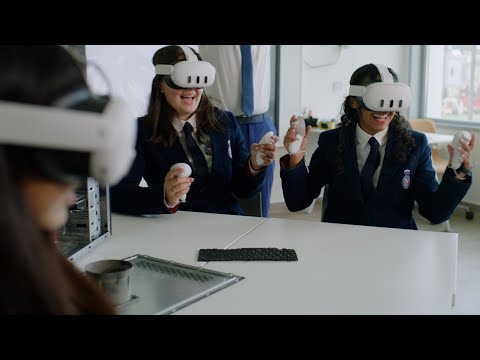
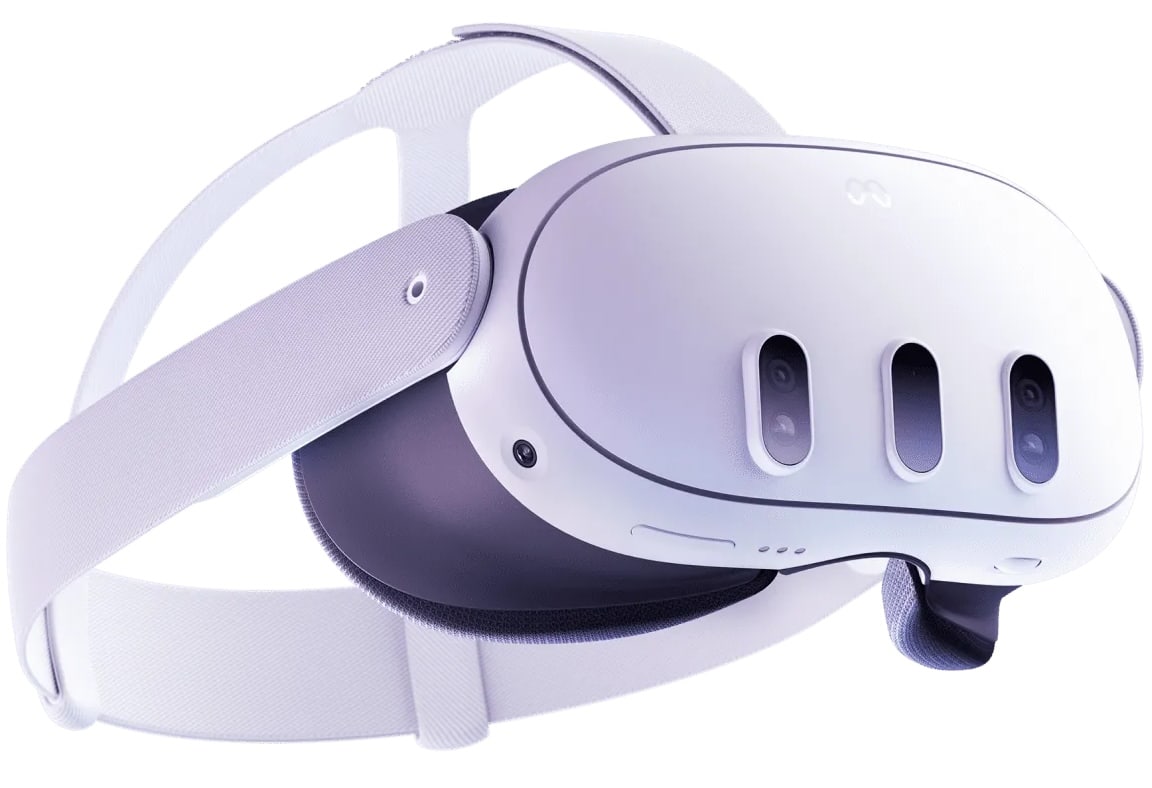
Meta Quest VR Headset: The Meta Quest VR headset is widely recognized in clinical simulation for enabling immersive, hands-on training through a lightweight, wireless form factor. The headset supports a vast library of medical simulation applications including full clinical scenarios, surgical simulations, patient interaction modules, and anatomy visualizations. Meta Quest’s standalone capability means no external computer is required, making deployment in simulation labs, classrooms, or remote learning environments seamless. Advanced spatial audio, hand tracking, and wireless casting features provide instructors and learners with intuitive control and observational feedback. Many simulation centers adopt Meta Quest to scale virtual training for nursing programs, surgical residencies, emergency medical technician (EMT) training, and even pediatric care education. Quest devices also support debriefing workflows through screen casting and integration with learning management systems. With affordable institutional pricing and compatibility with key healthcare simulation apps, Meta Quest delivers significant ROI in improving learning retention and competency-based outcomes.
Ray‑Ban Meta Smart Glasses: Ray‑Ban Meta Smart Glasses, co-engineered with EssilorLuxottica, represent a groundbreaking fusion of wearable technology, audiovisual capture, and artificial intelligence. With a built-in 12 MP camera, open-ear directional speakers, and Meta AI vision assistant, these glasses enable hands-free first-person simulation recording, live-streaming, and communication. Simulation programs use Ray‑Ban Meta for standardized patient capture, point-of-view instructor feedback, and remote clinical skills observation. Integration with Meta View mobile app allows for automatic uploads and review within educational workflows. Educators can prompt Meta AI to summarize observations or answer contextual questions in real time, enhancing feedback cycles. This technology empowers healthcare training programs to expand beyond fixed AV systems into dynamic, mobile-ready platforms for procedural skill review, student assessment, and faculty development. Ray‑Ban Meta’s comfort, lightweight design, and seamless smart features make it a powerful addition to simulation lab toolkits looking to enhance real-time learning environments.
Meta’s Healthcare Simulation App Ecosystem: Meta’s Horizon OS provides access to a rapidly expanding ecosystem of third-party VR healthcare applications used globally by simulation centers, academic institutions, and healthcare systems. Apps such as InvolveXR enable simulation managers to create custom scenarios for clinical judgment, interprofessional communication, and procedural skill mastery. Oxford Medical Simulation, one of the most well-known simulation providers on Meta Quest, delivers evidence-based virtual patient scenarios designed to meet clinical competencies in nursing and medicine. Additionally, educational tools like Primal VR and Medical Holodeck provide high-resolution anatomical models and surgical rehearsal environments to support advanced clinical visualization. These applications run seamlessly on Meta Quest hardware, offering responsive user experience, data capture, and high-fidelity visuals. Institutions using Meta-supported apps benefit from modular scenario deployment, standardized assessment tools, and cloud-based performance analytics. Meta’s software partnerships position the platform as a foundational simulation infrastructure capable of evolving with training needs across healthcare specialties.
Key Organizations / Institutions Clients
Meta’s immersive technologies are currently being utilized by several high-profile institutions committed to healthcare simulation, virtual training, and next-generation clinical education. Children’s Hospital Los Angeles (CHLA) has leveraged Meta Quest headsets to train pediatric emergency teams using virtual reality scenarios designed to improve critical response time and interdisciplinary communication. Oxford Medical Simulation, whose immersive VR content runs on Meta hardware, is implemented by numerous universities and teaching hospitals across the United States, United Kingdom, and Australia. InvolveXR also reports institutional adoption across nursing schools and clinical simulation labs that require custom scenario-building and scalable, repeatable VR training. Academic programs in surgical education have adopted platforms like Primal VR and Medical Holodeck, hosted on Meta Quest, to support 3D visualization and surgical rehearsal. These deployments highlight Meta’s growing footprint in simulation centers aiming to elevate their technology stack with mobile, immersive, and AI-supported experiences.
Key Partnerships/Acquisitions
Meta has strategically partnered with major global organizations to enhance the capabilities and distribution of its immersive technologies within healthcare simulation and education. A longstanding partnership with EssilorLuxottica led to the co-development of Ray‑Ban Meta smart glasses, combining high-fashion design with real-time AI-powered functionality. In the accessibility space, Meta integrated Be My Eyes, a visual assistance application, into its smart glasses, enabling real-time visual support—an innovation that supports clinical education for blind or low-vision learners and accessibility in simulation workflows. At the 2023 Meta Connect event, the company announced extended collaborations with third-party developers in medical VR to enhance the Meta Horizon ecosystem for training and education. Strategic collaboration with InvolveXR has provided simulation programs with advanced scenario authoring tools and seamless delivery through Meta Quest. Additionally, Meta’s hardware platforms have been central to Oxford Medical Simulation’s global expansion, creating ongoing alignment between Meta and a major clinical simulation content provider.
Who Should Consider Purchasing from the Company and Why
Meta’s hardware and platform offerings present compelling value to a broad range of clinical simulation stakeholders, including nursing programs, medical schools, allied health training centers, military medical units, and dental education institutions. Simulation program directors seeking scalable virtual reality solutions should consider Meta Quest headsets for their cost-effective implementation, access to high-quality training applications, and ability to deliver competency-based learning across disciplines. Educators, instructional designers, and simulation technicians benefit from the intuitive user interface, mobile portability, and ecosystem of clinical applications tailored for virtual patient scenarios, anatomy learning, and surgical preparation. The Ray‑Ban Meta smart glasses offer a novel, lightweight tool for faculty to record first-person training footage, engage in live-streaming simulations, or utilize real-time feedback with AI-powered vision support. For programs looking to expand audiovisual recording beyond fixed-room solutions, these smart glasses enable new mobile documentation workflows. Institutions with a focus on immersive education, remote training, or hybrid learning environments gain strong return on investment by adopting Meta hardware, which reduces logistical costs while improving student engagement and measurable learning outcomes. Simulation labs aiming to modernize infrastructure with wearable and VR solutions that align with CHSE and CHSOS standards of best practice will find Meta’s offerings well-suited to meet accreditation and program innovation goals.
- Meta Quest Headset: Supports a broad catalog of clinical training apps, offering wireless, mobile-ready VR simulation for procedural and patient care scenarios.
- Ray‑Ban Meta Smart Glasses: Combines real-time AI, livestreaming, and POV recording to enable mobile standardized patient observation and instructor debriefing workflows.
- Developer Ecosystem: Offers deep integration with third-party healthcare simulation software such as InvolveXR, Oxford Medical Simulation, and Medical Holodeck.
- Enhanced Debriefing and Assessment: Meta hardware facilitates real-time visual feedback, observational reviews, and learner self-assessment through seamless casting and recording tools.
- Simulation Program Efficiency: Devices reduce the need for fixed AV infrastructure, lower cost per learner, and accelerate onboarding through intuitive interfaces and rapid deployment.
Final Considerations of Meta
Meta stands at the forefront of immersive healthcare simulation by offering advanced hardware platforms that integrate seamlessly with the educational goals of clinical training programs around the world. Through Meta Quest VR and Ray‑Ban Meta smart glasses, simulation centers gain access to scalable, mobile, and intuitive technologies that enhance procedural training, critical thinking, and learner engagement. Meta’s partnerships with leading medical simulation software providers, along with a growing ecosystem of clinical VR applications, ensure institutions have the tools needed to modernize their simulation labs and extend access to virtual learning beyond traditional classroom boundaries. The company’s commitment to wearable innovation and artificial intelligence reflects a broader vision of transforming how simulation-based education is delivered and experienced. Meta’s solutions empower educators and simulation specialists to meet healthcare training demands while promoting best practices in learner assessment, scenario debriefing, and interprofessional education. Simulation program administrators looking to reduce costs, improve outcomes, and increase learner accessibility should strongly evaluate Meta as a primary platform for high-fidelity virtual training. Meta’s continual investment in VR, AR, and AI for education makes the company an essential partner for institutions advancing toward the future of simulation-based clinical education.
Disclosure: The information on this page may be inaccurate or out of date. Create a free account and click the ‘Contact Vendor’ button for direct communication with the company for the latest updates.


 1 Meta Way, Menlo Park, California, 94025, United States