
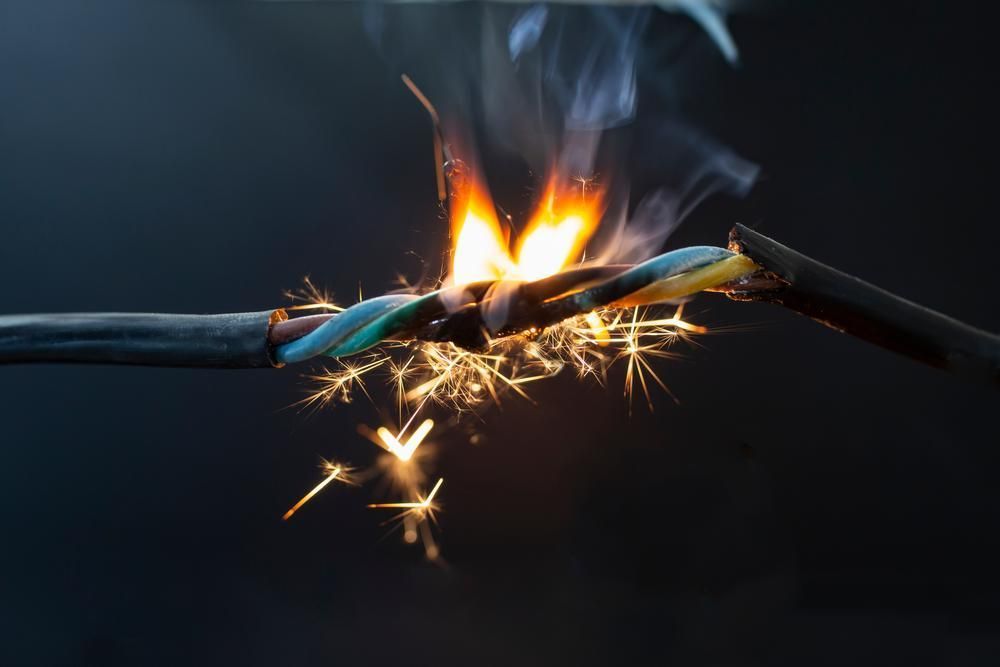
Electrical shock makeup moulage is helpful in providing clinical learners with the opportunity to simulate electrocution victims. Electrocution or electric shock injuries result from electrical energy that converts to heat as this passes through the body. Electrical energy can cause tissue damage throughout the body of the patient and severity of the burn can depend on factors such as the strength and duration of the current, the type of circuit, and the current’s pathway through the body. Due to the multitude of potential issues throughout many body systems for patients, an electrocution or electric shock clinical simulation scenario can meet the learning objectives for many different clinical areas and teams. This scenario stem and case is a great opportunity for healthcare simulation teams to provide clinical simulation participants with incredibly impactful moulage. This article by Erin Carn-Bennett, RN, MSN will discuss moulage for the electrocution or electric shock scenario.
Types of Electrocution Moulage and Electric Shock Moulage
As healthcare simulationists there is use to understand the pathophysiology of different patient presentations, when tasked to complete moulage for a clinical simulation experience in order to be able to apply moulage with the right level of impact for participants. Electrical injuries such as an electrocution or electric shock can arise from incidents that involve lightning, low-voltage, or high-voltage electricity. When not immediately fatal, these injuries can induce damage and dysfunction across multiple tissues and organs.
There are four primary types of electrical burns. Flash burns are caused by an arc flash and typically result in superficial burns since the electrical current does not penetrate beyond the skin. Flame burns occur when an arc flash ignites clothing and skin. Some electrical current may pass through the skin in flame burn cases. Lightning burns result from a short but high-voltage electrical discharge, with current that affects the whole body. More serious high voltage electrical burns occur when a patient becomes part of an electrical circuit, which is defined as the presence of clear entry and exit wound sites.
Mechanisms of Electrical Moulage Injuries
The primary mechanism of injury in electrical injuries is the conversion of electrical energy into thermal energy as electrical current traverses body tissues. Tissues with higher electrical resistance generate more heat and result in greater damage. Despite potentially minor surface burns, significant deeper tissue damage can occur due to heat generation. Electrical current can directly damage cell membranes and contribute to tissue necrosis.
At high voltages, electrical fields can create pores in cell membranes, which leads to fluid leakage and further cellular damage. Electrical shock moulage Low-voltage injuries are rarely associated with significant trauma or complications but can still cause severe burns dependant on exposure duration and contact area. Occupational electrocutions often result from power line contact or electrical machinery that can cause severe and extensive burns.
View the HealthySimulation.com Webinar Innovation & Moulage: Affordable Solutions to Increase Clinical Simulation Realism to learn more!
Electrical injuries can lead to cardiac arrhythmias, muscle necrosis, compartment syndrome, and renal failure due to systemic effects. Many body systems can be affected by electrical injuries and careful management is required for the numerous potential complications in both the pre hospital and also hospital based clinical environment. Due to these factors, an electrical injury scenario can be an incredibly useful team scenario for those in acute clinical care environments such as an emergency department or intensive care for both pediatric and adult patients.
Create Realistic Moulage for Electrocution and Electric Shocks
The creation of realistic moulage for electrical burn moulage injuries in healthcare simulation requires both a combination of moulage skills and how electrical injuries present on the skin and beyond for patients. Electric shock injuries will often have a small and charred entry wound where the electric current enters. A larger and more explosive exit wound is usually present where the electrical current leaves the body.
At every point in the creation of an electrical shock or electrocution moulage there should be reconsideration of what the scenario stem is, what was the mechanism of injury and also if the right balance of moulage is set to be achieved. The aim should be for the moulage to complement the scenario and learning objectives, but not be a distraction for the clinical simulation participants.
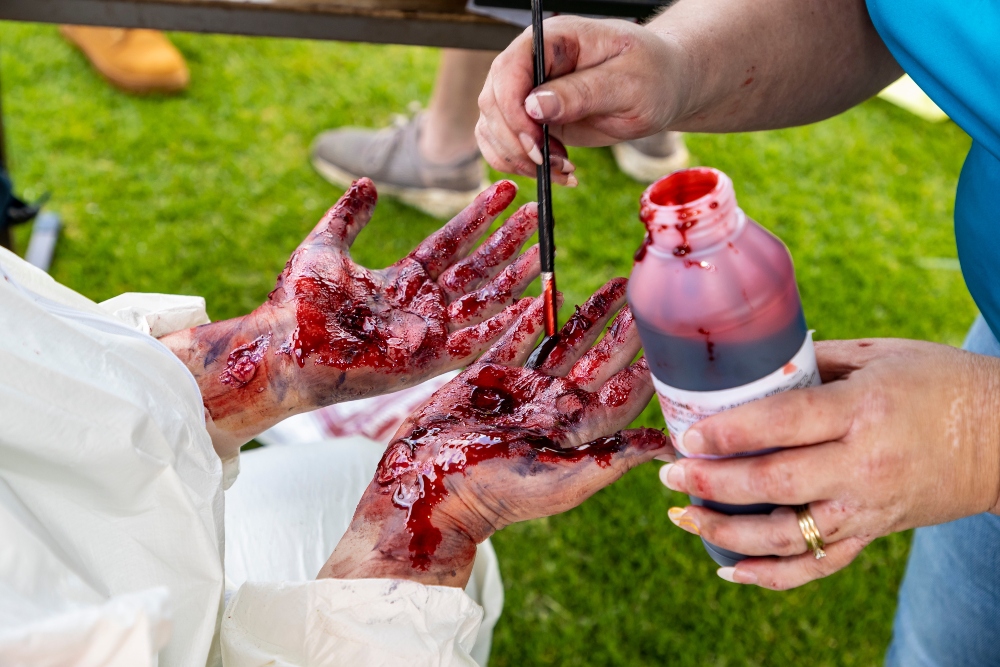
In order to create such moulage effects, the use of silicone or wax based products to assist to sculpt a small circular burn for the entry wound can be helpful. This could also be achieved with tissue paper and petroleum jelly as well. The application of black and dark red grease paints can help to mimic charred tissues of these types of burns. For the exit wound of an electrical injury, create a jagged and more extensive burn effect. This can be moulaged with the above methods or with sculpt gel to assist to simulate torn flesh. Red and brown tones with moulage makeup products can mimic both deep tissue burns and necrosis.
View the new HealthySimulation.com Community Moulage Group to discuss this topic with your Global Healthcare Simulation peers!
Electrical burns and injuries can appear dry and leathery, sometimes with blisters or cracked skin. This can be achieved through the application of a thin layer of liquid latex and then allow the product to dry. The dry liquid latex can then be stretched and tears can be made to small sections to create a peeled skin effect. This same effect can also be achieved with a peel off facial mask and a hairdrier to speed up the drying process. The use of charcoal powder or black grease paint can add to the scorched appearance around the electric burns. To moulage second-degree burns, an application of a clear gel such as petroleum jelly can create a wet and blistered skin appearance.
Bruise colors such as dark purple, blue, and green around the electrical injury placement on the patient’s body can assist to suggest deeper tissue damage. The application of stippled red and dark colors can simulate localised capillary ruptures and burnt skin. The presence of burnt clothing from distressed fabric from a heat gun and torn clothing edges alongside the application of black smudges can increase the fidelity of any moulage make-up applied for this clinical simulation scenario.
If the electrocution burn moulage moulage make up is applied to simulated persons rather than a manikin, consider whether the products are skin-safe and be sure to check for any allergies before the application of any moulage materials to simulated patients. Application of moulage to manikins should consider if the products will stain the manikin or not. Ensure that pre preparation and cleaning of the manikin is planned for. If there is the use of simulated smoke effects for the moulage, ensure that these products are non-toxic and are also safe in an indoor clinical simulation environment.
This article has described the importance to know about the pathophysiology and mechanism of injury for an electric shock or electrocution healthcare simulation scenario and consideration for moulage application. The moulage techniques described in this article allow healthcare simulationists to make considerations of how to assist to increase fidelity of electric shock and electrocution moulage. Moulage application for an electric shock or electrocution scenario can assist healthcare simulation participants to work as a team to care for a patient who has this injury and also to increase their knowledge of different electrocution shock moulage types and injuries.
How to Start out with Basics of Healthcare Simulation Moulage