
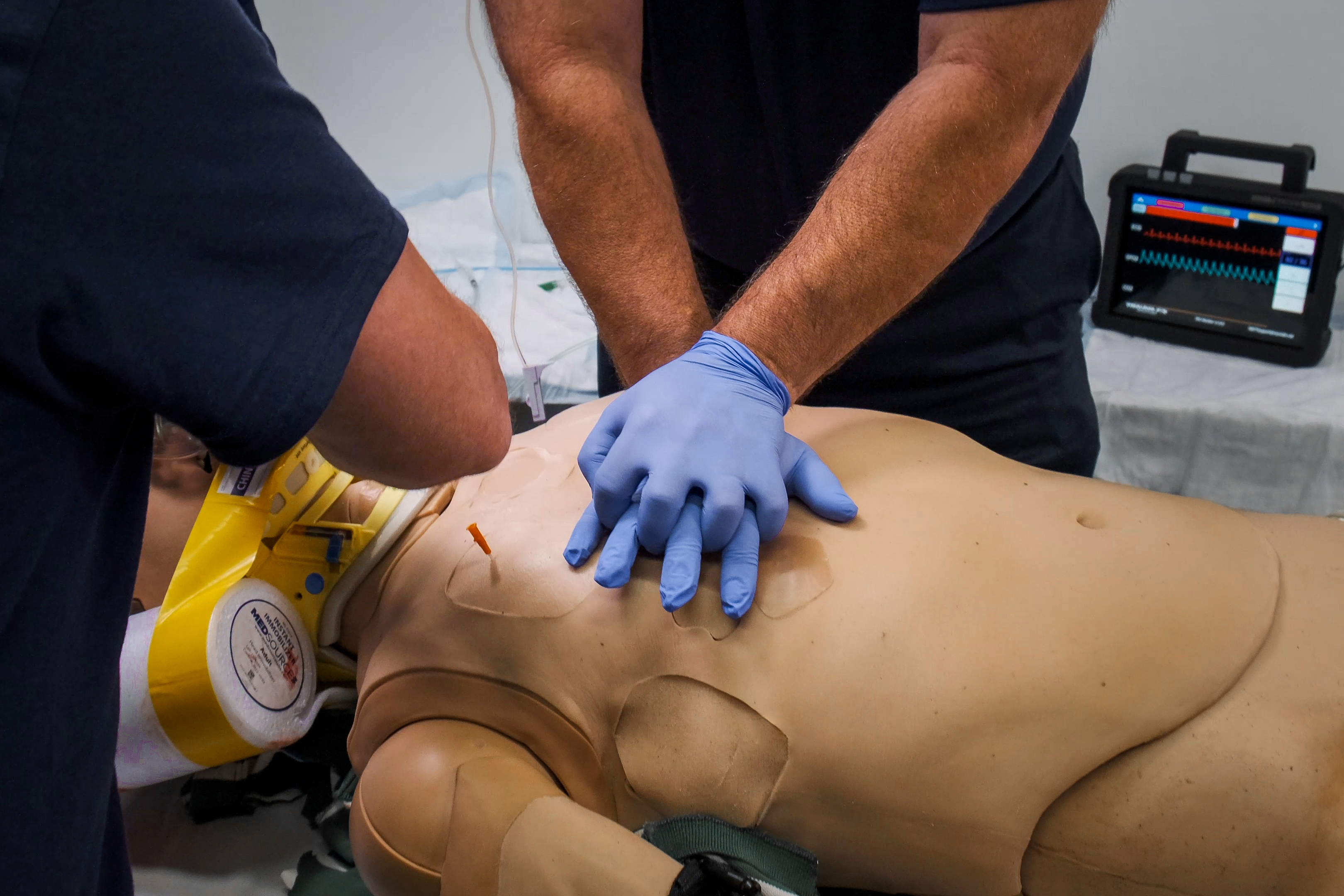
The WBS-EMITT-TM (Whole-Body Simulator Emergency Medical Trauma Trainer Tactical Medical) from TacMed Solutions is a cutting-edge, high-fidelity medical simulation platform engineered to meet the complex training needs of tactical medics, civilian first responders, and emergency medical personnel. Designed to replicate real-world trauma scenarios with remarkable accuracy and realism, the WBS-EMITT-TM delivers an immersive and comprehensive hands-on experience that prepares learners to perform critical life-saving interventions in challenging and dynamic environments.
TacMed Simulation, a division of TacMed Solutions, a leader in advanced medical simulation technology, developed the WBS-EMITT-TM as a multipurpose training solution capable of simulating a wide spectrum of traumatic injuries and medical emergencies. The simulator integrates anatomically precise features with physiological responses, making the device ideal for training in environments ranging from austere combat zones and disaster sites to civilian emergency settings.
Build and Design
At the core of the WBS-EMITT-TM is a durable urethane core, providing structural integrity and resilience to withstand rigorous training exercises. The exterior features highly realistic synthetic skin, which not only enhances tactile feedback but also mimics the texture, appearance, and responsiveness of human tissue. This combination of materials ensures longevity and durability even when used extensively in harsh outdoor or indoor conditions, including extreme weather and rough handling.
The full-body design offers a true-to-life human form, allowing trainees to practice patient handling, casualty evacuation, and medical interventions in a realistic manner. The simulator’s rugged construction makes it an ideal companion for field exercises, tactical scenarios, and simulation centers focused on trauma and emergency care.
Realistic Trauma and Medical Training Features
The WBS-EMITT-TM is engineered to simulate a broad range of critical trauma injuries and medical conditions, providing learners with opportunities to practice interventions aligned with current tactical combat casualty care (TCCC) and civilian emergency protocols. The trauma simulator’s comprehensive features include:
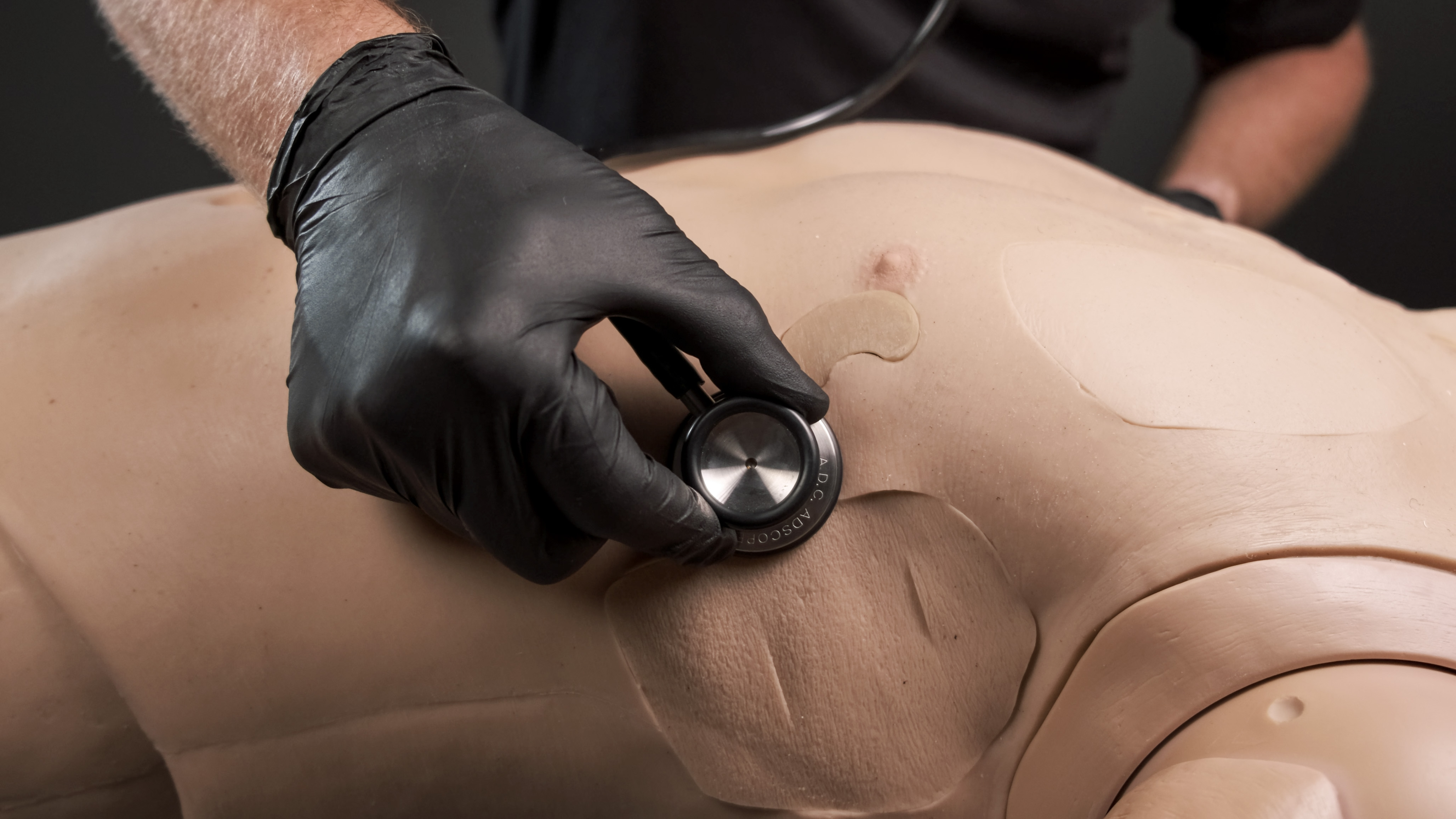
- Realistic Airway and Breathing: The simulator replicates spontaneous breathing with visible chest rise and fall, allowing learners to assess respiratory status and provide ventilatory support using bag-valve-mask (BVM) devices. Trainees can perform airway maneuvers and insert oropharyngeal and nasopharyngeal airways effectively.
- Intubation and Cricothyroidotomy: The WBS-EMITT-TM supports advanced airway procedures such as endotracheal intubation and emergency cricothyroidotomy, critical for managing compromised airways in severe trauma. The anatomical fidelity allows for realistic placement and verification of airway devices.
- Simulated Tension Pneumothorax and Needle Decompression (NCD): One of the leading preventable causes of death in trauma is tension pneumothorax. The simulator enables learners to identify this life-threatening condition and perform needle thoracostomy with real-time feedback, including air release simulation and occlusion detection.
- Sucking Chest Wound: The WBS-EMITT-TM features an open chest wound model that mimics a sucking chest injury, allowing trainees to practice sealing techniques and chest tube placement to restore respiratory function.
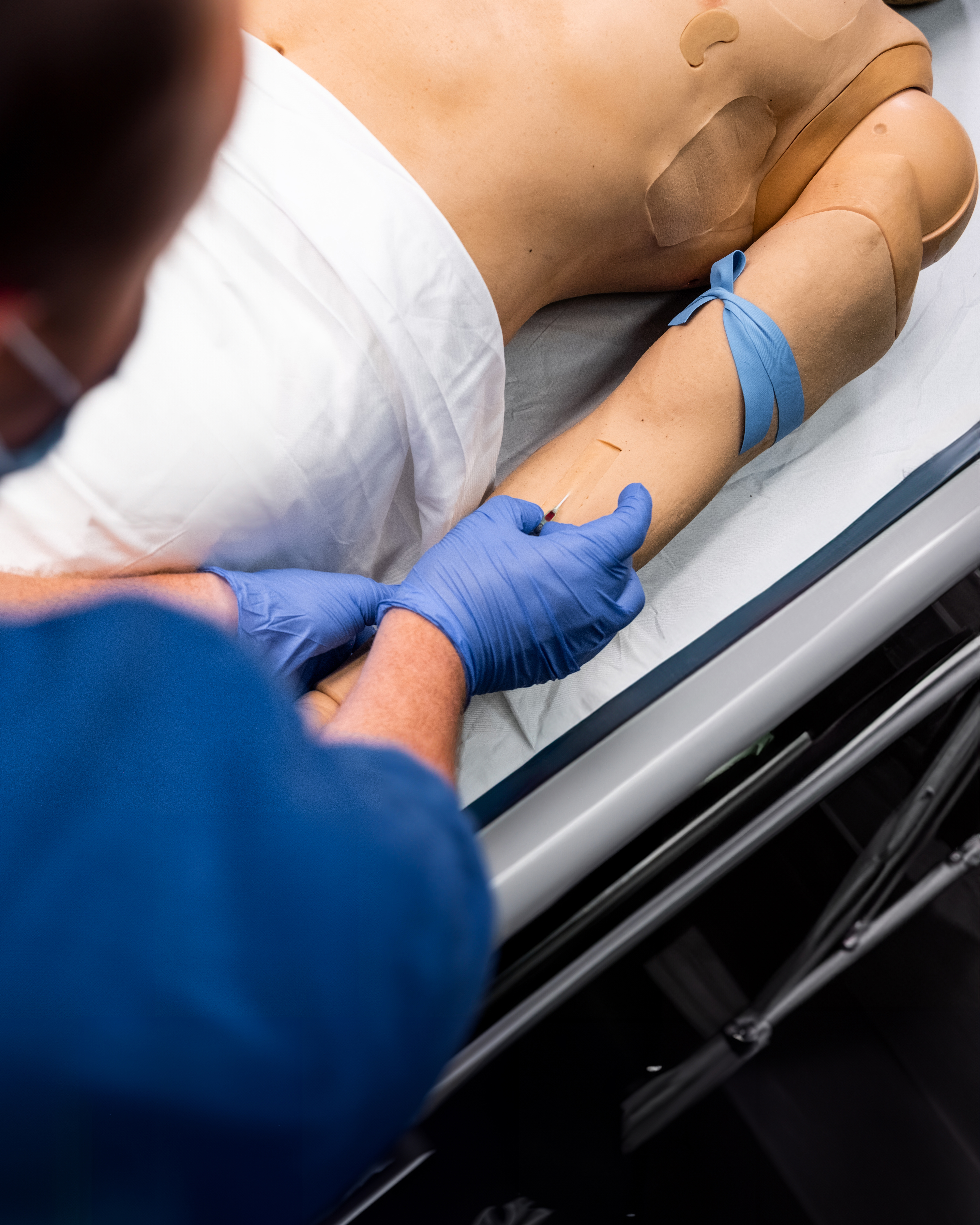
- Intraosseous (IO) and Intravenous (IV) Infusion: Vascular access training is essential for trauma care. The simulator provides sites for both intraosseous needle insertion and peripheral IV catheterization, complete with flashback cues for successful cannulation and the ability to simulate fluid infusion.
- Bleeding and Occlusion Feedback: Realistic arterial and venous bleeding scenarios are incorporated to train learners on hemorrhage control techniques. The system gives immediate feedback on occlusion effectiveness, encouraging precise application of direct pressure, tourniquets, and wound packing.
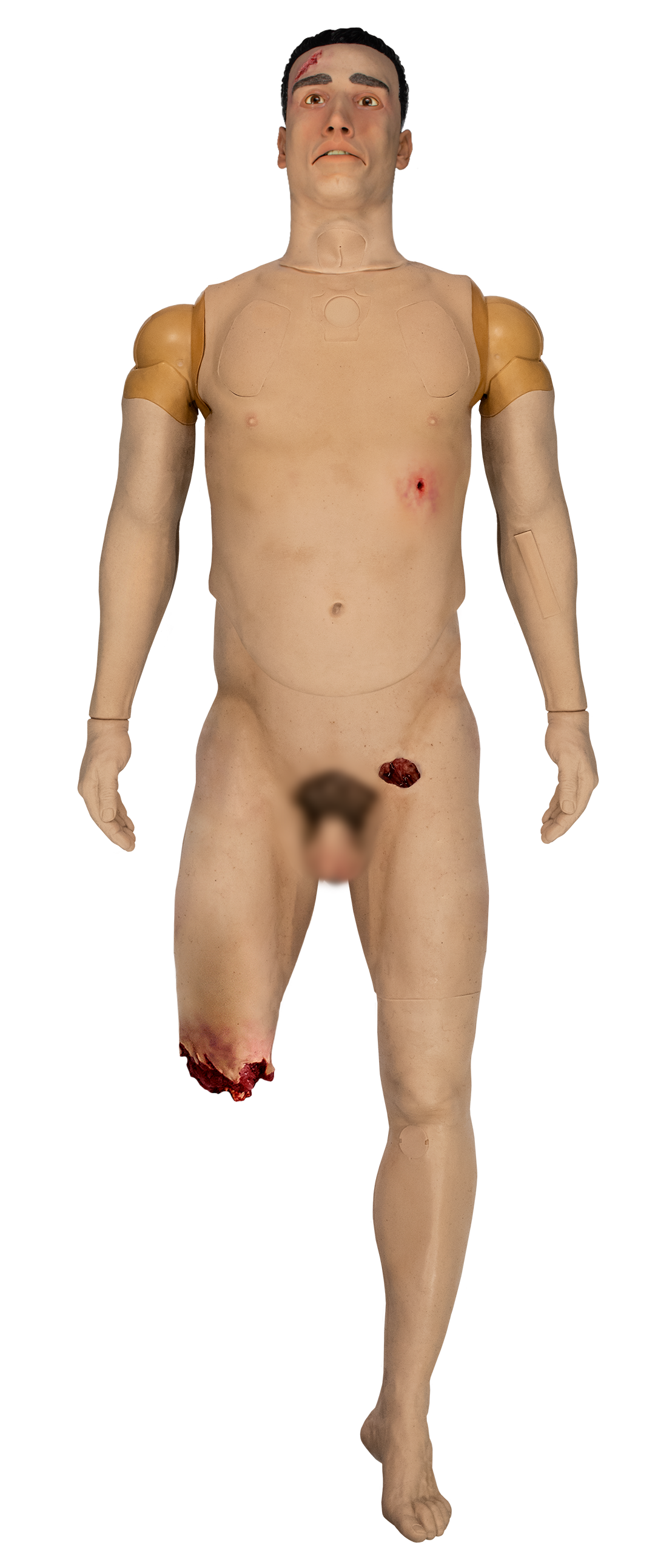
- Amputation and Packable Wound Training: The simulator features amputations with bleeding control challenges and packable wounds designed for the use of hemostatic agents and tactical dressings. This teaches critical skills in managing severe extremity trauma, a common battlefield injury.
Instructor-Controlled Real-Time Feedback and Scenario Management
- A standout feature of the WBS-EMITT-TM is the device’s long-range remote control system, which places scenario management firmly in the hands of instructors. Through this interface, instructors can:
- Adjust vital signs dynamically (heart rate, respiratory rate, blood pressure)
- Introduce complications or improvements based on learner actions
- Monitor intervention success and provide immediate feedback
- Log performance data for comprehensive debriefing and evaluation
This real-time control allows the creation of highly variable, realistic scenarios that respond to trainee decisions, enhancing critical thinking and decision-making skills under pressure.
Optional Modules and Customization
The WBS-EMITT-TM offers optional add-ons that expand the medical simulator‘s training versatility:
- Amputation (Bleeding) Arm: This module simulates traumatic limb loss with active bleeding, enabling practice in hemorrhage control and wound packing on upper extremities.
- Burn Arm: Designed to replicate various burn degrees, this addition facilitates training in burn assessment, dressing application, and fluid resuscitation protocols.
Such modularity allows programs to tailor the simulator to specific training needs, whether focused on combat casualty care, mass casualty incidents, or civilian trauma.
Clinical and Tactical Training Applications
The WBS-EMITT-TM is perfectly suited for a variety of training environments and user groups, including:
- Tactical Combat Casualty Care (TCCC): Military medics and combat lifesavers can practice multi-phase trauma interventions from point-of-injury care through evacuation.
- Civilian EMS and Firefighters: First responders and emergency medical technicians gain realistic practice in handling traumatic injuries and respiratory emergencies.
- Mass Casualty and Disaster Preparedness: The simulator’s modular design supports training for large-scale incident management with multiple injury types.
- Medical and Nursing Education: Students benefit from hands-on experience with trauma scenarios and complex procedures rarely encountered in clinical rotations.
Summary of Key Features
- Rugged urethane core and realistic synthetic skin for durability and realism
- Full-body design with anatomically accurate features
- Spontaneous breathing with chest rise/fall
- Airway management: intubation, cricothyroidotomy, BVM ventilation
- Simulated tension pneumothorax and needle decompression with feedback
- Sucking chest wound for thoracic trauma training
- Infusible intraosseous and intravenous access with flashback cues
- Realistic bleeding with occlusion feedback for hemorrhage control
- Amputation and packable wounds for extremity trauma management
- Real-time instructor control and feedback via remote interface
- Optional bleeding amputation and burn arm modules
- Weather-resistant design for field training
Advancing Trauma Training Care
TacMed Simulation’s WBS-EMITT-TM represents a pinnacle of trauma simulation technology, blending durability, realism, and advanced physiological modeling to create a comprehensive training platform. The WBS-EMITT-TM’s ability to replicate complex trauma scenarios and provide immediate feedback makes the TCCC simulator an invaluable tool for preparing medics, first responders, and healthcare professionals to perform life-saving interventions with confidence and precision.
By bridging the gap between classroom theory and real-world application, the WBS-EMITT-TM enhances medical readiness across military, civilian, and disaster response settings, ultimately improving patient outcomes in critical situations.


 1250 Harris Bridge Road, Anderson County, South Carolina, 29621, United States
