
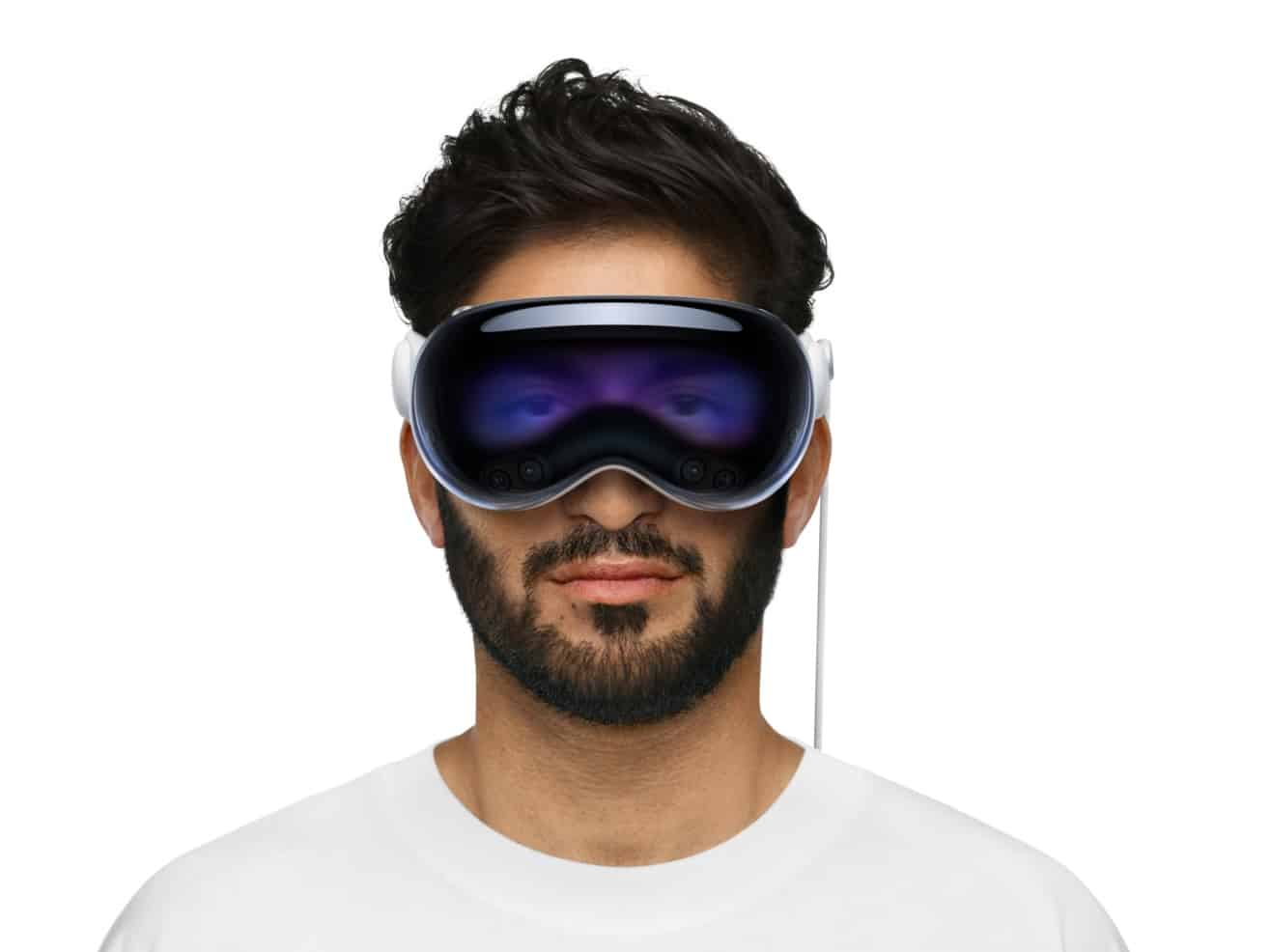
Apple Vision Pro, developed by Apple Inc. and released in early 2024, marks a major advancement in spatial computing with its immersive mixed-reality headset. Vision Pro features dual micro‑OLED displays, eye‑tracking, hand‑gesture controls, and spatial audio powered by M2 and R1 chips. The headset supports life‑size 3D holograms, surgical-quality imaging, and seamless integration of virtual and real-world content—making it ideal for high-fidelity clinical simulation. Apple’s investment in visionOS and broad developer ecosystem positions Vision Pro as a transformative tool for medical education, procedural rehearsal, and immersive learning. Healthcare simulation labs, surgery programs, and clinical training centers should consider Vision Pro for its precision visualization, interactive anatomy review, and advanced patient-centered immersive environments that align with CHSE/CHSOS standards.
Competition
Competitors to Apple Vision Pro in the medical simulation space include Microsoft HoloLens 2, Meta Quest 3, Magic Leap 2, Sony XR Headsets, PICO XR, and HTC Vive XR Elite, among others. These platforms offer varying degrees of spatial computing, hand tracking, and mixed-reality support for clinical education and procedural training workflows.
Summary of Key Products/Services from the Company
Apple Vision Pro introduces an entirely new dimension to healthcare simulation through advanced spatial computing, blending digital content with the physical world. The mixed-reality headset delivers ultra-high-resolution 3D visuals, real-time environment mapping, and responsive user interaction powered by eye-tracking, hand gestures, and voice commands. Apple’s custom silicon (M2 and R1 chips) ensures seamless, low-latency performance critical for immersive procedural training and interactive simulation environments. Through visionOS, Apple opens new opportunities for developers to create simulation experiences including surgical walkthroughs, anatomy review, and standardized patient communication in photorealistic detail. Integration with Apple’s HealthKit, secure enterprise workflows, and familiar development tools like SwiftUI positions Vision Pro as a compelling tool for simulation centers seeking hardware that is both high-performance and highly intuitive. Vision Pro aligns with the needs of simulationists who demand fidelity, accuracy, and usability in their immersive learning platforms.
- Apple Vision Pro Headset: Spatial computing headset with dual 4K+ micro-OLED displays, eye-tracking, and intuitive gesture control.
- visionOS Operating System: Purpose-built for mixed reality, supporting high-resolution medical simulation apps and real-time interaction.
- M2 & R1 Chipset Architecture: Enables ultra-low-latency performance for real-time anatomy rendering, haptic feedback, and natural scene composition.
- Enterprise Health Integrations: Compatible with Apple HealthKit, secure cloud workflows, and protected simulation data environments.
- Developer Ecosystem: Supports custom application development through ARKit, Swift, and Reality Composer Pro, ideal for tailored simulation training modules.
More Detailed Product / Service Offerings
Apple Vision Pro Headset: The Apple Vision Pro headset introduces spatial computing to healthcare simulation with remarkable hardware and ergonomic innovation. Featuring dual 4K+ micro‑OLED displays and advanced sensors for real-time spatial mapping, the headset allows simulationists to render anatomy, procedures, and patient scenarios in vivid, life-sized detail. The device uses a sophisticated combination of eye tracking, hand gesture input, and voice control to interact with content—enabling hands-free surgical rehearsal, emergency training, or interprofessional education exercises. For simulation centers, this level of control minimizes the need for peripheral hardware, making setups more streamlined and mobile. Vision Pro also includes spatial audio capabilities that simulate environmental sounds with directional accuracy, further enhancing realism in clinical training. Its all‑day battery configuration and modular design provide flexibility for simulation labs focused on long-form immersive learning sessions.
visionOS and Developer Tools: visionOS is the dedicated operating system for Apple Vision Pro, designed from the ground up to support 3D application layering, spatial memory, and contextual content awareness. Healthcare developers can build simulation applications that take advantage of dynamic lighting, realistic physics, and multi‑window functionality to recreate clinical environments with high fidelity. Apple provides support for familiar development platforms such as Swift, ARKit, RealityKit, and Reality Composer Pro—allowing simulation centers and EdTech developers to design highly customized VR/AR medical training modules. Simulationists can deploy apps with secure Apple enterprise authentication, integrate HealthKit APIs for physiological feedback, or stream standardized patient video scenarios across space and devices. This toolset empowers simulation program directors to control their own curriculum innovation while adhering to industry standards for data protection and user privacy.
Enterprise Workflow Integration: Apple Vision Pro is designed to integrate easily into enterprise simulation workflows, making it highly attractive for academic medical centers, nursing schools, and simulation labs seeking seamless technology solutions. The headset pairs with Apple silicon-powered Macs and iPads, allowing for synchronized session control, remote observation, and device provisioning through Apple Business Manager. Secure network authentication and user identity management tools help maintain compliance with institutional protocols and learner privacy requirements. This integration ensures that Apple Vision Pro can work harmoniously within simulation centers that already deploy iOS or macOS infrastructure. Additionally, compatibility with Apple Classroom tools allows simulation faculty to monitor and support learners during immersive experiences. These features reduce IT overhead and simplify the learning curve for faculty and staff, supporting smoother deployment and more consistent training outcomes.
- High-Fidelity Visual Display: Dual 4K+ micro-OLED screens deliver surgical-level detail and immersive spatial depth for anatomy and procedural simulations.
- Hands-Free Interaction: Eye tracking, gesture controls, and voice commands enable seamless, sterile operation during clinical training scenarios.
- Developer-Friendly Environment: Supports medical simulation development through Swift, RealityKit, ARKit, and visionOS—enabling fully customized training apps.
- Enterprise Integration: Works natively within institutional Apple ecosystems including iPad, Mac, Apple Business Manager, and HealthKit.
- Flexible Use Cases: Ideal for surgery, nursing, dental, and interdisciplinary training with support for live debriefing, data visualization, and real-time spatial computing.
Key Organizations / Institutions Clients
Apple Vision Pro is rapidly gaining attention from healthcare institutions, academic programs, and simulation labs eager to explore spatial computing in clinical education. Cedars-Sinai has piloted Apple Vision Pro applications for immersive surgical planning and patient education, showcasing the headset’s potential in real-world medical environments. Stanford Medicine has also demonstrated early exploration of the platform’s capabilities in anatomy instruction and procedural rehearsal. Independent medical education developers such as Holo Anatomy and Elsevier have expressed interest in creating healthcare-specific applications designed for Vision Pro’s high-resolution displays and gesture-based interaction. Several U.S.-based nursing and allied health programs are beginning to trial Apple’s technology as part of broader innovation labs and immersive learning initiatives. These examples reflect growing institutional interest in Apple Vision Pro as a transformative simulation and visualization platform for healthcare training.
Key Partnerships/Acquisitions
Apple’s development and rollout of Vision Pro has been supported by several key partnerships and strategic alignments that strengthen its impact in the healthcare simulation sector. Apple collaborated with Unity to ensure full compatibility with real-time 3D medical simulation applications using Unity’s game engine—widely used by VR and surgical training developers. Partnerships with software innovators such as Siemens and Epic have paved the way for Vision Pro integration into surgical planning and electronic health record visualization tools, enabling immersive patient care simulations. HoloAnatomy, an award-winning application from Case Western Reserve University and the Cleveland Clinic, has been adapted for the Vision Pro platform, highlighting Apple’s intent to support academic and clinical education from day one. Additionally, Apple’s RealityKit and ARKit tools are supported by hundreds of developers building VR and AR solutions for procedural training, anatomy instruction, and interprofessional team simulations. These partnerships position Apple Vision Pro as a cornerstone for enterprise-grade simulation environments in academic and clinical healthcare institutions.
Who Should Consider Purchasing from the Company and Why
Healthcare simulation centers, medical schools, nursing programs, and allied health training institutions seeking high-fidelity immersive learning should strongly consider investing in Apple Vision Pro. This headset offers unmatched visual clarity, spatial awareness, and real-time interactivity for simulating clinical procedures, anatomy, and standardized patient encounters. Simulation program administrators focused on cutting-edge technology, interoperability with existing Apple infrastructure, and long-term return on investment will benefit from Vision Pro’s enterprise features and ecosystem. Vision Pro supports multi-role scenarios for interprofessional education, surgical rehearsal, and nursing competency validation—making it suitable for both undergraduate training and continuing professional development. Simulation faculty, CHSE-certified educators, and CHSOS professionals will find Vision Pro intuitive to deploy and effective for observational assessment and debriefing. Simulation programs aiming to expand into hybrid, remote, or augmented learning modalities gain flexibility and scalability using Apple’s secure cloud services, cross-device integrations, and enterprise-grade configuration tools. With broad developer support and hardware optimized for extended use, Vision Pro presents an elite tool for elevating simulation experiences, improving clinical judgment training, and delivering quantifiable learner outcomes.
Final Considerations of Apple
Apple Vision Pro introduces a new era of immersive, high-resolution simulation that brings clinical education into the realm of spatial computing. With a focus on intuitive user interaction, unmatched display fidelity, and strong enterprise security, Vision Pro offers powerful new tools for simulation centers, nursing programs, surgical training institutions, and allied health educators. Apple’s integration of hardware, operating systems, and development platforms provides simulationists with an ecosystem designed for innovation, collaboration, and long-term performance. From standardized patient experiences to surgical rehearsal and anatomy instruction, Apple Vision Pro empowers clinical educators to create flexible, engaging, and high-impact learning environments. Institutions already leveraging Apple infrastructure will benefit from seamless adoption and secure deployment options. As more medical education developers adapt their applications for visionOS, Apple Vision Pro will continue to shape the future of healthcare simulation through its commitment to usability, precision, and immersive learning outcomes.
Disclosure: The information on this page may be inaccurate or out of date. Create a free account and click the ‘Contact Vendor’ button for direct communication with the company for the latest updates.


 One Apple Park Way, Cupertino, California, 95014, United States