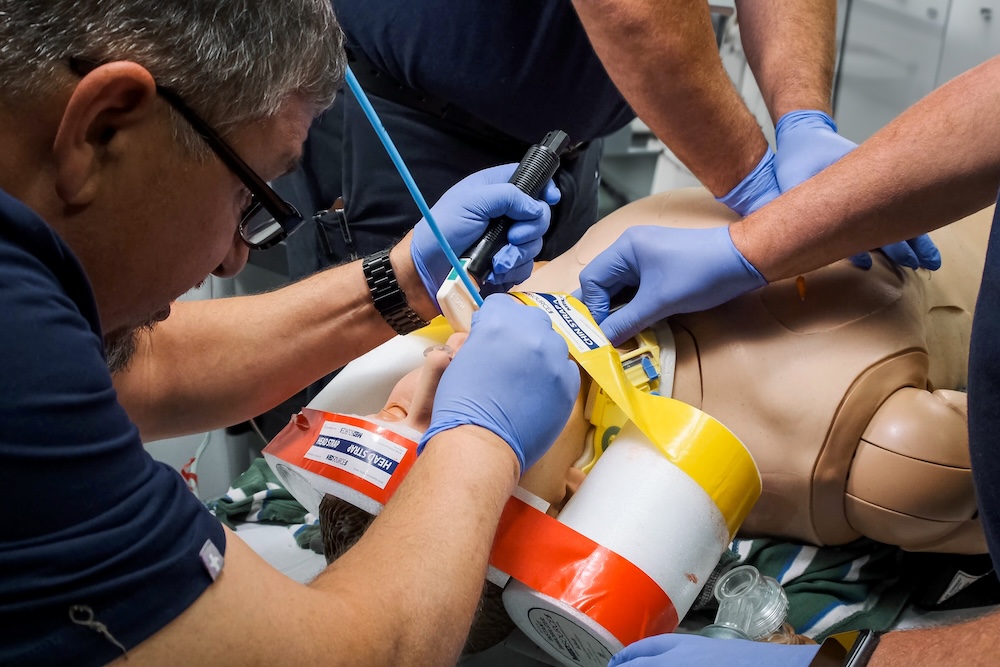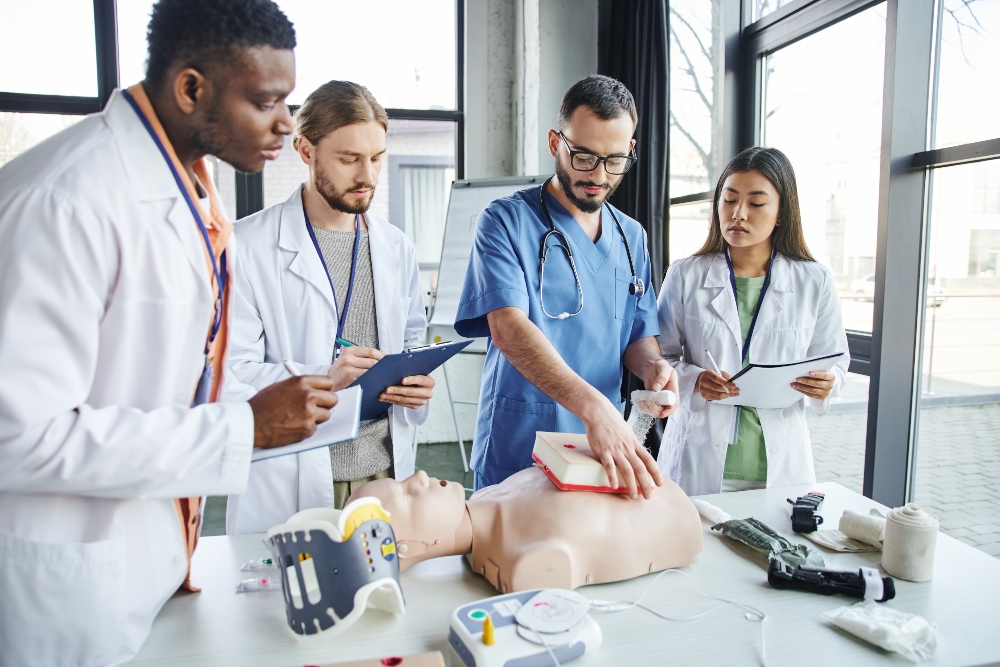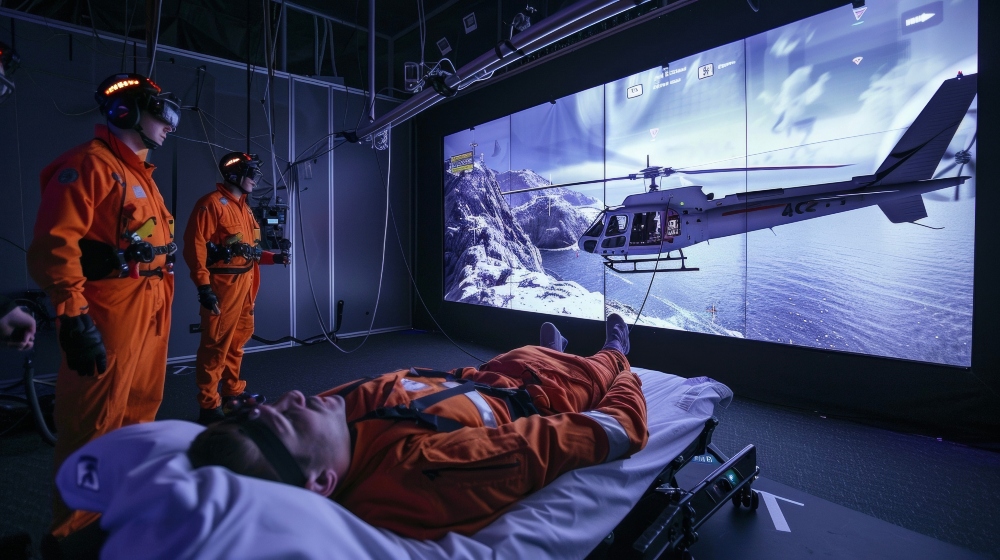

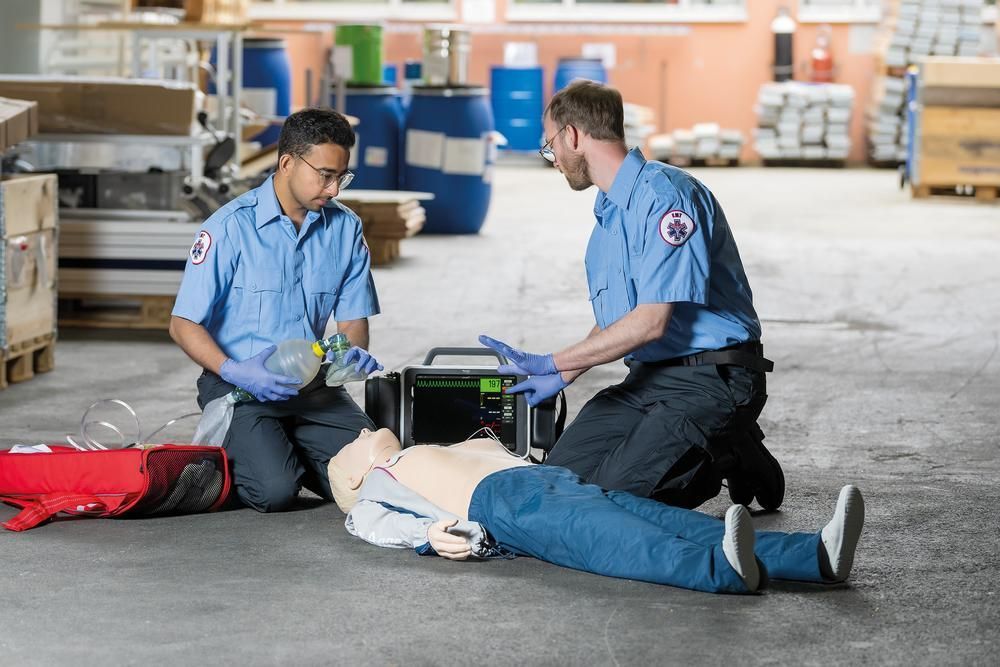
In honor of EMS Week 2025, Laerdal Medical proudly celebrates the dedication, resilience, and expertise of emergency medical service professionals across the country. Laerdal’s commitment to saving lives inspires everything they do—and they are here to support healthcare professional educators with tools that strengthen your team’s skills and confidence in every life-saving scenario. Laerdal would like to honor all first responders during EMS Week. This HealthySimulation.com article will highlight Laerdal medical simulation products to meet the education preparatory needs of EMS programs.
Laerdal: Simulation on a Budget
Laerdal knows that EMS agencies often face tough choices related to their budgets. Yet training does not have to be an all-or-nothing option. At Laerdal, the belief is to empower first responders with healthcare simulation solutions that grow with them and their program. This can be accomplished without a compromise in the quality or readiness of their learners.
Scalable Solutions for First Responders
Laerdal’s Resusci product line offers comprehensive support for foundational and advanced life support simulation training. Whether teaching high-performance CPR or practicing pediatric emergency care, Laerdal healthcare simulation manikins are built for durability, realism, and data-driven feedback.
EMS educators have the option to start with the essentials:
- Resusci Anne QCPR for realistic adult BLS and ACLS training. AED Skin, Airway Head, and full body or torso configuration options are available
- Resusci Junior QCPR for pediatric scenarios and airway head upgrade option
- Resusci Baby QCPR for infant and PALS training. Expand training possibilities with Airway head configuration options and IO leg
View the HealthySimulation.com Webinar Enhance Training Outcomes with Laerdal Medical’s Latest Simulation Solutions to learn more!
Add Depth and Complexity to Healthcare Simulation Over Time
Laerdal offers multiple options to increase the skills and complexity of the healthcare simulation products to scaffold experiential learning opportunities. Some of these are:
- Monitor by Laerdal – deliver more realistic ALS and BLS training to give EMS learners hands-on experience with real-time vitals, defib integration, and scenario control
- First Aid Trauma Modules like the Trauma Leg and Trauma Arm – ideal for MCI, hemorrhage control, and trauma scenario training
- Resusci Anne Extrication Limbs with IM Pads – add realism with this accessory for practicing injections
- Resusci QCPR IV Arm– for IV practice that matches real-world situations
- ShockLink System – Allows use of your own defibrillator for realistic BLS and ALS training
Invest in Readiness, One Step at a Time
Laerdal understands that EMS agencies are resourceful—because they have to be. Laerdal’s modular approach to simulation allows you to build a world-class training program gradually. Start with core manikins and enhance capabilities over time as funding allows. Each piece is designed to integrate seamlessly, so educators never have to “start over” when they are ready to grow. With Laerdal, the investment today can evolve into tomorrow’s complete training ecosystem—without sacrificing quality, realism, or relevance.
View the new HealthySimulation.com Community Pre Hospital Simulation Group to discuss this topic with your Global Healthcare Simulation peers!
Committed to Helping Save Lives: One Million Lives Saved Campaign
Laerdal is much more than a “simulator” company. Every product Laerdal offers is grounded in their mission: Helping save lives. That mission drives them to create training solutions that are accessible, sustainable, and designed to meet the real-world needs of EMS providers. One of Laerdal’s global impacts has focused on improving the quality of CPR to save lives. Laerdal Medical has a goal to help save one million more lives every year by 2030. In 2020, Laerdal established a goal to help save one million more lives, every year, by 2030 in a sustainable way. Laerdal understands that collaborative partnerships with the community (bystanders), first responders, and healthcare workers will be required to accomplish this goal. The aim of the Million Lives Mission is to educate and provide lifesavers with the knowledge and skills to perform their role more effectively.
Laerdal Thanks EMS Professionals
This EMS Week, Laerdal would like to thank you for the lives you touch and the countless hours you dedicate to your communities. We are proud to stand beside you—today, and as your training needs grow into tomorrow. Thank you for all you do.
Clinical Simulation in EMS Education
Healthcare simulation training is a critical component of paramedic education and ongoing readiness. Clinical simulation provides a safe, controlled environment where paramedics can practice high-risk, low-frequency scenarios, such as cardiac arrest, trauma, or mass casualty incidents. without putting real patients at risk. Through realistic, hands-on experiences, simulation helps improve:
-
Clinical Skills: Repeated practice of procedures like airway management, CPR, and medication administration enhances technical proficiency.
-
Decision-Making and Critical Thinking: Dynamic scenarios challenge paramedics to assess, prioritize, and respond under pressure to strengthen judgment and problem-solving.
-
Confidence and Communication: Exposure to complex team-based simulations builds confidence and improves communication in real emergencies.
-
Skill Retention: Simulation reinforces knowledge and helps maintain competence over time, even between real-world calls.
-
Error Recognition and Correction: Immediate feedback and structured debriefing allow learners to recognize mistakes and adjust behaviors before they reach the field.
Simulation helps bridge the gap between classroom learning and real-world emergency response, which leads to better-prepared, more competent paramedics and ultimately improved patient outcomes. Jam and collegeaus(2025) conducted a study to evaluate the effect of a scenario-based pre-hospital trauma management training course on emergency medical service (EMS) students. The results indicated a statistically significant improvement in both knowledge and clinical skills post-training. These results highlight the effectiveness of simulation-based education to enhance trauma care competencies.
Violato et al.(2025) conducted a systematic review of the evidence of using simulation to replace clinical experience for paramedic students. None of the studies directly addressed whether simulation-based education can be used as a clinical replacement, though both learners and program directors found value in simulation and felt a combination of simulation and clinical time was best. The findings of the systematic review indicate a willingness to engage in simulation to replace some clinical experience and certain skill areas that could be suitable for simulation. Simulation as a replacement for clinical experience has support in other health professions, but further research is needed in paramedicine to investigate its efficacy and to inform future educational practice, like the NCSBN National Simulation Study in nursing (Hayden et al., 2014).
More About Laerdal
Laerdal Medical is one of the world’s premier vendors of medical simulation and clinical education equipment. Laerdal Medical began their mission to “Help Save Lives” in 1960 with the invention of the CPR training manikin called Resusci Anne. For over sixty years, Laerdal has provided the global healthcare simulation community with clinical task training and high fidelity manikin products ranging from the Laerdal pocket mask to the Laerdal SimMan 3G, and now the SimCapture audiovisual systems and even virtual reality. Currently, the company boasts more than 2000 employees in over 26 countries with as many as 50 international distributors.
Learn More About Laerdal’s Scalable Solutions!
References
- Hayden, J. K., Smiley, R. A., Alexander, M., Kardong-Edgren, S., & Jeffries, P. R. (2014). The NCSBN national simulation study: A longitudinal, randomized, controlled study replacing clinical hours with simulation in prelicensure nursing education. Journal of Nursing Regulation, 5(2), S3-S40. https://doi.org/10.1016/S2155-8256(15)30062-4
- Jam, M.B., Shahrestanaki, Y.A., Arjeini, Z., Alipoour, R. (2025). Evaluating the effect of a scenario-based pre-hospital trauma management training course on the knowledge and clinical skills of emergency medical service students. BMC Emergency Medicine, 25 (30). https://doi.org/10.1186/s12873-025-01179-y
- Violato, E., Lauren, V., Ragasa, J. P., Lewis, M., & Violato, E. (2025). A Systematic Review of the Evidence for Using Simulation to Replace Clinical Experience for Paramedic Students: Simulation to Replace Clinical Experience. International Journal of Paramedicine, (9), 30–42. https://doi.org/10.56068/GXSE4776