
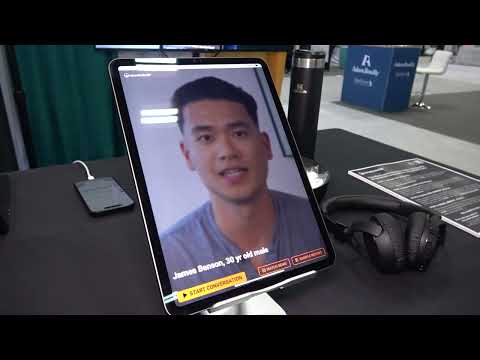


OrchestrateXR, formerly known as AccessVR, is a SaaS-based immersive learning platform that enables healthcare organizations to create, deploy, and scale simulation without technical or operational barriers. Designed for nursing education, medical training, and workforce development, OrchestrateXR combines XR (VR, desktop, and mobile delivery) with AI-powered simulation to support communication, decision-making, and performance-based learning.
OrchestrateXR is not a content studio or a standalone VR application, instead OrchestrateXR functions as a system of record for immersive training, embedding simulation directly into existing LMS, assessment, and compliance workflows. Educators and simulation teams can build immersive experiences using 360° video, structured programs, and AI-driven virtual characters—without coding or game development expertise.
A core differentiator of OrchestrateXR is Conversations, an AI-powered simulated patient solution that allows learners to practice realistic clinical and interpersonal interactions on demand. Unlike traditional standardized patient programs, Conversations provides unlimited practice opportunities, consistent performance, immediate feedback, and detailed analytics—reducing scheduling complexity and recurring costs while expanding access and flexibility.
The platform supports end-to-end simulation workflows, including experience creation, learner delivery, rubric-based assessment, structured debriefing, and longitudinal performance analytics. OrchestrateXR integrates with existing LMS platforms using standards-based approaches, allowing outcomes to be tracked alongside traditional training modalities.
Healthcare systems, universities, and simulation centers use OrchestrateXR to start with a pilot or single use case and expand over time across departments and programs. Customer-owned content, embedded workflows, and accumulated learner data create high switching costs and long-term value, enabling durable adoption and measurable impact.
OrchestrateXR partners with educators, clinicians, and training leaders to modernize simulation programs, improve learner confidence and competence, and make immersive learning scalable, sustainable, and outcomes-driven.


 4 Weems Lane #120, Winchester, Virginia, 22601, United States