Abstract:
In this CE presentation, Dr. Michael Barrie invites participants to explore the rapidly evolving landscape of immersive interprofessional simulation—and how emerging technologies are reshaping the way healthcare teams train together.
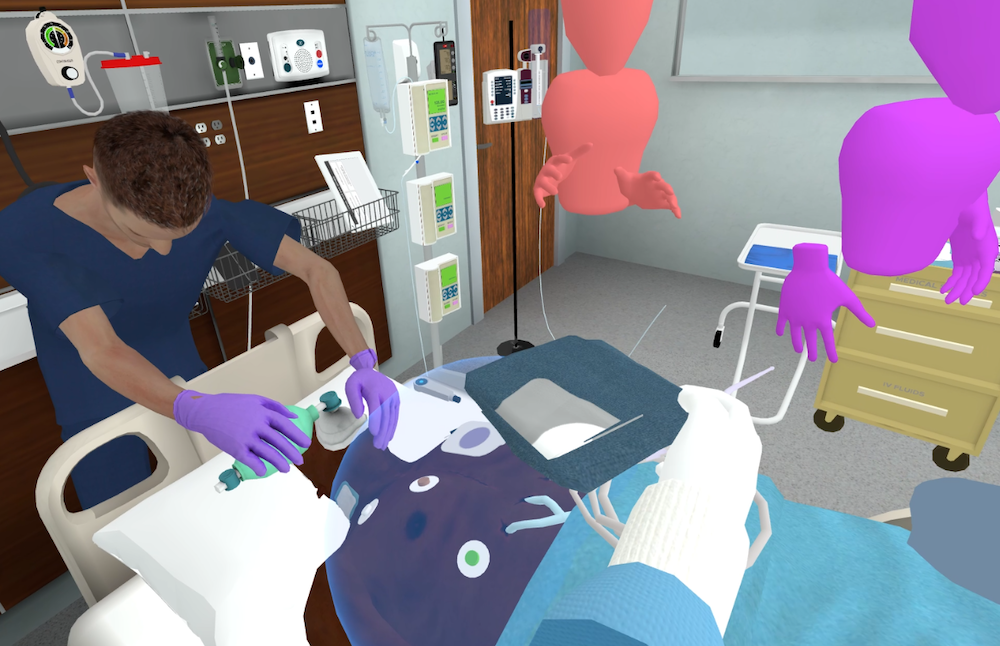
Interprofessional education (IPE) has always been essential to safe, coordinated patient care. Yet traditional simulation environments often struggle to bring multiple disciplines together at scale, at the same time, and with the fidelity required to recreate real-world team dynamics. VR changes that equation entirely. VR technologies, such as SimX’s multiplayer immersive platform, allows learners from nursing, medicine, EMS, allied health, and specialty disciplines to enter the same virtual scenario simultaneously, working side-by-side just as they would in clinical practice.
This CE presentation will showcase how VR enables a level of realism, synchronization, and shared problem-solving previously impossible with physical equipment alone.
Participants will gain insight into the unique instructional challenges behind designing meaningful interprofessional simulations. Creating scenarios that accurately reflect discipline-specific workflows, communication styles, and shared decision-making structures requires a deep understanding of how healthcare teams function—and how they break down under pressure. We’ll explore how virtual reality training technologies like SimX approach these complexities through evidence-based scenario design, rapid iteration with subject matter experts, and constant refinement based on real learner feedback. From clarifying roles during a rapidly deteriorating patient case to supporting leadership transitions during critical moments, VR provides a powerful environment for teams to practice communication, assertiveness, listening, and collaboration in ways that mimic real clinical demands.
This session will also highlight the newest advances in IPE simulation technology, including high-fidelity VR physiology, interactive procedures, AI-enhanced patient behaviors, and large-team scenario support that allows full interprofessional care units to train together regardless of physical location. We’ll discuss how institutions are using VR systems like those available from SimX to run everything from fast-paced emergency department team drills to nuanced interdisciplinary handoff scenarios—at a fraction of the cost and logistical complexity of manikin-based simulation.
Learning Objectives:
- Describe how VR simulation in healthcare supports multiplayer, team-based Interprofessional learning.
- Identify challenges in designing medical simulations for interprofessional communication and collaboration.
- Experience the latest advances in IPE virtual training simulation technology.