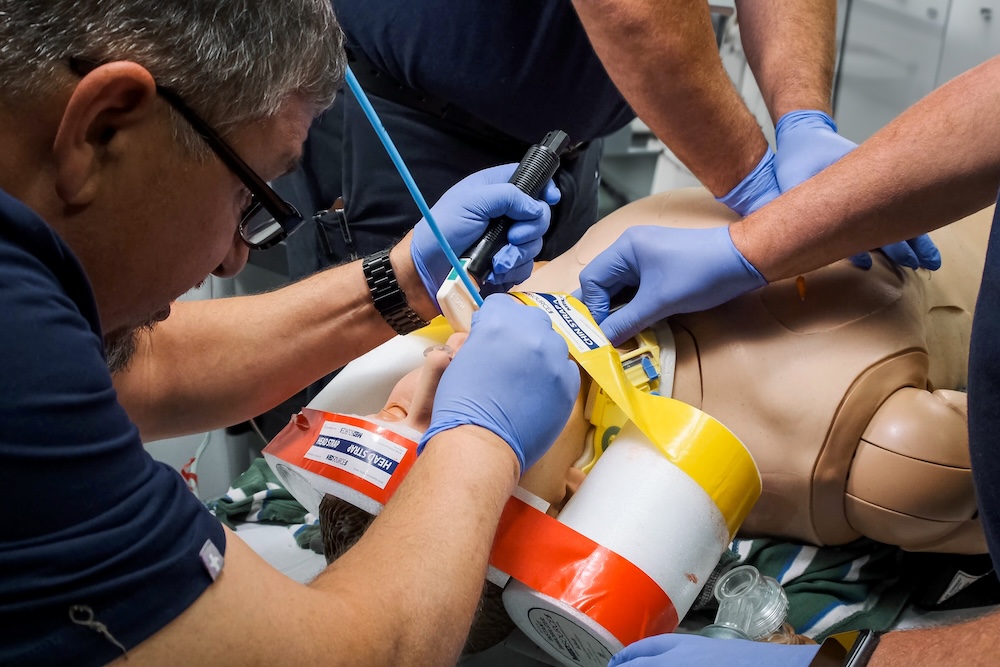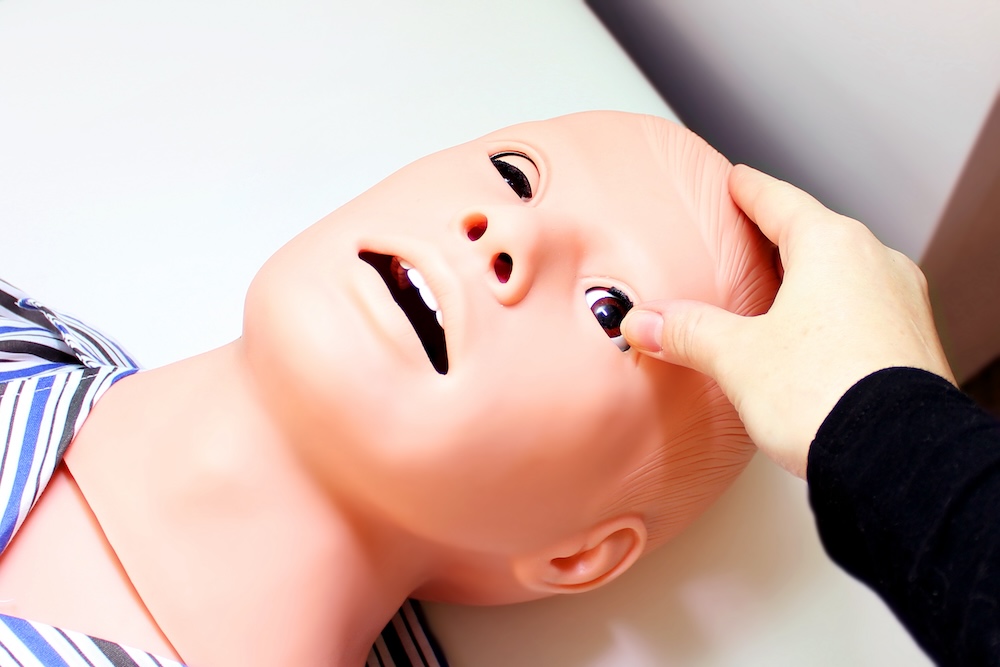

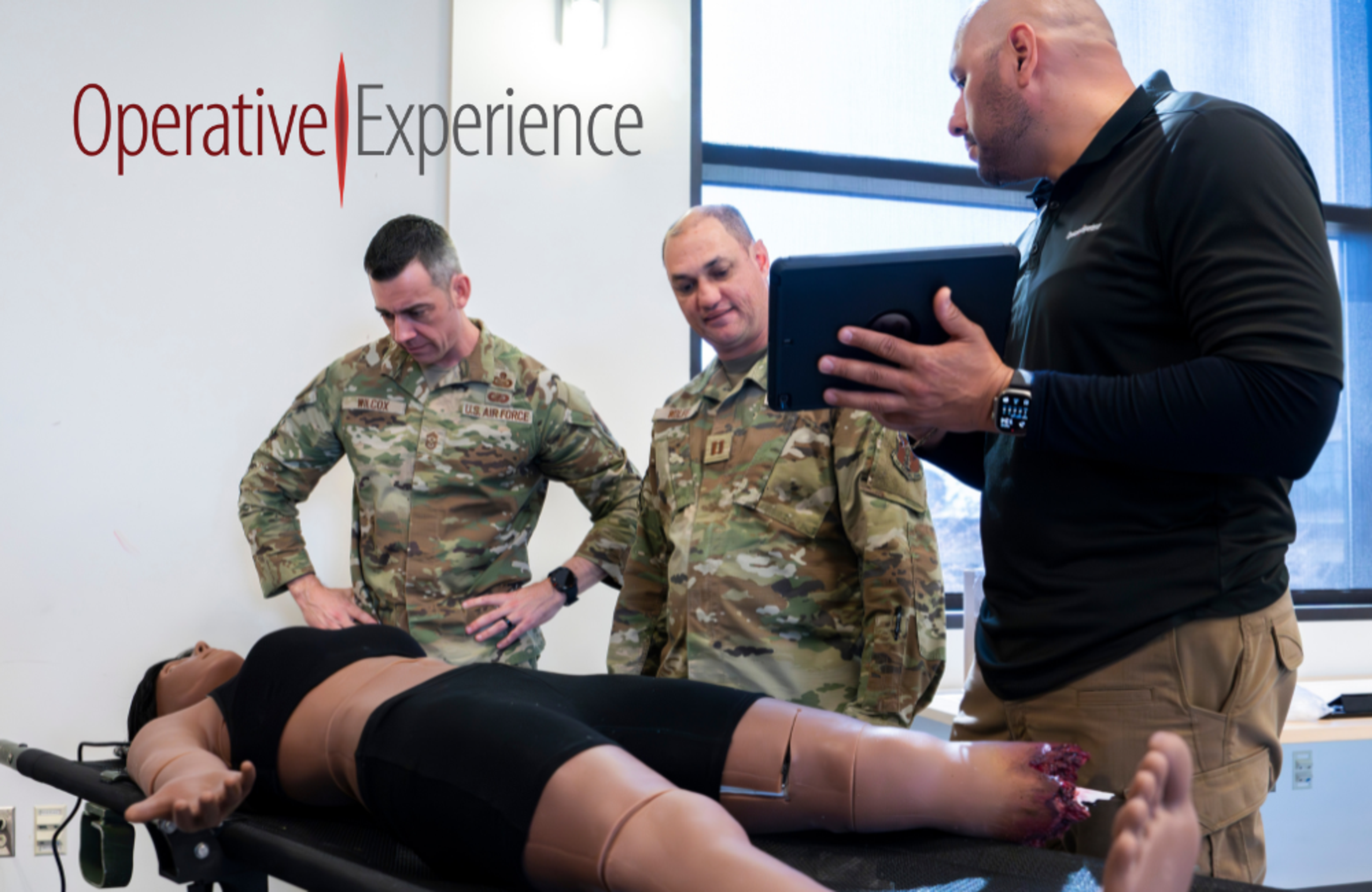
How far will Operative Experience, Inc. (OEI) go to ensure a great customer service experience? For the US Navy Ship (USNS) Comfort, OEI dispatched a team of technicians immediately, meeting the U.S. Navy hospital ship when they docked stateside at the Port of Miami during an international deployment. OEI representatives installed two mannequins and trained service members on how to use the high-tech medical simulators before the ship continued on their way for a multi-month goodwill deployment to the Caribbean, Central America, and South America. The team at Operative Experience, Inc. have provided this article sharing how to eliminate your medical simulation downtime with OEI’s Gold Standard Customer Support!
While this is certainly a unique customer service story, the lengths that OEI’s team will go to ensure their customers receive an excellent experience is not. “At OEI, quality and reliability are not just promises—they are the foundation of everything we do. We are agile, responsive, and fully committed to adapting to our customers’ needs,” says Jason Robbins, Vice President of Programs and Global Support. Robbins leads a team of program managers and field support technicians who provide comprehensive program management, life cycle sustainment, and warranty repairs for OEI customers.
Like many of the veteran-owned OEI’s employees, Robbins is a veteran and medical professional. He served for 30 years in the Air Force as an Independent Duty Medical Technician (Paramedic), which gives him a deep understanding of both the military and medical communities. Those experiences drive his commitment to leading his team to provide top-notch service: “This is my way to continue to support our nation’s warfighters and ensure their training is the best it can be.”
Large-Scale Impact Through Quality and Reliability
As a small business based in Aberdeen, Maryland, OEI is truly a global operation, working to improve training for medical providers the world over through better, more responsive equipment. OEI’s high-fidelity simulators provide real-time feedback and near-to-life practice in ways that other mannequins cannot.
“When it comes to innovation and dependability, OEI leads the way,” Robbins says. “We do not just meet industry standards—we set new ones.” This is not just Robbins’ opinion: the data tells the same story. OEI simulators consistently outperform the competition through their superior quality and reliability, to produce better results for customers, their students, and their patients. And this is the same story on the technical support side: OEI’s team of service professionals stands head and shoulders above the competition, clocking in with better customer satisfaction, appreciable minimization of downtime, and superior product expertise.
Specialized equipment requires specialized service and support. While OEI’s medical simulators are highly durable, they require highly technical care when they are not operating optimally. With two repair depots in the U.S. (Aberdeen, MD, and San Antonio, TX) and one in Europe (Munich, Germany), OEI is serious about rapid response. It is vital for Customers require the tools and devices to keep the medical simulators in working order. “Simulators are extremely important to medical training,” Robbins says.
A sidelined simulator can change the quality of students’ training experience, or in worst-case scenarios, canceled altogether. If mannequins are not working properly or there simply are not enough in the lab, trainees miss out. Medical providers may not have enough opportunities to practice skills. They may not receive critical feedback to help them refine their processes. Sometimes instructors may use live role players if simulators are not available, which can lead to adverse effects for the students and actors. “For example,” says Robbins, “when you repeatedly place a tourniquet on a live person, you run the risk of nerve damage. Having the simulator provides a safe environment where mistakes can be made without catastrophic consequences.”
Attention to Detail and Service
“Our strength lies in personal connection: from on-site installation and training to prompt repairs, we are there—face-to-face, every step of the way,” says Robbins. That commitment is evident in OEI’s careful attention to detail throughout the entire customer experience:
- Once a customer contacts OEI online or by phone, a ticket is created, and OEI will respond within 24 hours.
- After initial contact, a team develops a support plan and notifies the customer of the plan within five business days.
- Many issues can be resolved quickly over the telephone or via video conference.
- If the issue requires a higher degree of support, an OEI technician will schedule an on-site repair or coordinate the return of the simulator to an OEI facility.
- While OEI’s goal is to initiate and complete repairs between 30 and 60 days from the first ticket submission, technicians are often able to resolve the issue within 30 days.
Because each service plan is tailored directly to each customer’s situation, the needs and timeline of each customer are also taken into account. For example, if a customer has a large-scale training event on the horizon, loaner simulators might be a possibility, depending on availability.
View the HealthySimulation.com Webinar Next Level OB Simulation Training with RealMom Birthing Simulator and CTGi to learn more!
Commitment Beyond Repairs
At OEI, serving customers is not just about fixing problems, but about finding and eliminating pain points before they become a problem. From in-person courtesy health checks to integrated onboard diagnostics that can preempt an issue, OEI works to find innovative and proactive processes that give customers the highest level of support and service possible.
OEI’s commitment to supporting customers through the entire life cycle of the high fidelity simulators extends past traditional methods of service. One example of OEI’s attention to customer service is their dedication to providing pro gratis training events for U.S. military service members. This takes the form of different partnerships with organizations and branches within the military, like their years-long support of the Air Force Medic Rodeo competition and Agile Sparrow, an international medical conference planned and led by the U.S. Army. “In these events, we provide the use of our simulators and have on-site repair technicians. We do this because we know how important these training events are, and they often have very small budgets,” says Robbins.
As for the USNS Comfort, the ship set sail for warmer seas, fully equipped for their mission with veterinary teams, medical personnel, Seabees, and even musicians. Onboard were two high-fidelity mannequins and a team of OEI-trained Navy medical instructors, too. The mannequins—and the knowledge for operating and training with them—were onboard for deployment, thanks to the quick work of Robbins’ team.
During the US Comfort’s three-month goodwill mission, sailors worked with local medical personnel in six countries. At each port, members of the Comfort “provided direct patient care and technical expertise in community clinics to improve medical readiness, strengthen partnerships, and enhance the combined capabilities of the U.S. Navy and partner nations to respond to public health disasters and humanitarian crises,” according to the Navy.
While this is an extraordinary story, Robbins sees this as one that is indicative of the kind of service OEI provides all of their customers every day: “At OEI, the job is not done until our customer is not just satisfied, but confident in our partnership and support.”