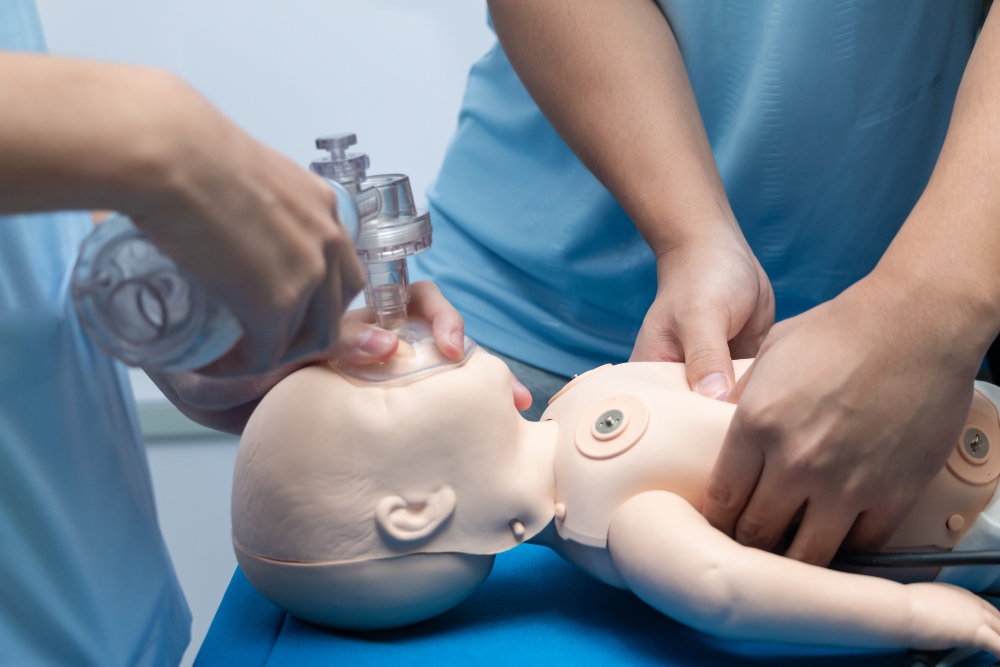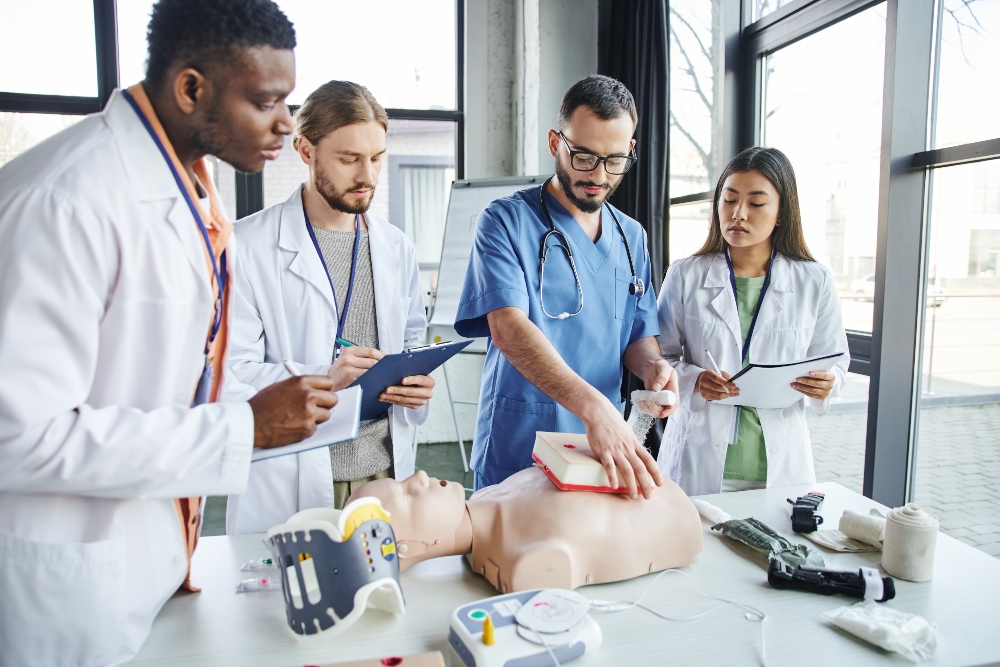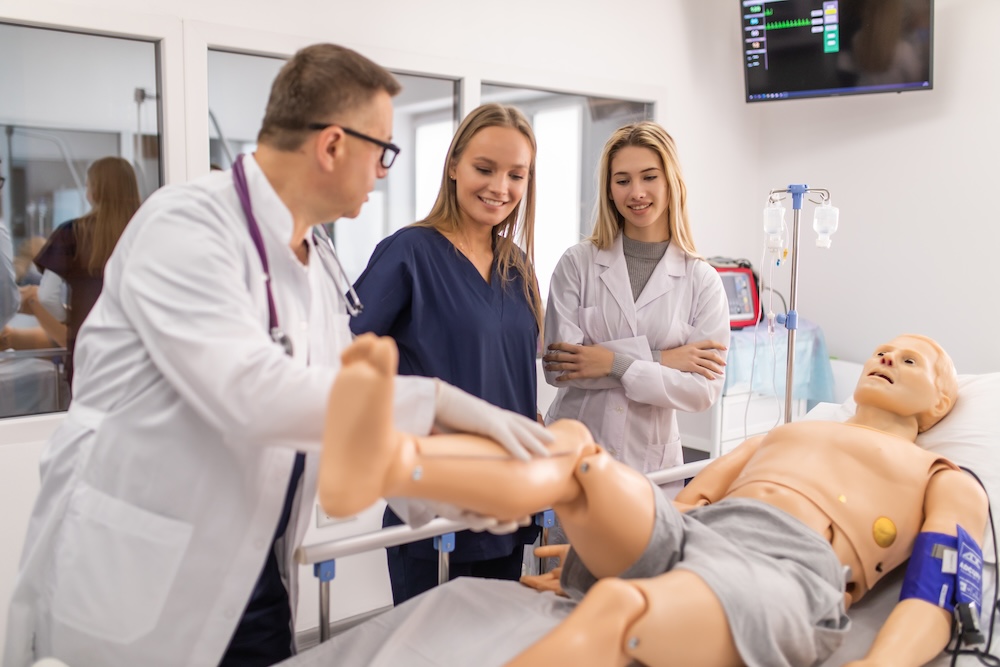


Paediatric behavioural disorders, like Autism Spectrum Disorders (ASD), have emerged rapidly in the 21st century, becoming more common among children. The global prevalence of ASD is 1%, which means one out of 100 children suffers from autism. In the United States, according to the Centre for Disease Control and Prevention, the prevalence is 2.8%. Medical simulation learning provides a structured approach to train healthcare professionals in areas where traditional methods often struggle to achieve effective outcomes. Paediatric behavioural disorders pose great challenges for practitioners in the aspects of screening, diagnosis, and counselling. Integrating the medical simulation with paediatric behavioural disorders learningcan bring meaningful solutions. This HealthySimulation.com article by contributor Dr. Bhavesh Patel, will explore how medical simulation can benefit healthcare providers in the early recognition and diagnosis of ASD.
Autism Spectrum Disorder (ASD) and Augmented Reality (AR)
Clinical features associated with ASD are a triad of impaired speech, impaired social interaction or communication, and repetitive or restrictive behaviour. ASD can be presented with psychological co-morbidities like ADHD, anxiety, depression, or physiological co-morbidities like epilepsy or sleep disorders. The complexity of ASD and overlapping symptoms can be difficult for practitioners for an early diagnosis and intervention. This issue justifies the need for a better learning approach for ASD. This HealthySimulation.com article will highlight how augmented reality (AR) can be used in the diagnosis and therapeutic treatment for children with ASD.
The American Academy of Paediatrics has proposed a guideline in which every child should be screened for development at 9, 18, and 30 months, and specific screening of ASD should be done at 18 and 24 months for every child. This demands more trained and skilled healthcare workers. Despite the high prevalence of behavioural disorders in paediatrics, many healthcare workers struggle to deal with ASD and other behavioural disorders.
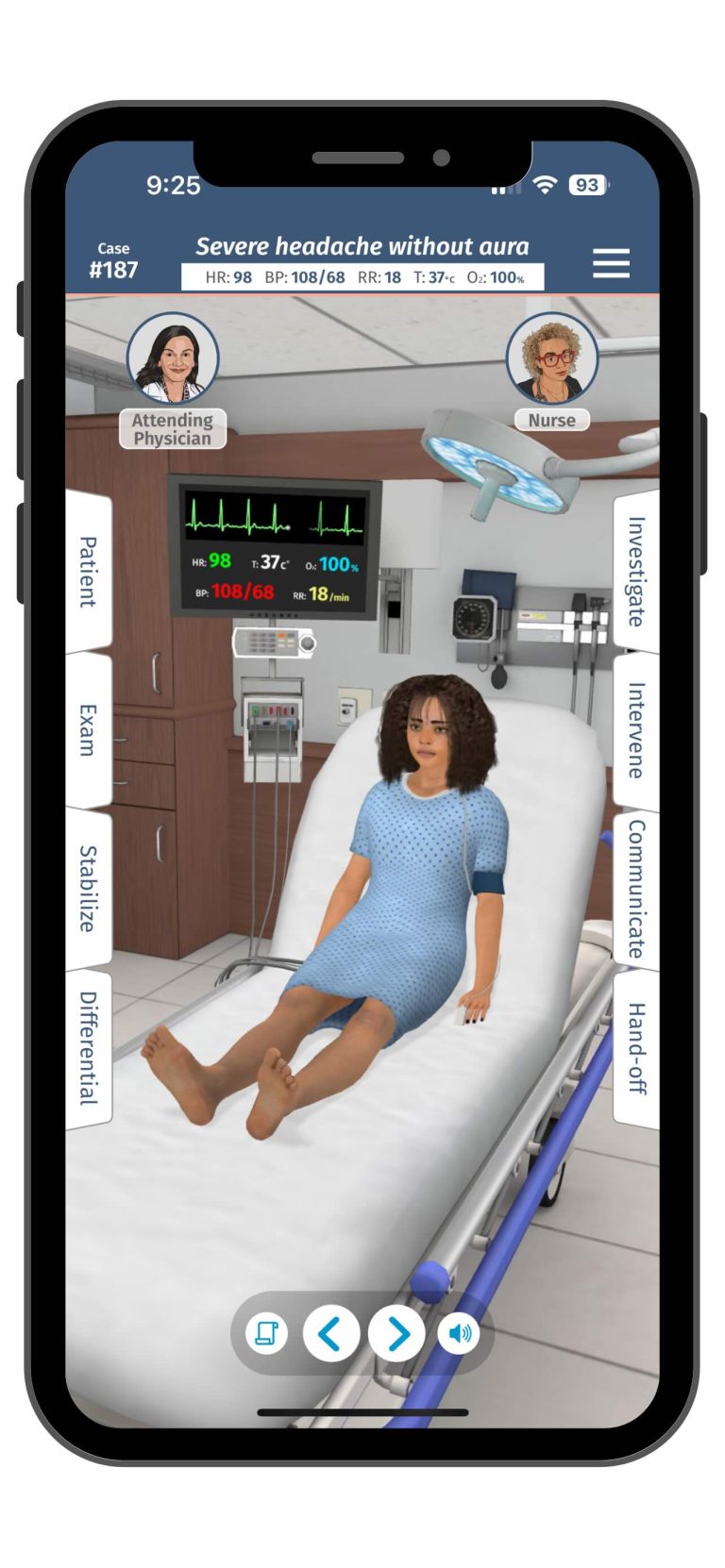
The integration of medical simulation with behavioural paediatrics can revolutionize the solution of early diagnosis and early intervention of ASD and other disorders. Medical trainees can practice behavioural paediatrics even without encounters with real patients and families. Trainees can get exposure to multiple scenarios and strengthen their diagnostic and communication skills. Medical simulation technology can simulate a scenario of an autistic child with augmented virtual reality. AR or VR headsets can be leveraged to experience the scenario in the most realistic way. Mobile apps or computer software can help to generate scenarios with animated videos and simulated family interaction chat.
Extended Reality (XR) in Autism Training
After the introduction and briefing about the role and functionality of augmented reality with medical simulation in behavioural paediatrics, trainees can use AR/VR headsets to see and interact with actual patients. Trainees can observe a child’s activity, expressions, and behaviour closely. The paediatric avatars can display symptoms of ASD, like a lack of response to their own name, engagement with a particular stereotypical activity, repetitive stereotypical sounds, or hand-flapping movements. Trainees can be given an option to communicate with the avatars of the patient’s family and ask questions related to the child’s symptoms and behaviour. An AI chatbot can be used to make the conversation more interactive. Trainees can observe reactions of the family while doing communication that can make trainees familiar with the emotional sensitivity of real scenarios and the complexity of communication.
View the HealthySimulation.com Webinar Thinking Outside the Box: Use Cases for Virtual and Augmented Reality in Healthcare Simulation to learn more!
At the end, trainees can adopt an evidence-based counselling approach to disclose the diagnosis and provide in-depth knowledge about ASD, the next step of management, the outcome, and the unique talents of the child can be explained to the family. This allows the trainees the opportunity to practice how to empathize with their emotions and interactions. Moreover, real-time feedback in AR activities enhances trainee’s engagement and motivation to interact with paediatric patients who display characteristics of mental and emotional health disorders.
In the traditional learning method, trainees had to face real patients with emotional families. Moreover, this takes time to get exposure to multiple possible clinical scenarios of ASD. These orthodox trainings are held in hospitals, so there is always a need for experienced and skilled paediatricians who can carry out this training process. However, with augmented medical simulation, a trainee can learn distantly from a hospital in a simulation lab without any exposure to real patients. Trainees can practice one scenario multiple times with different symptoms or severity to boost their confidence. A scenario of ASD associated with a physical problem like epilepsy or a psychological problem like anxiety requires a multidisciplinary approach that can also be practiced.
In the video above, Roshni Das, a medical student at King’s College London, provides insights into her research focused on improving the management of children with autism spectrum disorder (ASD) in hospital settings. The discussion highlights the challenges paediatricians face when caring for children with ASD and introduces a novel solution: virtual reality (VR)-based simulation training for clinicians. Initial findings indicate that VR training enhances clinicians’ skills, confidence, and competence in managing these patients. However, Roshni notes the current evidence base is limited by small sample sizes and inconsistent protocols. To address this, she advocates for large-scale studies and the establishment of a national registry to improve training processes. Roshni outlines plans for a large audit across multiple hospitals and the inclusion of focus groups with clinicians, patients, and parents to further evaluate the benefits of VR-based training. This interview took place at the RCPCH conference 2025 in Glasgow, Scotland.
View the new HealthySimulation.com Community Pediatric Simulation Group to discuss this topic with your Global Healthcare Simulation peers!
Possible Challenges and Disadvantages When Using Digital Training Technologies
The set-up of an entire simulated lab for behavioural paediatrics is a complex process. In routine simulated training, which is usually held on a mannequin, prefix protocols and algorithms have to be managed and carried out. But in behavioural paediatrics, the insertion of emotions in a child’s or family’s avatar is essential to create a realistic scenario. This may require an expert graphics and animation designer, which may increase the cost of these setups. Apart from the visual part, trainees have to engage in communication with family that may require an AI chat tool or possible preset dialogues. These setups can be very costly and may require external funding from governments or non-governmental organizations (NGO). AR or VR headset maintenance can be expensive. The same issues can be faced with computer software or mobile apps if they are used instead of AR or VR headsets.
Multiple scenarios with sensitive scenes can make trainees overwhelmed. The whole learning process can bring rigidity to the trainees’ thought processes, and they can fail to deliver adequate empathy to real families in complex scenarios. With behavioural disorders, each patient is unique, and the need for care and empathy towards the patients and family is also unique; that can be learned only after practicing for years.
Impact on Autism at a Global Level
Not only practitioners in the United States but also practitioners all over the world will have a chance to learn behavioural paediatrics in an advanced manner. This can aid possibilities of early diagnosis and early intervention worldwide. Early identification and intervention can reduce the burden of disability related to ASD in society. In countries where there is a shortage of skilled healthcare workers, primary healthcare workers can be trained to perform assessments of ASD and try to find ASD cases in early stages. Parents or caretakers can also educate themselves with basic knowledge about early signs of ASD and possible treatment and outcome. Medical simulation along with AR can deliver positive outcomes globally if adopted as an advanced learning tool for behavioural paediatrics.
Learn More About Free Medical Simulation Scenarios Available!
References:
- Hyman, S. L., Levy, S. E., & Myers, S. M. (2020). Identification, evaluation, and management of children with autism spectrum disorder. Pediatrics, 145(1), e20193447. https://doi.org/10.1542/peds.2019-3447
- Okoye, C., Obialo-Ibeawuchi, C. M., Obajeun, O. A., & Sarwar, S. (2023). Early diagnosis of autism spectrum disorder: A review and analysis of the risks and benefits. Cureus, 15(8), e43547. https://doi.org/10.7759/cureus.43547
- Wedyan, M., & Al-Jumaily, A. (n.d.). The use of augmented reality in the diagnosis and treatment of autistic children: A review and a new system. Multimedia Tools and Applications. Advance online publication. https://doi.org/10.1007/s11042-023-16287-6